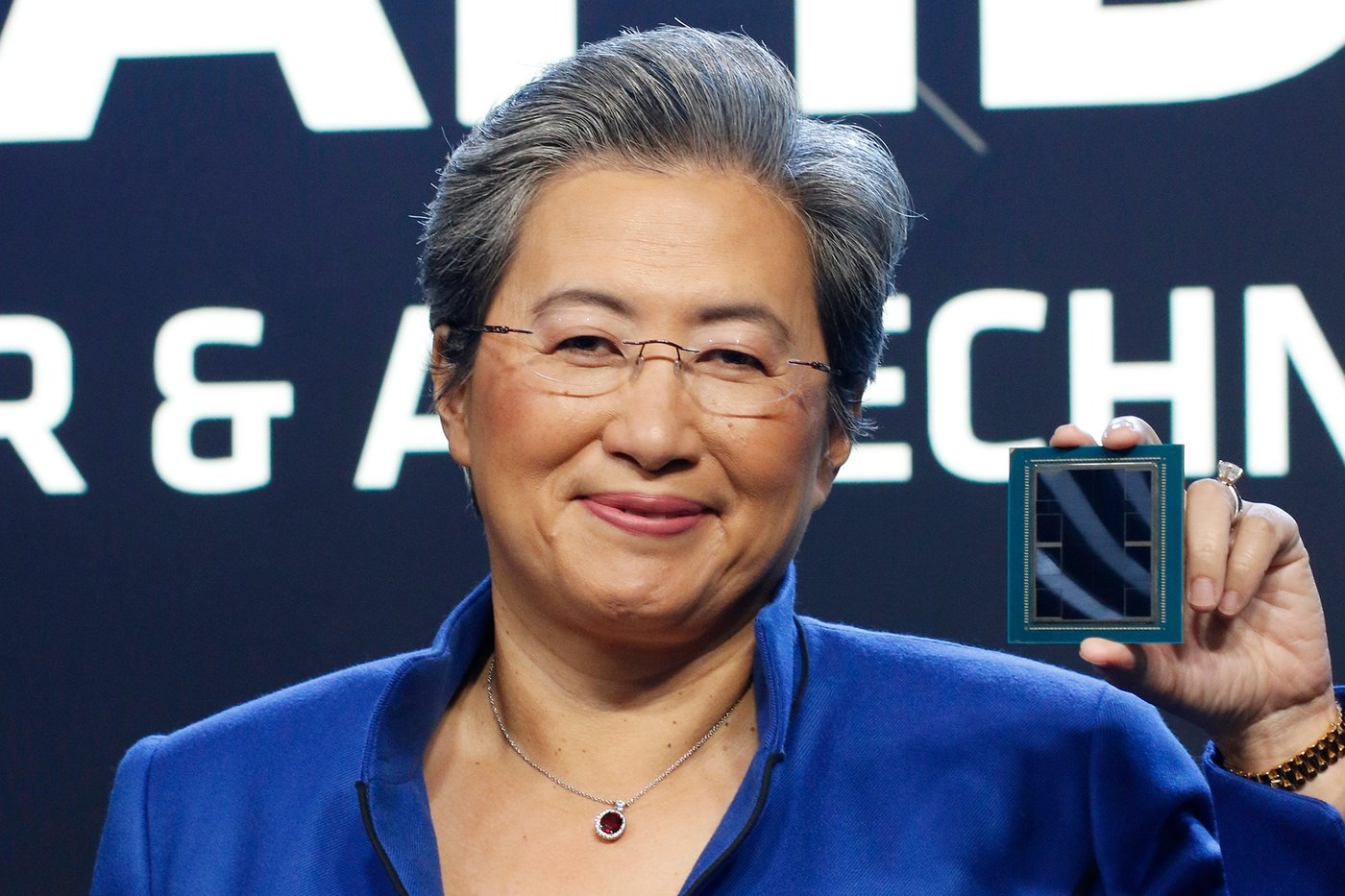
Lisa Su stood before a room of developers in San Francisco on Tuesday afternoon and sketched a future in which software agents, not humans, do much of the computing work. “In the past four or five months, with open code and a wave of new innovations around agents, we are seeing agentic AI fundamentally change the way we use AI,” the AMD chairwoman and chief executive said at the chip maker’s AI Developer Day. “If each of us could have five, ten, or a hundred agents, think how much more we could do.”
Her pitch was part sales talk, part roadmap. Su argued that a large language model sitting at the center of a system is no longer enough. Developers, she said, need models with reasoning, learning, and data-flow capabilities, the machinery that lets an agent plan a task, pull in fresh information, act, and then fold what it learned back into its next attempt. “Agents were built for exactly this,” she said.
The message carried a commercial edge. Su told the audience that the future would be GPU-rich, with accelerators “everywhere across the ecosystem,” but that graphics processors alone would not carry it. A full agent workload, she said, also demands large amounts of CPU capacity and an unbroken chain from silicon to software. That, she said, is where AMD intends to compete: complete end-to-end compute rather than a single component.
The remarks come as AMD fights to convert its momentum in data-center accelerators into a durable second-place position behind Nvidia, which still dominates the market for AI training chips. AMD’s Instinct line has won a string of cloud and enterprise customers over the past two years, and company executives have said supply constraints are easing even as demand keeps climbing. Su’s emphasis on the CPU side of the equation points to a quieter part of the competitive story: agents that reason, fetch data, and act in loops generate workloads that spread across memory, networking, and conventional processors, not just tensor cores.
Chip industry analysts said the framing suits AMD’s strengths. “The company’s whole product portfolio is the argument,” one analyst said. “Nvidia sells the accelerator; AMD sells the platform around it.” The analyst cautioned that software remains the hard part. Developers have built a decade of tooling around Nvidia’s CUDA ecosystem, and shifting that inertia takes more than competitive pricing.
Su acknowledged the gap without dwelling on it. She spent much of the keynote describing developer tools, open-source releases, and partnerships meant to lower the cost of moving workloads to AMD silicon. Company executives said the event was designed to give developers the full-stack story, from instruction set to orchestration framework, in a single session.
The timing is deliberate. Agent-based software is moving from demos to production at companies in finance, logistics, and customer service, and those deployments tend to require fleets of smaller models rather than a single massive one. That pattern, if it holds, plays to AMD’s portfolio economics: cheaper accelerators, more CPUs, and an instruction set that does not lock customers into a single supplier.
Su’s line of argument suggests how the company intends to market this year’s product cycle. Instead of leading with raw performance benchmarks against Nvidia’s latest silicon, AMD is leading with the workload itself. The question Su put to developers was not which chip is fastest, but which system can run a hundred agents at once without breaking the budget.
Whether that message lands will show up in revenue over the next two quarters. AMD’s data-center business has become the company’s largest segment, and investors have grown accustomed to quarterly beats driven by accelerator sales. A shift in narrative toward software and systems carries risk: it sets expectations that AMD’s advantage is architectural, not just price-performance.
For now, Su appeared comfortable with the bet. Standing on the stage, she told developers that the industry is only at the beginning of the agent era and that the winners will be those who build for a world of many models, not one. “Think of what we can do,” she said, “when every person has a hundred agents working for them.”
The company’s product calendar supports the pitch. AMD’s latest Instinct accelerators are shipping in growing volume, and the company’s next-generation server platform, built around a new generation of EPYC processors, is designed for exactly the mixed CPU-GPU workloads Su described. Server makers, including Dell, HPE, and Super Micro, have all expanded their AMD-based AI lineups this year, giving the company distribution that it lacked in earlier cycles.
Pricing still decides many orders. Nvidia’s flagship accelerators carry premium prices and are often bundled with networking and software that raise the effective cost of a cluster. AMD has undercut that pricing at every step, and Su’s agents-first narrative gives buyers a reason to consider the cheaper path without feeling they are settling for second-best silicon. Analysts said the argument is likely to resonate most with mid-sized companies building their first AI systems, the same customers Dell said this week are pushing its AI server orders to records.
That sentence may end up as the keynote’s most-quoted line. The test comes later this year, when the first systems built around her end-to-end pitch reach customers, and the market decides whether AMD’s story is more than a speech.