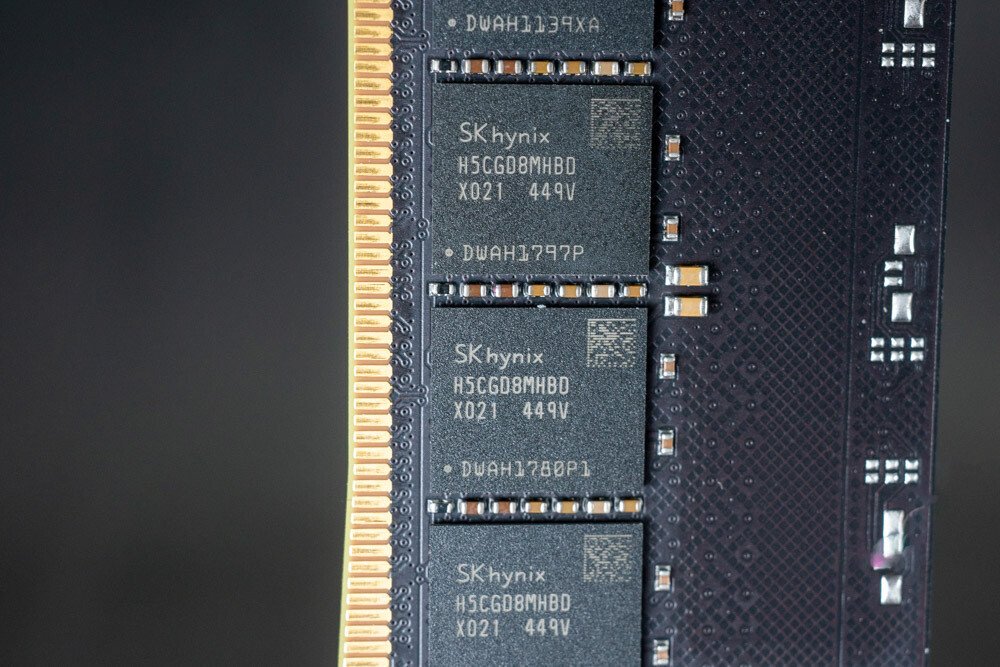
In Huaqiangbei, Shenzhen’s warren of electronics stalls, memory modules stack ceiling-high in shopfronts that measure business in cartons moved per day. This week, the cartons are moving slower. Industry-standard 8GB DDR4 memory modules fell 12.5% in the week through May 26, and 16GB modules dropped 8.82%, according to China Flash Market, a Shenzhen-based research firm that tracks memory pricing across spot and channel markets. The decline widened from the week before, the firm said, as buyers who had stocked up earlier in the year chose to work down inventory rather than place new orders.
The slide ran against a stretch of supply-side news that might otherwise have supported prices. Spot prices for certain high-grade DRAM chips ticked up, helped by two developments, according to the report: wage talks between Samsung Electronics and its union have yet to produce an agreement, and Micron Technology is restarting 1-alpha-nanometer DDR4 production lines to serve specific long-lifecycle industries. Traders read both as signals of tighter supply ahead.
Buyers did not bite. Since the start of the second quarter, customers have kept procurement plans conservative and made clearing existing stock the priority, the report said. With few orders in the pipeline, module makers and distributors cut prices against one another, and the declines accelerated as the week wore on. The result is a market pulling in two directions: scarce chips at the high end of the spot market, and glutted shelves downstream where the older standard actually trades.
Analysts who follow the memory business said the divergence is a demand story wearing supply’s clothing. DDR4 is now a legacy product, displaced by DDR5 in new servers and personal computers. Its remaining customers — industrial equipment makers, networking vendors, operators of aging data centers — buy in modest volumes tied to replacement cycles, not expansion. When those buyers pause, the older standard’s prices fall hard, because everyone in the channel is holding the same inventory and competing for the same few orders.
The buying pause has a history behind it. Through late last year and the first quarter, customers rushed to secure supply during a stretch of rising prices, a habit left over from the industry’s boom-bust cycles. Those orders are now arriving as inventory, and the warehouses that were meant to hedge against scarcity have become the source of this quarter’s oversupply. Procurement managers, according to people familiar with their thinking, now treat DDR4 purchases as discretionary rather than urgent.
The weakness extends beyond DDR4. LPDDR pricing is softening as well. In China, the cost of buying LPDDR chips has drifted lower month by month, and low-priced alternatives have begun to disturb the market, the report said. This week, prices for 32-gigabit and 48-gigabit LPDDR4X and LPDDR5X parts slipped, and shipments came under visible pressure. Phone and device makers, the biggest LPDDR consumers, are themselves managing inventory carefully in a slow-demand season.
The Samsung labor question deserves attention, analysts said. The company and its union have spent months trying to close a wage and bonus deal, and each missed deadline feeds supply anxiety among memory buyers. A strike at Samsung’s chip plants in 2024 showed how quickly disruption at a single fab can move global pricing. But analysts cautioned against over-reading the current situation: talks continue, production has not stopped, and the market has already priced in a good deal of disruption risk.
Micron’s 1-alpha move is narrower than it first appears. The 1-alpha node was Micron’s advanced DRAM process of the early 2020s, and the restart serves customers in industries with long product life cycles — industrial automation, automotive electronics, networking — where equipment stays in service for a decade or more and DDR4 remains the required standard. Keeping such lines running adds modest supply in a niche that would otherwise go underserved, without committing the company to broad capacity for an aging product.
For the memory industry as a whole, the second quarter has become a test of whether the artificial-intelligence demand boom can lift every part of the market. Prices for the newest DRAM products remain supported by the data center buildout, and high-grade parts tied to servers and accelerators are the ones that ticked up this week. But the long tail of the market is behaving as it usually does in a digestion phase: buyers flush with inventory, sellers competing on price, and the weakest standard falling first.
Where prices go from here depends on two variables, analysts said: how quickly inventories clear, and whether Samsung’s labor situation resolves in a way that actually removes supply. Neither is imminent. For now, the memory industry’s newest chapter — artificial intelligence — coexists with its oldest habit, a price war in the parts nobody is buying. The modules stacked in Huaqiangbei will sit a little longer, and the quotes will keep drifting down until someone needs them.