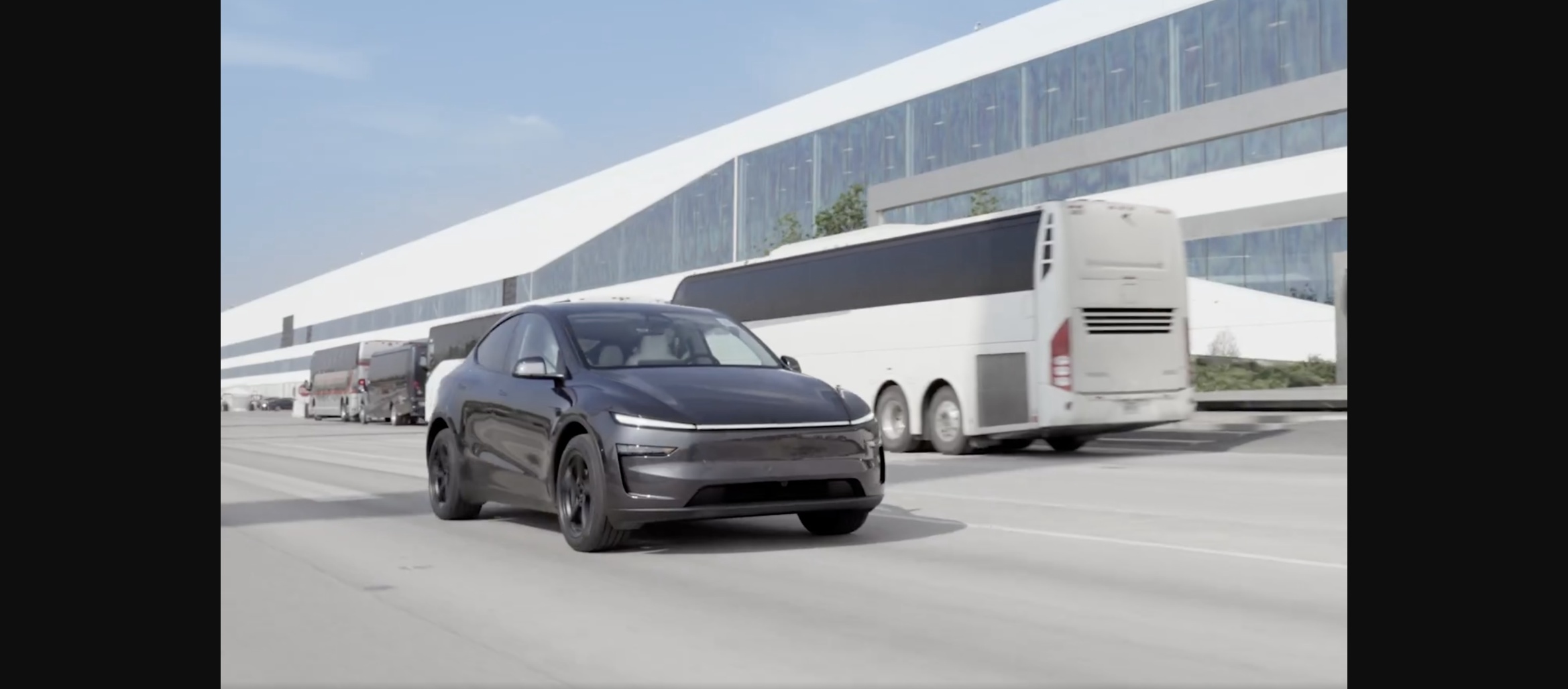
The workers who teach Tesla’s Full Self-Driving system to read the road have a close view of what it can do. Reviewing hours of footage from the eight cameras on every Tesla vehicle, they see the system succeed, and they see it fail. Asked whether they would trust it to drive them, seven of nine former data labelers said no, according to a Reuters investigation published this week.
One was blunter. He said he would not ride in a Tesla robotaxi “if you fucking paid me,” Reuters reported. A former self-driving engineer who reviewed Tesla crash data for years called the company’s safety claims “bullshit” and said, “Don’t trust Elon on this,” a reference to Chief Executive Elon Musk.
The investigation, based on interviews with nine former labelers, a former engineer and 11 traffic-safety researchers, paints a picture of a wide gap between Tesla’s safety marketing and what the people closest to the technology believe. Ten of the 11 researchers who reviewed Tesla’s methodology told Reuters the statistics amounted to misleading marketing rather than serious safety analysis.
The central finding concerns the numbers themselves. Tesla has claimed its vehicles with Full Self-Driving are roughly ten times safer than the average American car, a statistic repeated by executives and by Musk, who displayed a chart at a shareholder meeting claiming “85% less crashes.” Reuters found the comparison was skewed: Tesla counted crashes in its own vehicles that deployed airbags, then compared that figure against federal data that includes all crashes requiring a tow, a far less severe threshold.
When University of Michigan researcher Marco Benedetti performed the comparison correctly, airbag-deployment crashes for Teslas against airbag-deployment crashes for all vehicles, the claimed tenfold advantage fell to roughly threefold. Even that figure is unreliable, researchers said, because Tesla’s fleet averages just 4.1 years old, compared with 12.8 years for the U.S. fleet, and newer cars are safer in general.
“It’s like saying: ‘My jet airplane is faster than your World War II bomber,'” said Phil Koopman, a Carnegie Mellon University professor of traffic safety who reviewed the methodology for Reuters.
The labelers described a system that fails at maneuvers human drivers handle routinely. They reported seeing FSD vehicles hit animals without braking, drive 20 to 30 miles per hour over speed limits, and clock 60 mph in a 25-mph zone after a feature called Mad Max mode was introduced. They described vehicles failing to pull over for emergency vehicles, failing to give motorcycles space, and, in one case they recalled, nearly striking children.
The failures are documented in a corner of Tesla’s operations that the public rarely sees. One team in Palo Alto, known informally as the “trauma team,” had special permission to review footage of near-misses with pedestrians, three former employees said. Tesla tightly controls access to the videos, and labelers see only the clips they are assigned, a structure that means even the people training the system may not see its worst failures.
Reuters also found that Tesla’s “no maps” narrative does not survive contact with its own operations. Before the Cybercab unveiling in 2024 and the Austin robotaxi launch in 2025, staff worked long hours filming the exact routes the service would use, annotating curbs, markings and known hazards. The manual preparation, documented in the investigation, sits awkwardly with Musk’s repeated claim that Tesla’s approach needs none of the detailed mapping that rivals like Waymo rely on.
The timing is delicate for Tesla. The company launched a robotaxi service in Austin last year and has been expanding it, with Musk promising a fully autonomous future that depends on FSD’s reliability. Ahead of the Austin launch, Tesla’s data-labeling operation in Utah doubled from about 150 to 300 workers, according to Reuters, a labor-intensive effort that belies Musk’s claims that Tesla’s approach requires no detailed mapping.
Regulators have noticed. NHTSA has four active investigations into FSD and Autopilot, including one covering dozens of cases in which vehicles using FSD failed to stop for red lights or turned into oncoming traffic, and another examining at least nine FSD-involved incidents, including a fatal crash, where the system failed in low-visibility conditions such as fog and sun glare.
Tesla did not respond to requests for comment on the Reuters findings. Musk has repeatedly said the data show FSD is safer than human drivers, and the company has framed the statistics as a straightforward measure of crashes per mile.
The investigation lands as the robotaxi business moves from promise to product. Every mile of expansion puts the system in front of more passengers, and the gap between Tesla’s claims and its trainers’ doubts has become harder to dismiss. Reuters noted that Tesla’s own engineers who reviewed crash data were among the most skeptical voices inside the company.
For investors, the question is whether the disconnect matters. Tesla’s valuation has long rested on the expectation that autonomous driving will one day be a high-margin business, and the company has staked billions on FSD being safe enough to trust. The people who trained it, asked the simplest question, said they would not bet their lives on it.