The date on the calendar keeps moving, but the pitch has not changed. Inside Apple’s Vision hardware group, the company’s first consumer smart glasses, a device internally code-named N50, were supposed to reach customers in early 2027. According to Bloomberg’s Mark Gurman, that target has now slipped to late 2027, the latest in a series of delays for the project.
The glasses are no side project. People familiar with Apple’s planning describe N50 as outgoing Chief Executive Tim Cook’s top priority before he hands the company to John Ternus on September 1. Ternus, who will succeed Cook as CEO, has run the Vision Products Group for the past two years and is described by people who work with him as the driving force behind the device. Cook’s successor inherits a roadmap in which the glasses sit alongside a rebuilt Siri assistant as the products most likely to shape Apple’s next decade.
The immediate cause of the slip is software, not glass. Apple has promised a revamped Siri for two years and delivered only pieces of it. Gurman, who has tracked the assistant closely, calls it the single most consistent source of delay across Apple’s product roadmap, and the glasses inherit every day of that slippage. The device leans on Apple Intelligence and the new Siri for its core experience, a multimodal assistant that can see through the camera, hear through the microphones and answer through open-ear speakers. Until that software is ready, the hardware has no reason to ship.
There is a sharper twist. Reports through 2026 point to Apple leaning on Alphabet’s Gemini models to power the rebuilt assistant, an arrangement that sits awkwardly with the privacy message Apple plans to make central to the launch. Teams within the Vision hardware group and elsewhere treat privacy as priority No. 1, according to Gurman, who reports that engineering and marketing staff are working to refine not only the product but the company’s privacy message as well.
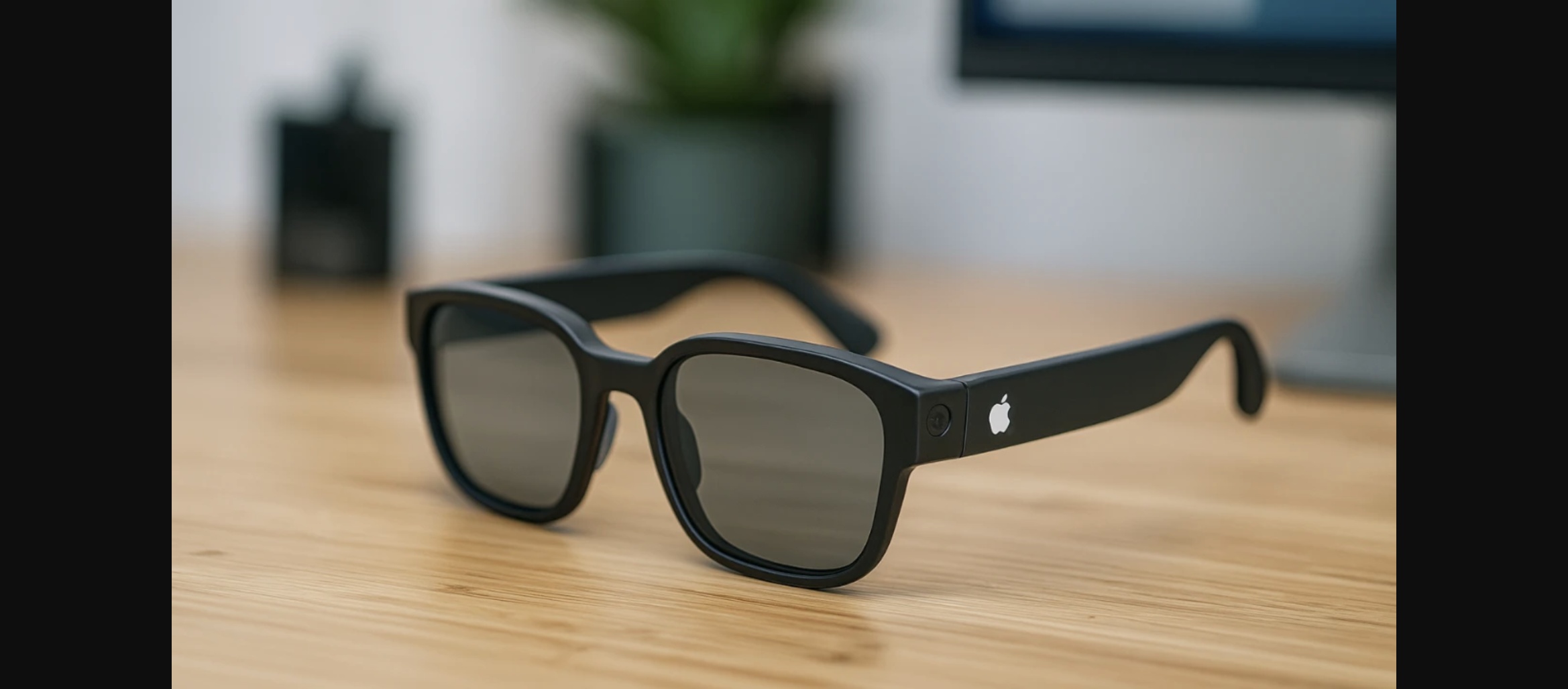
The product itself is deliberately modest. N50 will not carry an in-lens augmented-reality display; that technology is left for a later generation, expected around 2028. Instead, the glasses pair oval-shaped cameras for photos and video with speakers, microphones and deep iPhone integration. Four frame styles are in testing, two rectangular and two oval, in colors that include black, ocean blue and light brown, built from premium acetate. Analysts who have seen early specifications expect a price near $500, positioning the device against Meta’s Ray-Ban line rather than against the $3,499 Vision Pro headset, which Apple shelved in October 2025.
The market case is easy to state and hard to execute. The global eyewear industry is worth roughly $200 billion a year, and Meta, with partner EssilorLuxottica, has built a commercially viable camera glasses business that Apple executives privately acknowledge. Apple’s bet is that its brand, its iPhone integration and Apple Intelligence will drive upgrades from people replacing prescription eyewear, echoing the strategy that turned the Apple Watch into a dominant wearable after its 2015 debut. The strategy is staged the same way: launch a stylish companion product first, then expand into health features and, years later, augmented reality.
Privacy is the wildcard. Smart glasses have become a flashpoint in public spaces, with schools, gyms and hospitals among the venues restricting their use. Gurman argues that smartphones carry more capable cameras, but glasses have a stealth quality that makes them feel like a hidden camera. Meta has tried to blunt the concern by disabling recording when a tamper-evident light is disturbed, a feature Apple is expected to match or exceed. A person close to Apple’s hardware teams said the company considers the glasses a test of whether consumers will trust a camera that is always on their face, and that privacy engineering has absorbed more engineering resources than any single feature.
The delay also reflects a broader truth about the category. Consumer AR hardware has a long history of slipping. Transparent displays, all-day battery life and frames that look ordinary remain difficult to combine at scale, and even camera-only glasses require tight coordination between silicon, sensors, software and supply chain. Apple analyst Ming-Chi Kuo had already pointed to a 2027 supply-chain plan, and the late-2027 window is now the working internal goal, according to people familiar with the matter.
For Cook, the timeline matters personally. The glasses are meant to be the last major product launch of his tenure, the answer to critics who say Apple’s biggest innovations arrived before he took the top job. The delay to late 2027 pushes the launch just past his September handover, meaning Ternus, not Cook, will likely present the device at the June 2027 Worldwide Developers Conference and manage its release. Whether that is an orderly transition or a loss of control over a personal project is a question Apple’s board has discussed.
Analysts are split on the risk. Others note that Meta’s Ray-Ban line keeps improving and that a year of delay hands the market leader more time to widen its lead. Either way, the glasses have become a test of Apple’s ability to ship ambitious hardware on a timeline that its own software can keep. Given that Siri has slipped for two years straight, the late-2027 date may itself be optimistic. People familiar with Apple’s planning say the target is a launch window, not a ship date, leaving room for the glasses to reach buyers even later.
What is certain is that the project carries the weight of a succession. Cook wants the glasses to be his legacy; Ternus will have to deliver them. The date on the calendar will move if it must, but the bet underneath it will not change.