
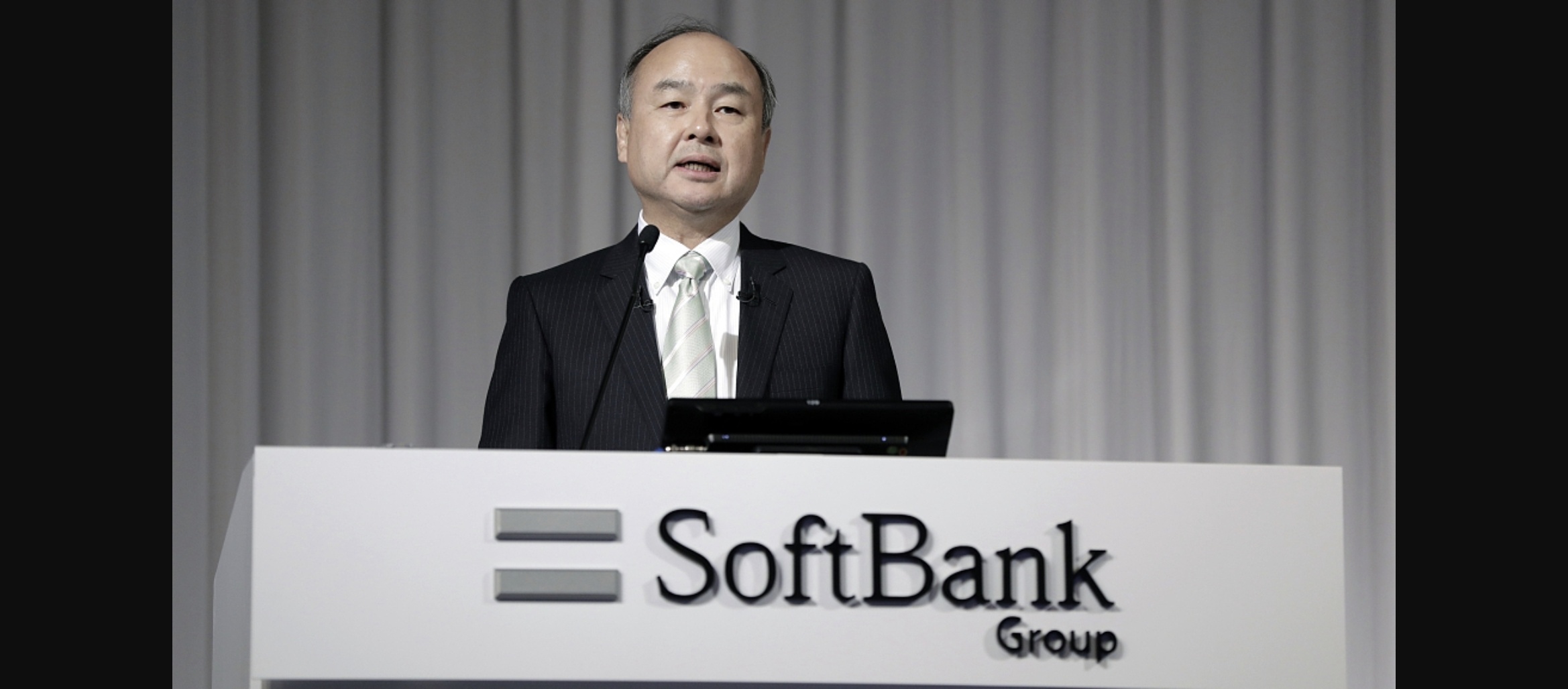
The ticker at the Tokyo Stock Exchange told the story that hundreds of analysts had been expecting. On June 1, SoftBank Group’s market capitalization edged past Toyota Motor’s, making the investment holding company the most valuable listed company in Japan. The shift capped a year in which SoftBank shares have ridden the artificial-intelligence boom, a rally powered less by its telecom or chip businesses than by its outsized stake in OpenAI and its willingness to write increasingly large checks for AI infrastructure.
The immediate catalyst was France. SoftBank announced on May 30 that it would invest up to 75 billion euros, about $87 billion, to build artificial-intelligence data centers in the country, its largest AI infrastructure commitment in Europe. The first phase, an initial 45 billion euros, or about $53 billion, will deliver 3.1 gigawatts of capacity in the Hauts-de-France region by 2031, with sites planned in Dunkirk, Bosquel and Bouchain. The announcement was timed to the Choose France summit hosted by President Emmanuel Macron, and founder Masayoshi Son used a press briefing with Macron to confirm the figure, saying the full investment, when the surrounding system is counted, could approach $750 billion.
Son’s pitch to investors has been consistent for two years: the world is moving toward artificial superintelligence, and SoftBank intends to be the financier and infrastructure builder of that transition. The France commitment fits the template. The data centers will consume enormous amounts of power, and France, as a net exporter of electricity, offers a solution to the energy problem that has constrained AI buildouts elsewhere in Europe. SoftBank will partner with Schneider Electric on a large industrial production cluster at the Port of Dunkirk, where the two companies will manufacture and integrate data center power systems, pairing SoftBank’s robotics and automation with Schneider’s industrial expertise.
The numbers behind the rally are as much about SoftBank’s portfolio as its own operations. The company has invested more than $30 billion in OpenAI and holds roughly an 11 percent stake, and its investment gains in the company totaled $45 billion in the year ended March. SoftBank also holds a majority stake in Arm, the chip designer whose processors are central to the AI buildout, and Son has been recycling profits from earlier bets, including a profitable exit from Nvidia stock, into new AI positions. The combination has turned SoftBank into a concentrated bet on the entire AI supply chain, from chips to models to the data centers that connect them.
Market participants said the move past Toyota was symbolic but meaningful. Toyota has been Japan’s most valuable company for most of the past decade, a measure of the country’s industrial strength in automobiles. Its displacement by a holding company whose value rests largely on stakes in American AI companies reflects a shift in what investors think Japan’s future looks like: less about manufacturing muscle and more about financial exposure to the global technology cycle. Analysts note that SoftBank’s market capitalization now moves with AI sentiment rather than with Japan’s domestic economy, for better and for worse.
The risks are equally visible. SoftBank’s valuation depends on a handful of concentrated positions, and its history includes spectacular drawdowns, most notably the collapse of its Vision Fund’s bets on companies like WeWork. The France project will take years to build, and the returns depend on demand for AI compute remaining strong through the decade. Son has acknowledged the uncertainty, telling reporters that the scale of the opportunity justifies the scale of the risk. “This will be the largest investment in Europe in infrastructure related to artificial intelligence,” he told a French newspaper before the summit, framing the decision in terms of energy security and European competitiveness.
For Europe, the investment is a validation. The region has worried that AI infrastructure would concentrate in the United States and China, leaving it to import compute at a strategic disadvantage. France’s energy advantage, its nuclear fleet and export capacity, has made it the most credible European location for hyperscale data centers, and SoftBank’s commitment, if delivered, would make the country a hub for the industry. Roland Lescure, France’s minister for industry and energy, said the investment reflected the country’s ambition to lead across the AI value chain, and SoftBank said the project would create thousands of high-skilled jobs across data center development, engineering and advanced manufacturing.
The question for SoftBank shareholders is whether the rally has further to run. The company’s shares have more than doubled over the past year, and the gap between its market value and the sum of its stakes has narrowed as investors increasingly treat Son’s vision as the company’s primary asset. Bulls argue that the OpenAI stake alone is worth more than the market credits, and that the data center buildout gives SoftBank a durable revenue stream beyond asset appreciation. Bears point out that the company’s debt remains substantial and that the AI cycle, like every technology cycle before it, will eventually cool.
What is clear is that June 1 marked a changing of the guard in Japanese market history. The country’s most valuable listed company is no longer a carmaker; it is a holding company betting on machines that think. Whether that bet pays off will be decided over the next decade, but for now the market has voted, and SoftBank’s ticker sits at the top of the board.



