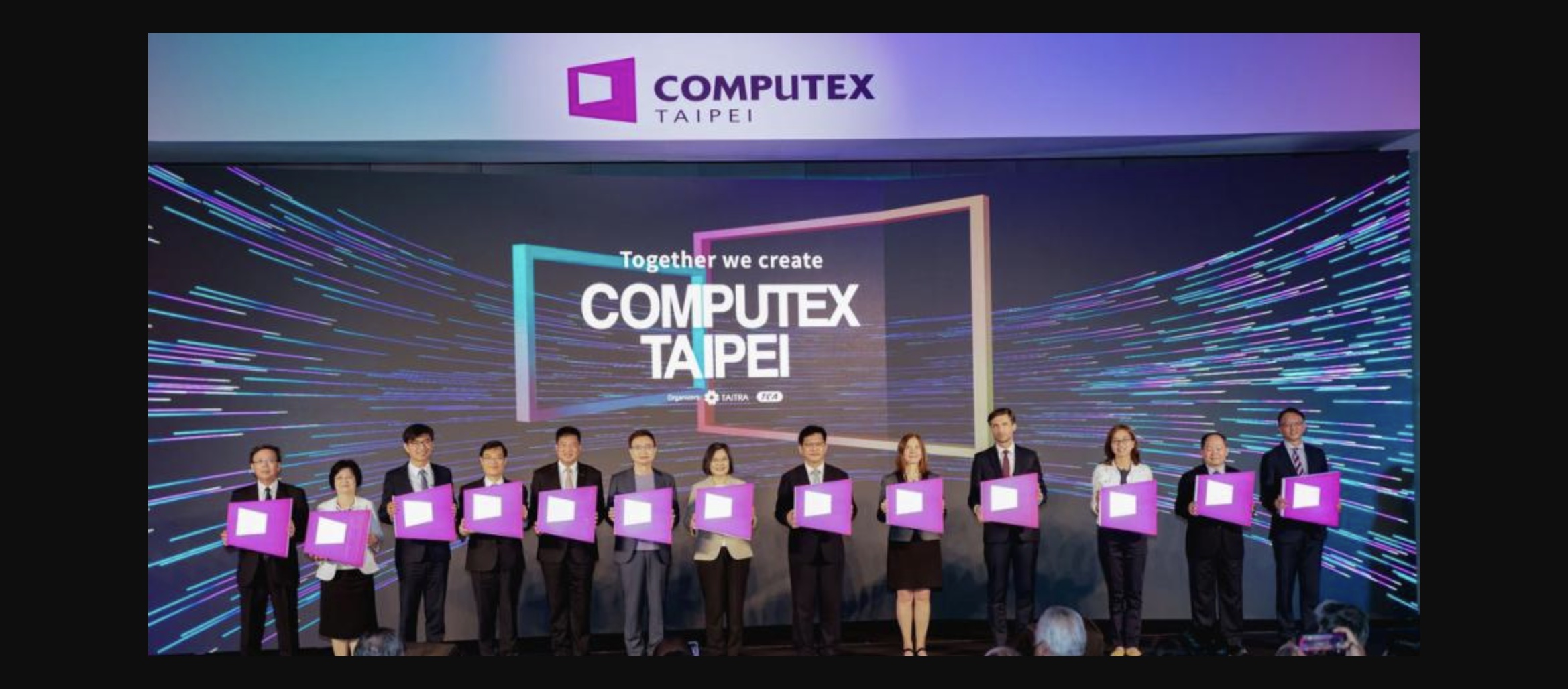
Cristiano Amon opened Computex on June 1 with a declaration that set the tone for the show: 2026 is the year of the agents. The Qualcomm chief executive used the keynote, delivered under the theme “AI Together” at the Taipei Nangang Exhibition Center, to argue that the smartphone era is giving way to something else, a computing model in which AI agents, not apps, sit at the center of the digital experience across roughly 10 billion connected devices. “The digital ecosystem is no longer at the phone itself,” he said.
Amon’s argument is architectural. In the current model, a phone runs an operating system that orchestrates applications, and the user moves between them. In the agent model, AI agents run continuously as background processes across phones, PCs, cars and wearables at the same time, maintaining context and acting on the user’s behalf. The device becomes a hardware endpoint that connects the user to the agent, rather than a self-contained computing platform. That shift, Amon argued, changes where and how computing happens.
The economics he presented were designed to make the case for Qualcomm’s hardware. Amon said AI agents running on a hybrid of on-device and cloud inference can execute agentic tasks with 30 percent fewer tokens and at four times lower cost than pure cloud compute. With token demand projected to exceed four quintillion per year by 2030, he argued, per-token cost becomes a durable competitive position. The hardware requirements he sketched map directly onto Qualcomm’s roadmap: conversational agents need a neural processor in the 10-to-20-TOPS range, while multi-step tool agents, which handle 100,000 to 500,000 tokens per task, need more than 40 TOPS, a level Qualcomm positions its Snapdragon X2 Elite to reach.
The keynote was the first of a series that turned Computex into a contest of AI visions. NVIDIA’s Jensen Huang had already delivered a wide-ranging address, declaring the Vera Rubin platform in full production and unveiling the RTX Spark chip for Windows PCs. Marvell’s Matt Murphy rounded out the lineup. The sequencing was deliberate: Huang set the terms, Amon answered, and Intel’s Lip-Bu Tan, arriving last, had the most to prove.
Tan’s case was for integration. Intel’s story at Computex ran across chips, manufacturing, systems and partnerships, the full-stack argument that distinguishes it from fabless rivals. The most striking detail of his presentation, reported by Readhub from the show floor, was a demand signal of a kind CEOs rarely share: over the past four weeks, he said, multiple company chief executives had called him directly to ask for more CPU supply. The anecdote was meant to show that the PC market is roaring back, and that the AI boom is generating orders for processors, not just accelerators.
The contrast between the two men’s messages was the subtext of the show. Amon’s vision is distributed: intelligence lives on the device, close to the user, in Qualcomm’s power-efficient silicon. Tan’s is systemic: Intel builds the foundries, the processors and the platforms that run the AI economy, and it wants to be paid across the stack. Both are responding to the same shift, the rise of agents that need compute everywhere, but they are betting on different futures, one on edge devices, the other on the integrated backbone.
The two companies face different pressures. Qualcomm’s challenge is proving that on-device agents can deliver the experience Amon promised, in hardware that fits in phones and laptops and lasts a day on battery. Intel’s challenge is credibility: it has talked about foundry leadership and AI processors for years while losing share in its core markets, and the direct-call anecdote showed that its customers still want its products, a point Intel needs Wall Street to believe.
Computex itself has changed around these arguments. The show was historically a consumer-hardware bazaar, where the stars were laptops, motherboards and gaming rigs. This year’s edition was dominated by enterprise infrastructure and the components of the AI factory: keynotes were semiconductor-first, the exhibits were racks and accelerators, and the conversations were about tokens, training clusters and power. The client devices were still there, but they were framed as endpoints for agents.
The commercial stakes are enormous. If Amon is right that agents run mostly on devices, the economics of AI shift toward Qualcomm and the Arm ecosystem, and away from the cloud. If Tan is right that the heavy lifting stays centralized, Intel’s foundries and server chips remain essential. The two can both be right, agents split between edge and cloud, which is what the hybrid-inference pitch implies, but the industry will not know for a few years which share of the workload each side captures.
For the executives who flew to Taipei, the takeaway was simpler. The show confirmed that the AI economy is no longer just a data-center story. It is a compute-everywhere story, and the companies that define where agents run will define the next decade of the semiconductor industry. Qualcomm and Intel each made their case; the market will render the verdict.