Jamie Dimon will personally pitch SpaceX’s initial public offering to the bank’s wealthiest clients this month, a roadshow built around the lender’s branch network rather than the usual circuit of hotel ballrooms and analyst calls. For a chief executive who rarely sells a single stock to the rich, the decision signals how much is riding on what promises to be the largest technology IPO on record.
More than 2,500 wealthy clients are expected to take part, with the presentation simulcast to roughly 90 JPMorgan branches across 26 states, according to people familiar with the matter. The lineup includes Mary Callahan Erdoes, who runs the bank’s global wealth management business, alongside SpaceX President Gwynne Shotwell and Chief Financial Officer Brett Johnson. Dimon and Erdoes are expected to frame the offering in personal terms for clients, people close to the bank said, emphasizing access to a company that has spent two decades privately held.
The event marks a rare moment in which the largest U.S. bank treats a single equity offering as a firmwide priority. Wealth management clients have been asking for SpaceX shares for years, and the allocation process has become a subject of intense competition among brokerages, according to bankers involved in similar offerings. JPMorgan declined to comment; SpaceX did not respond to a request for comment.
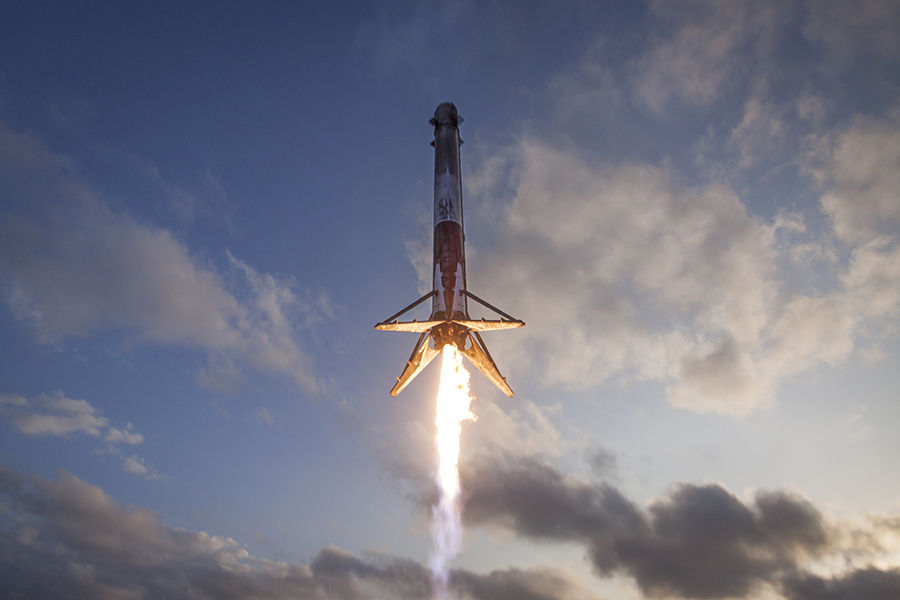
Alongside the private roadshow, SpaceX is courting retail investors with a 17-minute video that walks through the company’s three business lines: rocket launch, the Starlink satellite network and a newer AI computing arm that sells data-center capacity. The IPO is priced at $135 a share, which would value SpaceX at about $1.77 trillion, according to the terms circulated to prospective investors.
The pricing puts SpaceX far above any technology company that has gone public before. For comparison, Alibaba raised $25 billion in 2014, the largest IPO on record, at a valuation of roughly $230 billion. SpaceX’s $1.77 trillion valuation would be more than seven times that figure, and the company would immediately rank among the five most valuable public companies in the world, ahead of every automaker and most of the tech giants.
The CFO, Brett Johnson, has spent recent weeks explaining the investment case to funds and private clients, people familiar with the discussions said. His central pitch: the three business lines together address a quantifiable market opportunity of about $28.5 trillion, a figure the company arrived at by combining launch demand, satellite broadband subscriptions and the fast-growing market for AI data-center infrastructure.
The timing is no accident. SpaceX is seeking to list as early as June 12, according to people familiar with the schedule, a move that would let it capture the current market appetite for AI-related assets while interest rates remain elevated. A successful listing would reset the terms of every future space and AI offering, analysts said, giving investors a liquid way to own infrastructure that was previously the preserve of private funds.
The roadshow also highlights the changing structure of IPO distribution. By simulcasting the pitch across regional branches, JPMorgan is betting that the wealthiest individual investors, who have poured money into private shares of SpaceX through secondary-market funds, will convert those holdings into public stock. The bank’s branch network, long seen as a cost center, becomes a distribution channel for one of the year’s defining financial events.
Questions remain. SpaceX has said it expects to use part of the proceeds for Starship development and Starlink expansion, but the company has not disclosed a profit figure for the AI compute unit, which is still building out data centers. Some investors have privately questioned whether a $28.5 trillion addressable market estimate can support a $1.77 trillion valuation, people familiar with the conversations said.
The roadshow is also a test of JPMorgan’s new playbook for mega-IPOs. Banks have spent the past two years competing for the right to take the era’s defining companies public, and SpaceX is the prize: the fee pool alone is expected to be one of the largest in history, JPMorgan’s decision to put its most senior executives in front of clients is, in part, a message to rival banks that this deal belongs to the house that Dimon built.
The Starlink business gives the offering something most IPO candidates lack: an operating story told in real numbers. The satellite network has grown into a subscription business with millions of paying customers, generating recurring revenue that did not exist when the company raised its early rounds. Analysts who follow the sector say that recurring stream is what lets the company describe itself as infrastructure rather than a capital-intensive launch venture, and it is the part of the pitch that has moved skeptical funds, according to people who attended the early meetings.
Not everyone is sold. Some investors have said privately that the $135 price leaves little room for error, and that a company valued at $1.77 trillion must grow into that number quickly, whatever the addressable market. Others note that the retail video, is aimed at a different audience than the institutional roadshow, and that the two pitches will be compared in hindsight.
Still, the offering has already changed how global capital thinks about space and AI infrastructure. For decades, launch companies were judged by the same metrics as airlines, with thin margins and cyclical demand. SpaceX’s pitch reframes the business as recurring infrastructure: satellites that sell subscriptions, rockets that carry other people’s payloads and data centers that rent computing power. Whether the market agrees will be decided in the first weeks of trading. If the deal clears, it will stand as the largest single transfer of private equity value to public investors in history, and every rival launch company, from Rocket Lab to Blue Origin’s orbital ambitions, will be forced to explain why its stock should trade at a discount to it.