
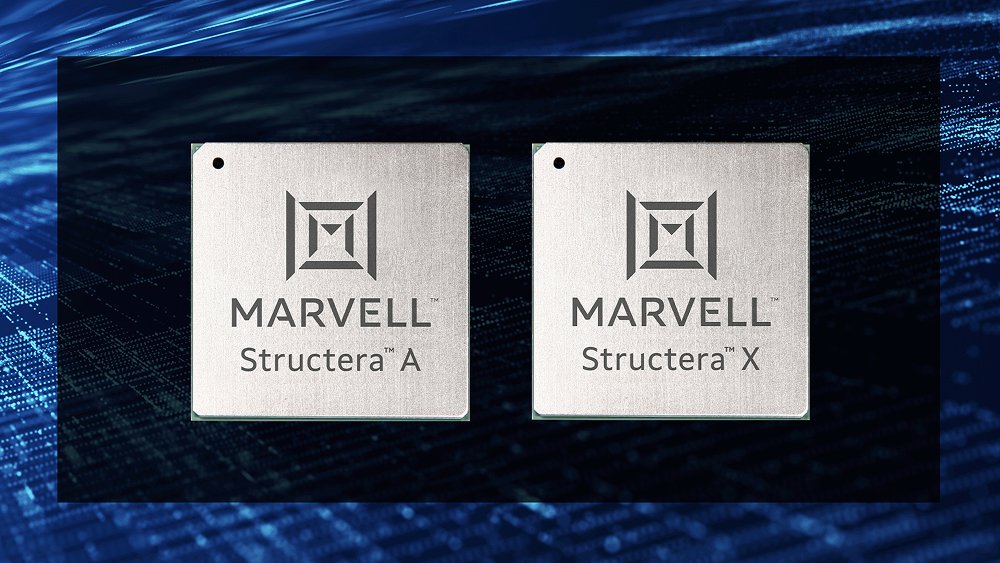
S&P Global said Marvell Technology will join the S&P 500 index on June 22, replacing Pool Corp and Campbell’s, and the announcement turned a stock that had already been one of the market’s best performers into a seller’s market for a few hours. Marvell shares rose nearly 9 percent in premarket trading on Monday.
The move was expected on Wall Street, but the timing carried its own message. Marvell enters the benchmark at a market value of about $230 billion, after a rally of roughly 210 percent this year that has made it one of the biggest winners of the AI trade. Index inclusion does not change the business, but it changes the buyer base: the funds that track the S&P 500 now have to own the stock, and the forced buying is a tailwind no amount of earnings can match.
The rally has a name attached to it. Jensen Huang, Nvidia’s chief executive, called Marvell “the next trillion-dollar company” during his Computex keynote last month, and the remark has been repeated on trading desks ever since. Coming from the man whose company supplies Marvell’s biggest customers, the line carries weight, even if the valuation math required to reach a trillion dollars from $230 billion is aggressive by any measure.
Marvell’s story is one of repositioning. The company spent two decades selling chips into storage, networking and wireless markets, a solid but unglamorous business that competed on price in mature segments. The AI cycle changed the picture: data center operators need custom silicon and high-speed networking parts to build the clusters that train large models, and Marvell turned out to be one of the few companies able to design them at scale.
The relationship with Nvidia runs through the middle of that story. Marvell supplies networking and interconnect components that sit inside the systems Nvidia sells, and it designs custom chips for some of the largest hyperscalers. That puts the company in the odd position of being both supplier and potential rival, and the market has priced the upside of the relationship while mostly ignoring the tension.
The custom-chip business is the growth engine. Cloud providers that want to run AI workloads without paying Nvidia’s prices have turned to bespoke silicon, and Marvell has won design contracts with several of the largest, according to people familiar with the company’s pipeline. The work is slower to scale than selling standard parts, but the margins are higher and the contracts are longer, which is exactly the profile index investors like to see.
There is a precedent for what comes next. When a stock is added to the S&P 500, index funds typically buy over several sessions around the effective date, and the buying can add a measurable cushion to the shares. Marvell’s move into the benchmark also widens the investor base: funds that cannot hold stocks outside the index suddenly become eligible, and the liquidity profile of the stock improves with every fund that adds it.
The risks are equally visible. Marvell’s customer list is short, and a handful of AI buyers account for a large share of its revenue; if any of them cuts orders, the growth story compresses quickly. The stock’s valuation has run far ahead of earnings, and the 210 percent rally has priced in the custom-chip pipeline as if every contract will land on schedule. The selloff that hit AI stocks in the days before the announcement showed how fast that pricing can unwind.
The company’s executives have been careful to describe the opportunity in numbers rather than adjectives. Management has said the addressable market for custom silicon and networking in AI data centers is large and growing, and that Marvell’s design wins put it in position to capture a share of it. The S&P 500 inclusion gives the company something it did not have a year ago: a seat in the benchmark that the whole market is forced to consider.
For investors, the index announcement settles one question and opens another. The question it settles is whether Marvell has graduated from a cyclical chip supplier to a core holding; the question it opens is whether the price already reflects everything that graduation implies. Huang’s trillion-dollar remark was a keynote line, not a forecast, and the difference between the two is what the next year of trading will measure.
What is not in doubt is the direction of the business. The companies building AI infrastructure are spending on networking and custom silicon at a pace that has surprised even the optimists, and Marvell sits at the intersection of both. The S&P 500 listing is a recognition of that position, and for the funds that track the index, the trade is simple: whether the stock deserves its price is a question for later, but owning it is now mandatory.



