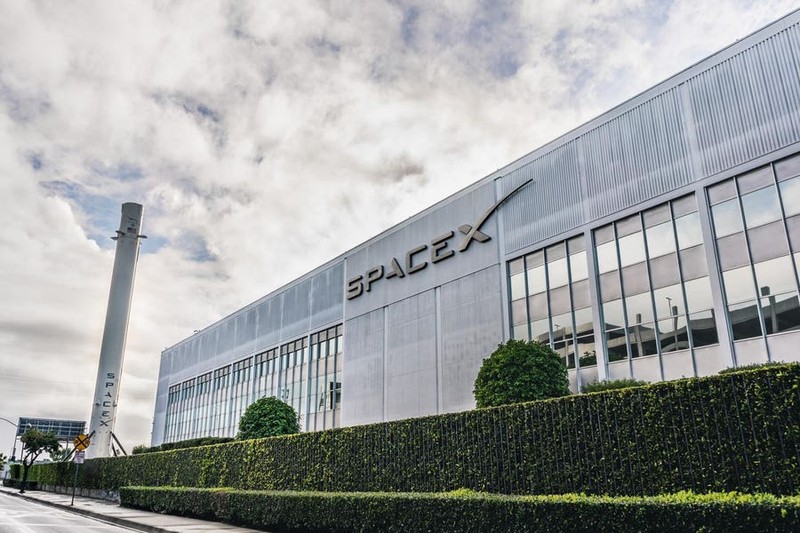
On the morning of June 12, as SpaceX shares opened 29% above their offer price on Nasdaq, an investor who had wired money into a SpaceX special purpose vehicle in 2021 could not say how many shares he owned, what he had paid per share or whether he would receive any shares at all. His sponsor had stopped answering his messages roughly a year earlier, according to an investigation by TechCrunch.
He is not alone. The largest IPO in history, which raised $75 billion and briefly valued SpaceX at about $2.28 trillion, has exposed a shadow market that grew alongside the company’s private stock. Thousands of retail investors bought “pre-IPO exposure” to SpaceX through special purpose vehicles, pooled funds that aggregate small investors’ money to buy shares in private companies. For many of them, the public listing was supposed to be the payoff. For a significant group, it has become a lesson in what they do not know about what they own.
The problems are structural. SPVs that sell access to private companies often stack on top of one another: a retail fund buys into a feeder vehicle, which buys into a master vehicle, which holds the actual SpaceX shares. Justin Ernest, founder of Sabertooth Capital, told TechCrunch that structures around SpaceX run “four or five layers deep.” Each layer adds its own delay to the distribution chain. The first-layer vehicle has thirty days after the IPO to distribute stock to its investors. Each subsequent layer adds another thirty days. An investor at the bottom of a stacked vehicle may wait eight or nine months after the listing to receive shares, and for the entire period, he cannot sell, cannot hedge and does not know the size of the position he is waiting for.
The economics compound the delays. Each layer in a stacked SPV typically extracts its own management fee, often 2%, and carried interest, often 20%. A hypothetical investor who put $2 million into a vehicle that grew to $10 million by the IPO could see nearly $5 million consumed by middleman fees before tax, according to the TechCrunch analysis. Some vehicles took the problem further: regulatory filings and investor communications reviewed by reporters show that some fund managers liquidated their underlying SpaceX equity before public trading even began, capping returns while their investors watched the stock climb.
The IPO itself made the opacity worse. Demand for the offering was so strong that retail allocations were cut to the low 20% range, and the shares that did reach retail investors through vehicles were subject to the vehicles’ own rules rather than the company’s. SpaceX’s lock-up agreement, which freed up to 911.5 million insider and early investor shares on August 6, was a legal event; delivery is a logistical one. Even after the lock-up expired, most of those shares had not reached anyone in a position to sell them, and shares released in August may not be deliverable until the second quarter of 2027 because of a separate Securities and Exchange Commission rule requiring the company to have been a reporting company for ninety days.
The consequences have been visible in the stock. SPCX climbed to an intraday high of $225.64 on June 16, then fell through its $135 offer price in July and lost roughly half its value from its peak by late July. Investors at the bottom of stacked vehicles watched the decline without the ability to sell, without the ability to hedge and without knowing the size of the position they were watching. Some may receive no shares at all: nearly a dozen SPV managers and secondary market investors confirmed to reporters that lower-tier backers could discover their holdings are smaller than expected, eroded by fees or nonexistent.
The structure that produced the problem is older than SpaceX itself. Special purpose vehicles have been used for decades to give small investors access to private deals, and the SEC has wrestled with how to count their holdings since a 1965 rule defined how many investors a vehicle represents. The agency’s staff flagged the specific pattern in 2012: vehicles created to pool funds and buy shares of companies that had not yet gone public. The SpaceX episode is the first time the problem has surfaced at the scale of the largest IPO in history, with hundreds of thousands of retail dollars wrapped in chains of vehicles that no single regulator oversees.
The market is beginning to respond. Anthropic and Anduril have banned multi-layer SPVs, and regulators have begun asking questions about how vehicles that hold shares for hundreds of investors each are counted for disclosure purposes. The revelation of the structure’s failures is prompting closer scrutiny of SPV disclosures as investors and regulators alike reckon with the growth of private market access products.
The IPO’s celebration obscured the structure underneath it. The secondary market’s frenzy, the $2.28 trillion valuation and the record volume told one story. The primary market’s mechanics told another: the largest public listing in history sits on a layer of private vehicles whose investors are discovering, months later, that they cannot be sure what they own. For the investors waiting at the bottom of the stack, the rocket has already landed, but their shares have not arrived.