
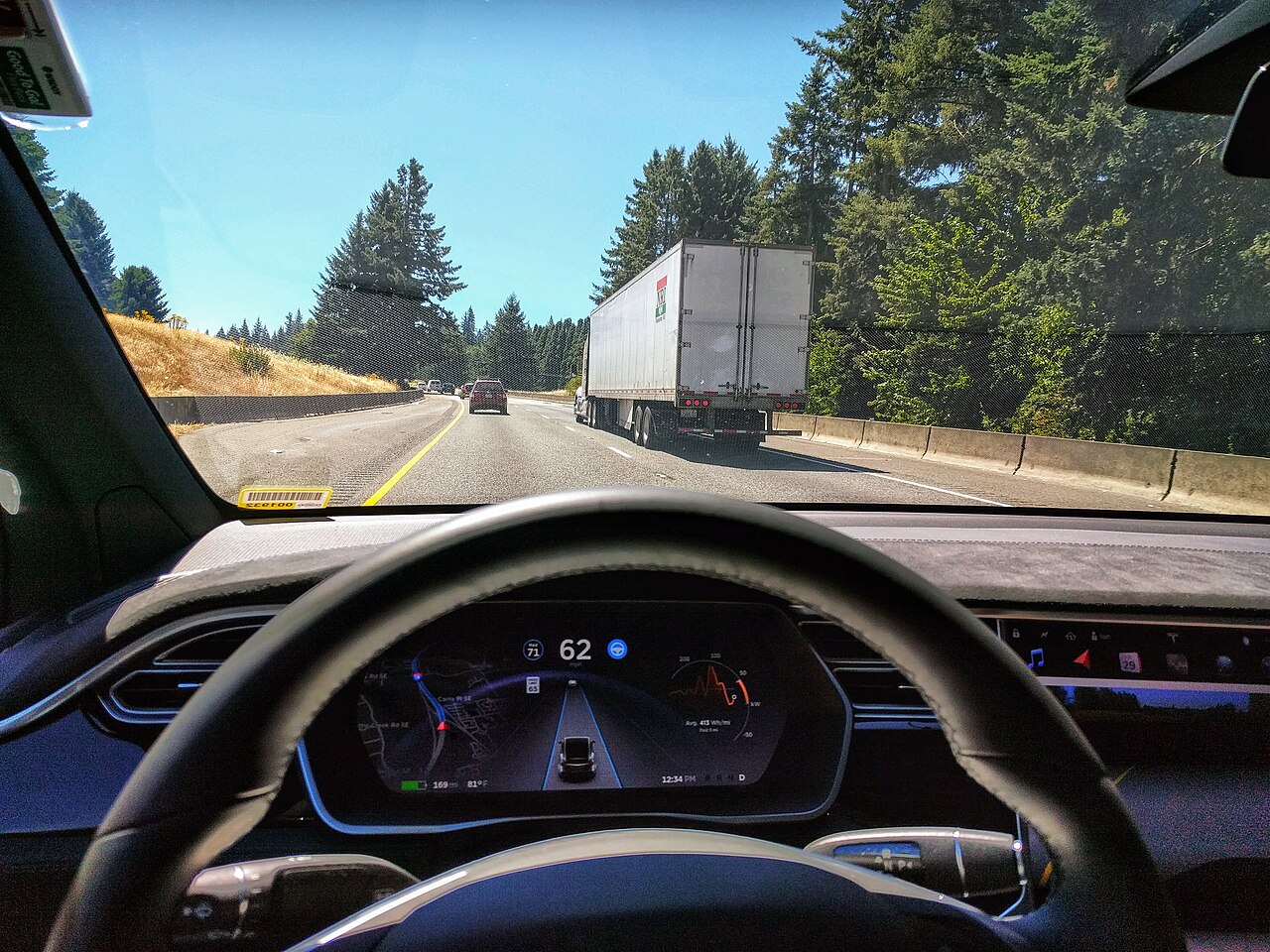
On a weekday morning in Austin, the wait for a Tesla robotaxi can stretch past 20 minutes, and the ride, when it arrives, does not always make it to the destination without a pause. A Bloomberg review of the service’s first year on the road paints a picture that is a long way from the one Elon Musk described when the service launched.
The numbers are the hard part. Across Texas, Tesla operates about 59 robotaxi vehicles in three cities — a fleet smaller than some local car-rental offices. Wait times are long, and vehicles stop mid-trip with a frequency that riders describe as a normal part of the experience. The service’s collision rate is about four times that of human drivers, according to data compiled for the review.
Mr. Musk has called autonomous driving the company’s core value proposition and has promised repeatedly that a fleet of millions would be operating within a year or two. The gap between the promise and the deployment is now measurable, and the review’s findings have renewed questions about how Tesla’s approach — cameras and neural networks, without the lidar that rivals use — will scale.
Tesla has made progress on the regulatory front. Denmark and Belgium have approved the sale of its Full Self-Driving software, adding to a list of European markets where the feature is available. But approval to sell software is not the same as permission to run a commercial robotaxi service, and the European approvals have not translated into deployments.
The collision rate is the most serious number. A rate four times higher than human drivers is, in absolute terms, still low — human drivers are poor, and the robotaxis have not been involved in fatal crashes — but it is far from the safety case Tesla has argued for years. The company’s central claim has been that autonomous systems will eventually be safer than people; the first year of data shows the gap has not been closed.
The operational problems are more mundane. Riders report long waits, vehicles that stall mid-route and demand manual intervention, and coverage areas that are much smaller than advertised. In Austin, where the service has been running longest, riders said the robotaxis work best in the dense downtown core and struggle in the sprawl that surrounds it.
The gap between promise and deployment has a structural explanation. Tesla’s approach relies on training its neural networks with data from consumer vehicles, a strategy that generates enormous data volume but depends on the software handling rare events correctly. Rival services use lidar and detailed mapping, which cost more per vehicle but behave predictably in the areas where they operate. Tesla’s bet is that scale will win; the first year suggests the edge cases are harder than expected. The vehicles that stall mid-trip are, by the company’s own framing, evidence of the software learning, a comfort for investors, but not for riders waiting at a curb.
The economics are unclear. Tesla has not disclosed the cost per ride or the utilization of its fleet, and analysts said the 59-vehicle operation, at roughly the size of a pilot, cannot be generating meaningful revenue. The value of the robotaxi program, at this stage, is in the data it generates and the software it trains — not in the fares it collects.
Competitors are ahead on deployment. Waymo operates thousands of vehicles across several American cities and has logged millions of paid rides, and its safety record has drawn the approval of regulators. The comparison matters because Tesla’s pitch to investors has always been that its approach — cheaper sensors, an existing car fleet, software trained on consumer vehicles — would let it leapfrog rivals that move slowly.
The leapfrog has not happened yet. Tesla’s robotaxi fleet is a fraction of Waymo’s, its service area is smaller, and its vehicles require more human oversight. The advantages Tesla claims — scale, cost, data — remain theoretical, while its rivals’ fleets compound in the real world.
Mr. Musk’s own framing sets a high bar. He has said the ultimate test of autonomous driving is falling asleep in the car and waking up at the destination, and he has described the robotaxi business as the future of the company’s valuation. By that standard, the first year is a long way short.
Tesla’s defenders note that robotaxi is a young product and that the company’s software improves with every mile. They point to the European approvals as evidence that regulators are coming around, and to the company’s ability to iterate faster than competitors. The question, they say, is not whether the first year matched the vision, but whether the trajectory is right.
The stock market has already made its judgment. Tesla shares have lagged the broader AI rally, and the robotaxi program’s slow start is a reason investors cite. The company’s next robotaxi event, expected in the coming months, will be the next test: if Tesla can show a bigger fleet and better numbers, the story regains momentum; if the review’s findings hold, the gap between promise and deployment becomes harder to explain.



