Patrick McBride spent the week watching thermometers the way other underwriters watch balance sheets. McBride, who runs international building-construction insurance at Zurich, said extreme weather has become the leading cause of losses in his data-center book — a third of all claims — and this week’s record temperatures are testing that exposure in real time.
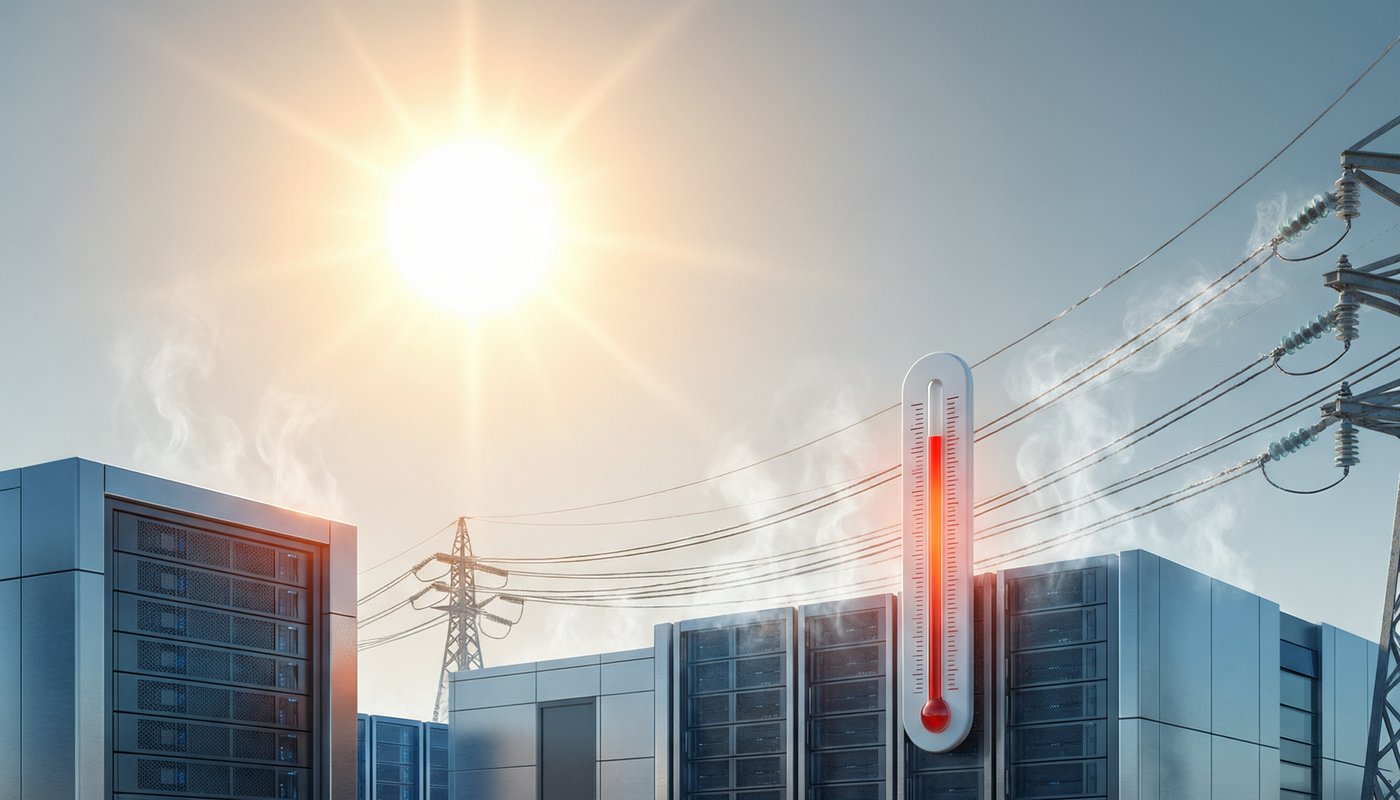
Across Europe, operators of AI data centers are scrambling to keep powerful chips cool as a heat wave pushes temperatures to records. Chillers are running at capacity, cooling towers are straining, and facility managers are juggling workloads to avoid the thermal shutdowns that can take a data hall offline in minutes.
The extra electricity demand from air conditioning is the deeper worry. Utilities have warned that cooling loads on top of data-center consumption could push grids to the edge of overload, raising the risk of blackouts that would take out not just homes and offices but the infrastructure that runs on the same circuits.
The problem is not confined to Europe. McBride said the pattern of extreme weather losses has built up over the past three years as data-center construction accelerated and climate records toppled in quick succession. Heat, flooding and wind have all moved from tail risk to routine underwriting questions for the industry.
The insurance math is blunt. When a data center shuts down, the costs cascade: lost service, damaged hardware, contractual penalties, and reputational damage that lingers with clients long after power is restored. Insurers have responded by tightening terms and raising prices for facilities in high-risk zones.
Design changes are coming, but slowly. Liquid cooling, once reserved for the densest high-performance computing installations, is moving into mainstream AI facilities as operators try to cut the energy needed to move heat out of buildings. Some builders are raising the ambient temperature tolerances of their designs rather than paying for ever-larger cooling plants.
Software is part of the answer too. Operators are using AI-driven load shifting to move compute to cooler hours or cooler regions, and some are negotiating with utilities to shed load during grid emergencies in exchange for lower rates. The tools work, engineers say, but they require the kind of coordination that is still rare across the industry.
Location is becoming a risk decision of its own. McBride noted that many data centers are moving to suburban and rural areas where land is cheaper and tax incentives are generous. The trade-off: those regions often have thin climate records, so builders and insurers know little about the flood plains, wind exposure and heat norms they are underwriting.
Rural siting also concentrates risk in networks that were built for smaller loads. Transmission lines sized for a farming community are now expected to feed a facility drawing as much power as a mid-sized city, and utilities are scrambling to upgrade. In some regions, connection queues stretch for years.
The stakes are rising because the machines inside are changing. AI chips run hotter and draw more power than the servers of a decade ago, and the economics of a modern data center assume near-continuous operation. A facility that loses cooling for an afternoon can suffer damage that takes weeks to repair.
For the broader economy, the issue is interdependence. Factories, nuclear plants and data centers all sit on the same grids, and this week’s heat has shown how a weather event can stress all of them at once. Regulators in several countries have begun asking utilities to model data-center demand against climate scenarios, a review that barely existed two years ago.
Industry executives say the heat wave is not a one-off. Climate models point to more frequent extremes, and the buildout of AI capacity is projected to continue for years. The combination means cooling, grid capacity and climate data will shape where the next generation of data centers gets built — and what it costs to insure them.
Europe’s experience this week offers a preview. In France, grid operators have for years reduced output at nuclear plants that rely on river water for cooling when temperatures climb, and this week was no exception. Data-center operators say the same rivers that cool reactors also supply the water many facilities need, creating a competition for a scarce resource that has no easy answer.
The equipment vendors are the quiet winners. Companies that make chillers, cooling towers and liquid-cooling hardware have reported order backlogs stretching well into next year, and analysts say the heat wave will accelerate purchases that operators had planned to defer. Cooling, long the dullest line item in a data-center budget, has become a board-level topic.
Some operators are betting on geography. Facilities are being proposed in the Nordics, in the mountains of the Alps, and even in subsea locations where cold water can be used directly. Each option trades one risk for another: distance from users, undersea cable reliability, or the politics of building in a new region.
For McBride, the near-term question is simpler: whether the current heat wave produces the kind of cascading failure that would redefine the risk. “We have priced the probability,” he said. “The market is waiting to see the actual losses.”