The announcement landed on a Thursday morning from Scottsdale, Arizona, and it was the largest deal ON Semiconductor had ever done. The chipmaker, known to investors as ON Semi, agreed to acquire Synaptics, a California company whose chips sit in the touchscreens and displays of laptops, phones and cars, in an all-stock transaction valued at about $7 billion. Synaptics shareholders will receive 1.350 ON Semi shares for each share they hold, a premium of roughly 19 percent to the companies’ recent trading levels, and will own about 12 percent of the combined company once the deal closes.
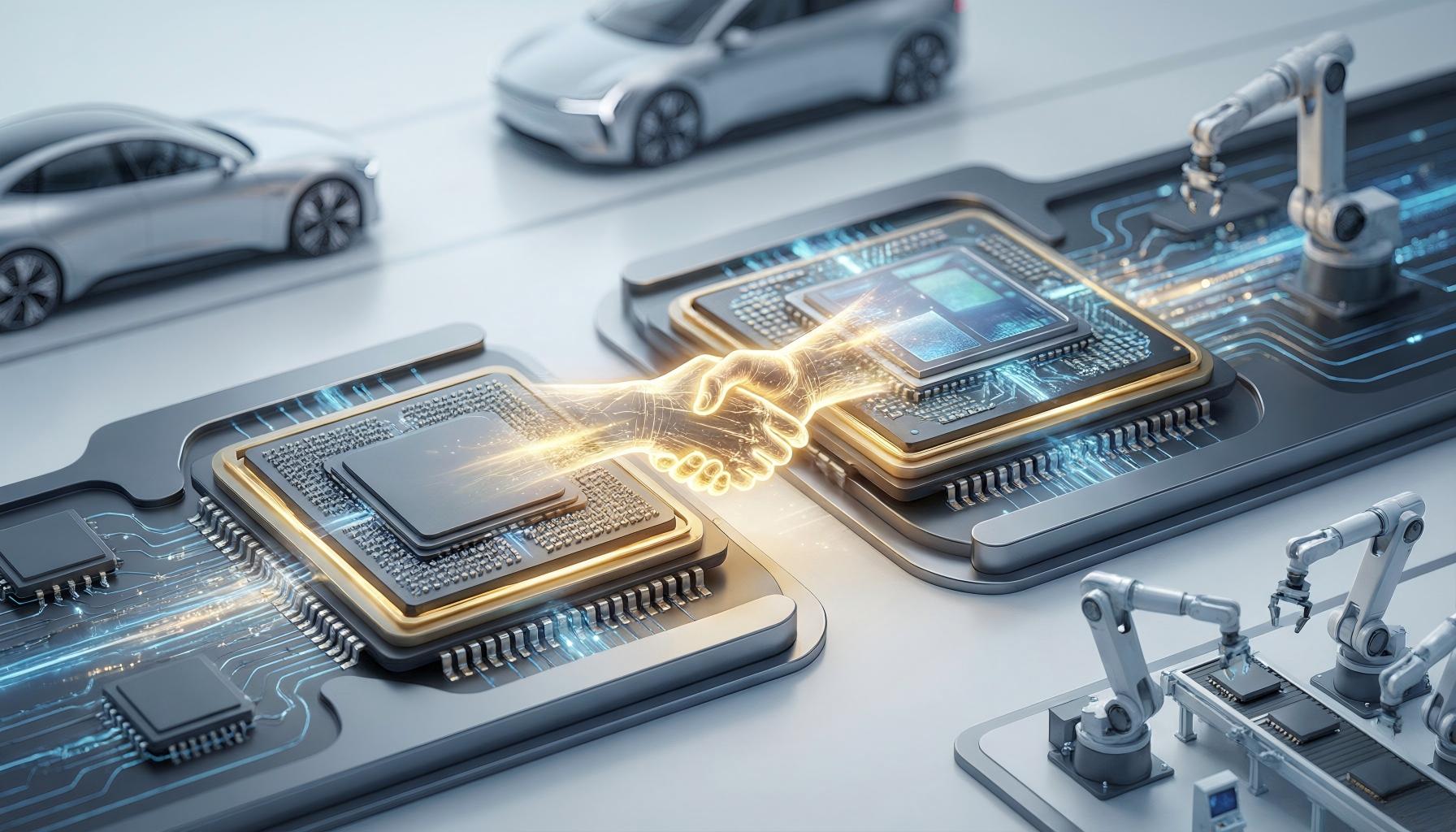
The combination is a wager on a simple idea: the next phase of artificial intelligence happens in the physical world. Chief Executive Hassane El-Khoury has argued that AI is moving beyond the cloud into machines that sense, decide and act in real time, and that such systems need power, sensing, connectivity and compute to work together. ON Semi brings the power chips and sensors that manage electricity and perceive the environment. Synaptics brings the touch controllers, display drivers and wireless connectivity, along with an AI-computing platform called Astra that the company has been building for edge devices.
The deal is ON Semi’s answer to a strategic problem. The company has built a strong business selling power-management and sensing chips to automakers and industrial customers, but its growth has been tied to cycles in those markets. The acquisition extends it into human-machine interfaces and edge AI, the chips inside devices that process data locally rather than sending everything to a data center. The companies said the combination expands their addressable market by $30 billion, to $243 billion by 2030.
The logic is about position in the AI economy. Nvidia dominates the cloud, where the biggest models train and run, and the companies selling to that market have enjoyed extraordinary growth. ON Semi is not trying to compete there. Its bet is that the second battlefield of AI, the edge, will reward the companies that make devices intelligent, and that the winners will be those that can combine sensing, power and compute in ways Nvidia’s data-center strategy does not cover.
The fit is complementary on paper. Synaptics’ touch and display business generates steady revenue from the laptop and phone markets, where it has long-standing relationships with the largest manufacturers. Its Astra platform, which combines AI processors, wireless connectivity and software, is aimed at exactly the kind of embedded intelligence that El-Khoury describes as the future. The combination gives ON Semi a software and developer ecosystem it has lacked, a gap that has limited its ability to sell complete systems rather than components.
Integration is the risk. Chip acquisitions of this size fail as often as they succeed, and the cultural gap between a power-semiconductor company and a consumer-interface company is real. Synaptics’ products move on design cycles measured in months, while ON Semi’s automotive and industrial products live on cycles measured in years. The companies will need to reconcile those rhythms while the deal awaits regulatory approval, expected to complete in mid-2027.
The timing reflects the broader consolidation moving through the chip industry. As AI reshapes which components matter, companies are buying capabilities rather than building them, and the prices for scarce technology are rising. Analysts said the premium ON Semi accepted, roughly in line with recent semiconductor deals, suggests the company believes the edge-AI opportunity justifies the risk.
The transaction also says something about the direction of the industry’s attention. The most valuable AI companies have been built on the assumption that intelligence lives in the cloud and that devices are windows into it. The physical-AI thesis holds that the next generation of value comes from putting intelligence where the action is, in cars, factories, robots and the devices people carry. ON Semi’s purchase of Synaptics is a statement of that thesis, made with the company’s largest deal ever.
Synaptics brings more than technology to the combination. The company’s touch controllers sit in most of the world’s laptops and in a large share of smartphones and cars, and its display and audio products generate the steady revenue that funds its newer AI work. The Astra platform, its AI-native computing line, has won design wins in products where on-device intelligence matters, and the company has been building the software stack that makes those chips easy to deploy.
Analysts were mixed on the price. The 19 percent premium is in line with recent semiconductor deals, and the expansion of the addressable market gives the combination a growth story, but the merged company will still face the reality of two mid-sized chip businesses in an industry dominated by giants. The deal’s success will depend on whether ON Semi can sell complete systems rather than components, a transition that has eluded many chipmakers.
El-Khoury has said the acquisition positions the company to capture a larger share of the AI opportunity beyond data centers. Whether the bet pays off will depend on whether devices really do get smarter, and whether the combination of power, sensing and connectivity proves to be worth more together than apart. The deal’s supporters see a company placing itself at the intersection of the four pillars of physical AI. Its skeptics see two mid-sized chip businesses betting that together they can outrun markets that have been hard to grow alone.