The last Atlas V rocket in United Launch Alliance’s fleet lifted off from Cape Canaveral on Thursday morning with 29 Amazon satellites tucked inside, and by the afternoon ULA confirmed the spacecraft had been deployed into low-Earth orbit. The flight was a retirement ceremony disguised as a routine launch: after more than two decades and roughly 100 missions, the workhorse rocket that carried NASA probes, spy satellites, and military payloads is done. Its successor, the Vulcan Centaur, takes over the manifest.
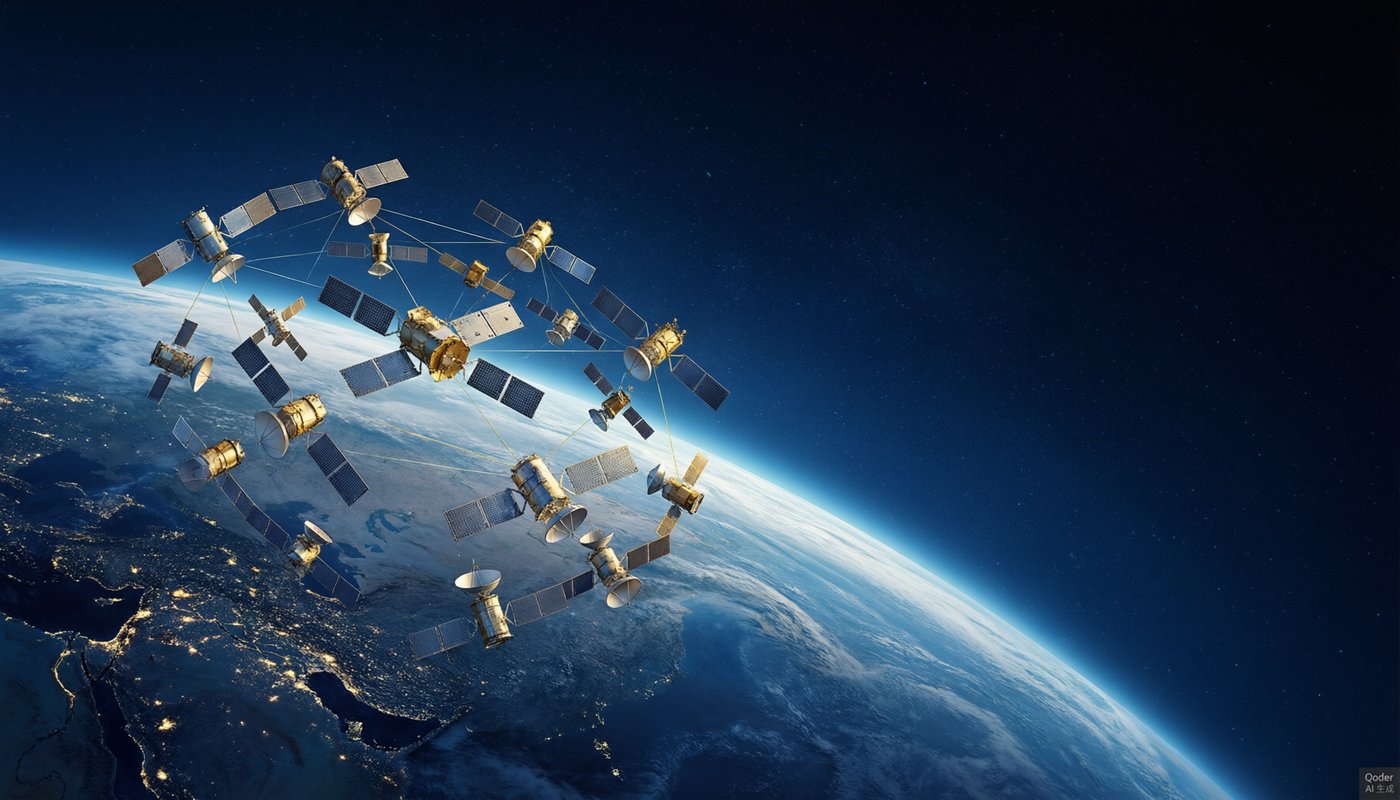
For Amazon, the launch carried more than nostalgia. The 29 satellites were the final batch of its Project Kuiper constellation, the company’s answer to SpaceX’s Starlink. With this flight, Amazon has deployed nearly all of the more than 3,200 satellites it is licensed to operate, and people familiar with the program said commercial service is expected to begin in the coming months. The launch also clears a regulatory deadline: under its license from the Federal Communications Commission, Amazon must have half of its constellation in orbit by the end of this month.
The timing was not accidental. Kuiper has been racing a clock set in Washington, and every delay in the rocket manifest had threatened to push the program past its deployment deadlines. Amazon bought launch capacity from several providers to hedge against exactly this risk — Falcon 9 rockets from SpaceX, Ariane 6 rockets from Europe, New Glenn rockets from Jeff Bezos’s Blue Origin, and Atlas V rockets from ULA. Thursday’s flight was the last of the Atlas V bookings, and program insiders said the remaining satellites are slated for Falcon 9 and New Glenn missions.
Kuiper’s business case rests on a simple observation: roughly a third of the world’s population still lacks reliable broadband, and satellites can reach places where fiber and cell towers cannot. Amazon says its user terminals, the dishes that customers install to receive the signal, are designed to cost less than $400, undercutting Starlink’s hardware. The company’s pitch to customers bundles the service with its wider ecosystem — AWS for businesses, Prime for households, its logistics network for hardware delivery.
The competitive reality, though, is that Amazon is entering a market SpaceX has owned for years. Starlink has operated commercially since 2020, counts millions of subscribers across dozens of countries, and benefits from SpaceX’s ability to launch its own satellites at cost. Analysts said Kuiper’s advantage is different: Amazon brings a distribution machine, a cloud business that wants enterprise satellite customers, and a balance sheet that can absorb years of losses. “Starlink won the first decade,” said one industry analyst. “The second decade is up for grabs, and Amazon is the only challenger with real scale.”
The stakes extend beyond broadband. Satellite constellations are becoming a strategic asset in their own right — used by militaries for communications, by airlines for in-flight connectivity, and by governments that want alternatives to foreign-owned networks. The FCC license under which Kuiper operates came with build-out requirements precisely because the agency wants to avoid a single-operator market. Thursday’s launch moves Amazon closer to becoming the counterweight regulators hoped for.
The two companies will also collide on Wall Street. SpaceX, which completed the largest initial public offering in history in June, received its first formal analyst coverage this week at a valuation near $2.2 trillion. Amazon, with a market value above $2 trillion, is effectively borrowing against its own scale. Analysts said the space-internet market alone could generate tens of billions of dollars in annual revenue within a decade, but that the real prize is the data and the customer relationships that come with it.
For ULA, Thursday’s flight closes a chapter that began with the rocket’s first launch in 2002. The Atlas V family has flown more than 100 missions without a failure of the core vehicle, a record that made it the default choice for the government’s most sensitive payloads. Its retirement had been planned for years, driven by the need to stop relying on Russian-built engines and by the commercial logic of consolidating on one vehicle. Amazon’s satellites were among the last paying customers.
The transition is not without risk. Vulcan Centaur has flown a handful of missions so far, and the government and commercial customers who once spread their launches across Atlas V will now share a smaller pool of vehicles. But for Amazon, the immediate concern is simpler: the constellation is nearly complete, the deadline is near, and the commercial fight with Starlink is about to begin in earnest. The last Atlas V did its part on Thursday. Now the satellites have to earn their keep.
The operational challenge now shifts from launching satellites to running a network. A satellite constellation is a service business: terminals must be manufactured in volume, ground stations must be built in locations with fiber backhaul, and software must route traffic between satellites moving at 17,000 miles an hour. Amazon has been preparing all three in parallel, and people familiar with the program said the ground infrastructure is in place across the Americas, Europe, and the Asia-Pacific region. The company has also run end-to-end tests with pilot customers in several countries, and the feedback has shaped terminal design and launch pricing.
The commercial launch will be watched closely for another reason: it will be the first real test of whether Amazon can execute a hardware business that requires global logistics, regulatory approvals, and round-the-clock operations. The company’s track record with hardware is mixed — its phones and some of its devices have stumbled — but satellite broadband is closer to its core strengths in logistics and cloud services. If Kuiper launches on time and works, it gives Amazon a seat at a table that has been dominated by a single company. If it slips, the window stays open for competitors, and for the regulators who bet on a two-operator market.