The executives gathered in Veldhoven on Thursday to deliver news that the company’s own order book had already signaled for months: demand for the world’s most advanced chip-making machines is outrunning supply. ASML, the Dutch company that holds a near-monopoly on extreme ultraviolet lithography, raised its full-year revenue guidance, citing sustained demand from AI chip manufacturing. The announcement, carried by Chinese financial news service Cailianshe, confirmed what semiconductor suppliers had been saying privately — the AI build-out is moving from planning into purchasing.
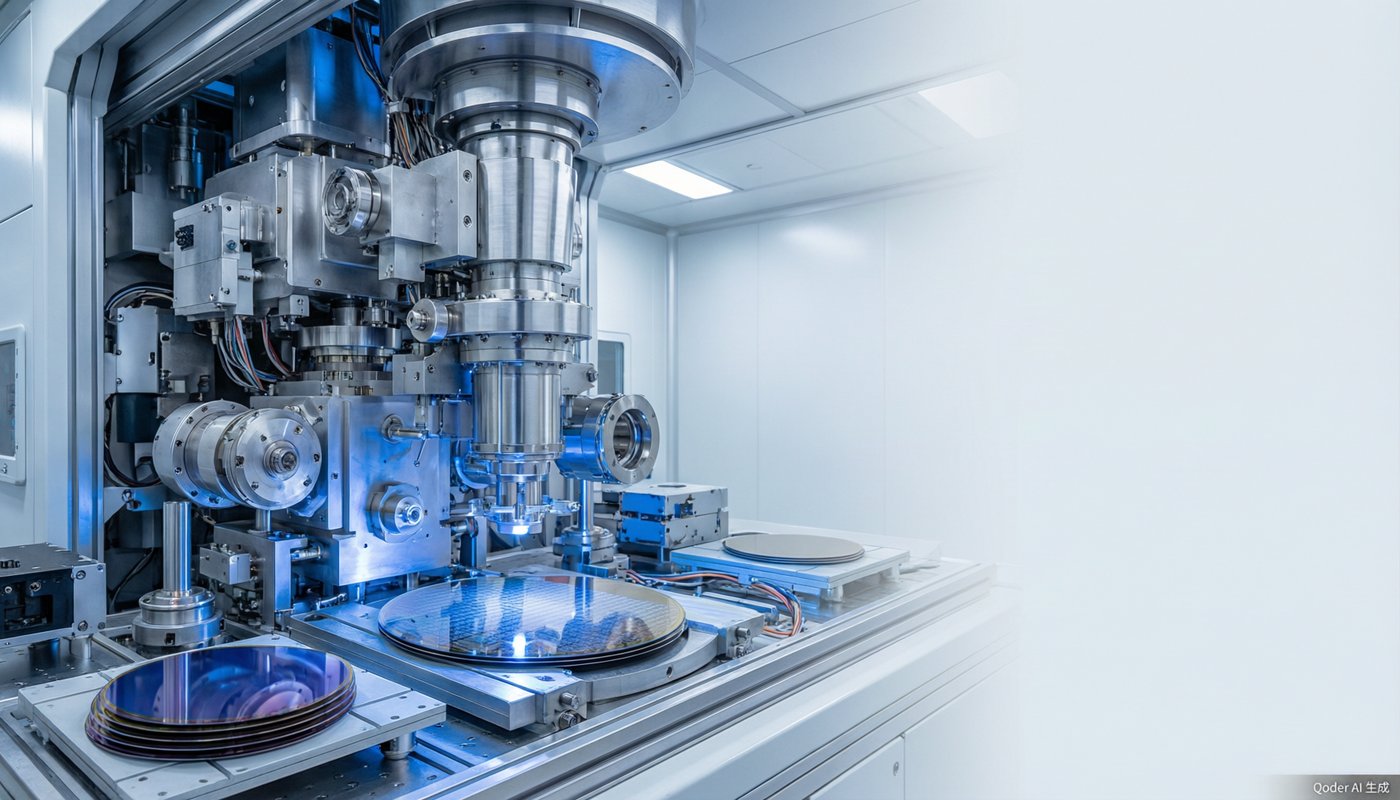
The machines in question are the most expensive pieces of manufacturing equipment on the planet. ASML’s EUV scanners, which use light with a wavelength of 13.5 nanometers to etch circuits onto silicon wafers, cost hundreds of millions of dollars each. Its newest high-NA EUV machines, which offer even finer resolution, sell for more than $350 million a unit. Only a handful of companies in the world can afford them, and only a few fabs can use them. TSMC, Samsung, and Intel are the principal buyers, and all three are expanding capacity for the most advanced chips.
The demand is being driven by a specific product: the accelerators that power AI. Companies like Nvidia and Broadcom design chips that pack more transistors into less space than any consumer processor, and those designs are built on the most advanced manufacturing nodes — 3 nanometers and below. Every new AI accelerator factory, every foundry expansion, requires EUV machines that ASML produces in limited numbers. Delivery lead times have stretched, and customers have been fighting for production slots years in advance.
ASML’s guidance increase is read across the industry as a signal. Because ASML sits at the top of the semiconductor supply chain — its machines are needed before any chip can be made — its outlook is treated as a leading indicator for the entire equipment sector. When ASML sees demand, the argument runs, so will Applied Materials, Lam Research, and the other toolmakers that supply the rest of the fab. Order data from those companies, according to analysts, has been confirming the same picture: equipment for advanced logic and memory is selling faster than it can be built.
The upturn is visible in the numbers the industry watches. Advanced foundry capacity for AI chips is being expanded in Taiwan, in the United States, and in Japan, and the customers behind those projects have moved past the feasibility stage. TSMC, which announced this week that it would double capacity at its Arizona fab, is a case in point: the expansion, aimed at serving American customers like Apple and AMD, requires the same EUV machines ASML is scrambling to deliver. Samsung’s foundry unit is making similar moves, and Intel is spending heavily to keep its own manufacturing competitive.
Analysts said the supply-demand balance is tightening rather than easing. ASML’s production capacity for high-NA EUV machines is limited by physics and by the supply chain: the lenses, the light sources, and the vacuum chambers cannot be scaled up overnight. Every machine ordered for an AI fab is a machine that cannot be ordered by someone else. The company’s delivery schedule, already extended, is expected to stretch further, and customers are placing orders years ahead of need to guarantee capacity.
The timing of Thursday’s announcement made the message sharper. The same week ASML raised its guidance, semiconductor stocks across Asia and Wall Street were falling — Korea’s KOSPI dropped nearly 8% on Thursday on worries that AI chip orders were slowing. The disconnect between the equipment order book and the equity market captures the uncertainty running through the industry: the companies that build the machines see boom conditions, while the investors who trade the stocks fear the boom is peaking.
That tension has a history. Semiconductor cycles have always been brutal, swinging between shortages and gluts, and the current expansion has already run longer than most. The difference this time, industry executives argue, is that AI demand is structural rather than cyclical — training and inference workloads keep growing even when consumer electronics sag. ASML’s guidance increase is their evidence. Whether the equity market agrees is another question.
For ASML, the raised outlook is also a statement of confidence in its own pipeline. The transition from EUV to high-NA EUV is the biggest technology change in lithography in a generation, and the company has bet its future on convincing customers to pay a premium for it. The guidance suggests the bet is working. Customers are not just ordering machines; they are ordering the most expensive machines ASML makes, and they are paying up to get them early.
The equipment maker’s message, in the end, is a simple one: the machines are sold out, the deliveries are scheduled, and the money is coming in. Whether that adds up to a boom that lasts, or the beginning of an overbuild that ends badly, is a question for the buyers of the chips, not the makers of the machines.