
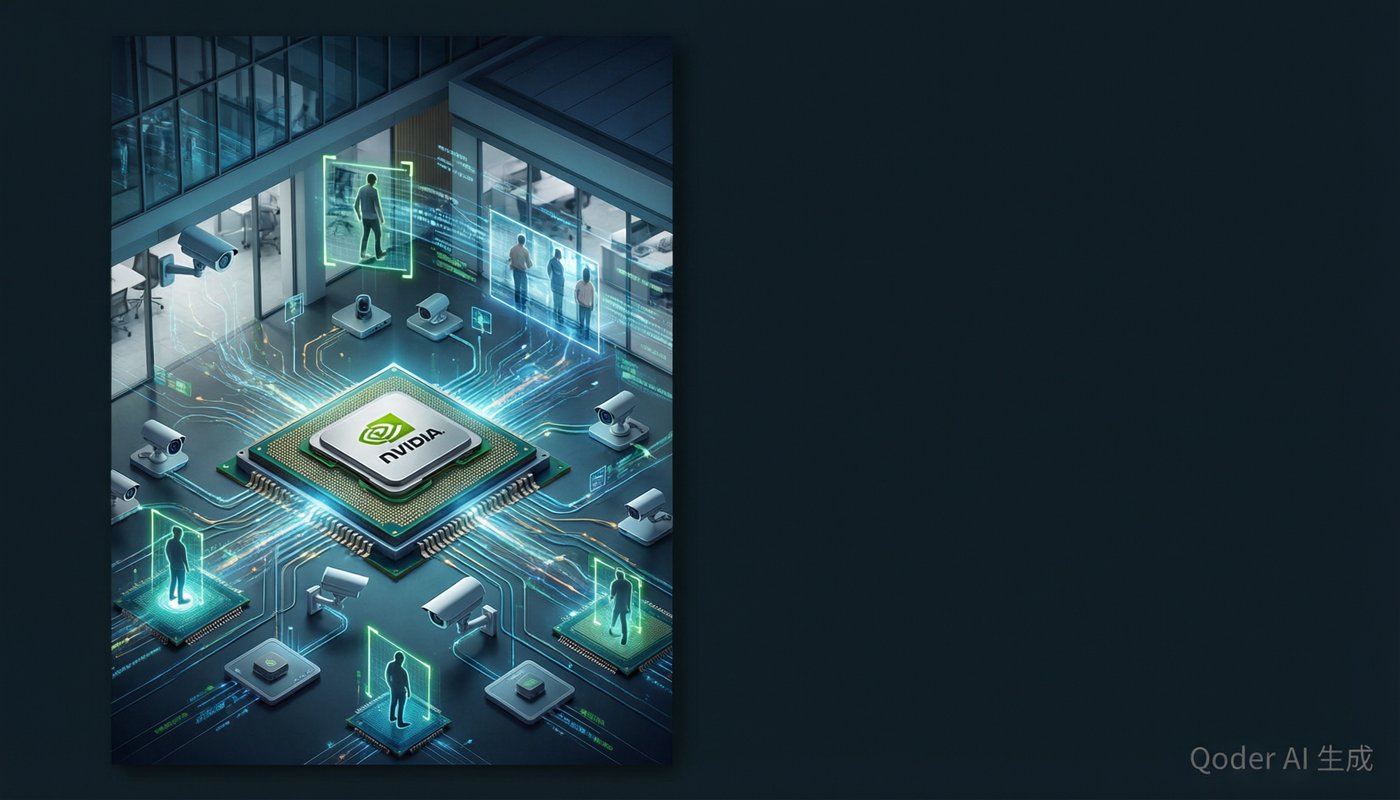
The investment, announced Wednesday, extends Nvidia’s reach into a business it does not usually touch: video surveillance. Verkada, a ten-year-old company that sells security cameras and the software that runs them, said Nvidia has made an equity investment of undisclosed size at a post-money valuation of $5.8 billion — the same valuation the company carried in December, when Alphabet’s growth-investment arm CapitalG led its previous funding round.
The round is notable for what it says about both companies. For Verkada, Nvidia’s name on the cap table is a validation that goes beyond the check: the world’s most valuable chip company is effectively endorsing the security-camera market as a serious consumer of AI. For Nvidia, the investment is part of a pattern of placing strategic bets in industries where its chips are becoming indispensable — and surveillance is one of the fastest-growing of those industries, as cameras multiply in offices, warehouses, schools, and city streets.
Verkada’s pitch to customers has always been about the software as much as the hardware. The company sells cameras that are easy to install and manage, but its real product is the platform that turns video into searchable, analyzable data. Modern security systems use AI to detect people, vehicles, and events in real time, and the computing that makes that possible runs on chips — increasingly, on Nvidia’s chips. The investment cements a relationship that was already commercial: Verkada’s systems use Nvidia’s technology for the AI processing that has become the core of its offering.
The flat valuation between December and now is itself a story. In a market where AI-adjacent companies have seen valuations inflate rapidly, Verkada’s round holds the line at $5.8 billion, suggesting the deal was priced for strategic value rather than hype. The flat round also gives Nvidia an entry at a price that later investors cannot argue was overheated, and it gives Verkada’s existing investors — who include the venture firms that backed the company through its earlier phases — a chance to sell some stock at the same price as the previous round.
The investment is the latest in a series of Nvidia’s direct bets on companies that consume its technology. The chip maker has invested in AI cloud providers, in robotics startups, and in the companies building the data-center ecosystem, in each case buying both financial exposure and a seat at the table where its technology gets adopted. The Verkada deal fits the pattern: surveillance is a massive market that is only beginning to shift to AI, and Nvidia wants the shift to happen on its silicon.
The competitive context is sharpening. Verkada competes with a crowded field of security-camera companies — from legacy incumbents like Motorola Solutions and Honeywell to a new generation of AI-native startups — and Nvidia’s backing gives it a claim to technology leadership that rivals will find hard to match. The company has also been expanding beyond cameras into access control and environmental sensors, building a broader physical-security platform that depends on the same AI processing stack.
There are questions the announcement leaves open. Verkada has a history of security controversies — its products have been criticized over privacy and vulnerability issues — and the surveillance industry is under growing regulatory scrutiny in Europe and parts of the United States. Nvidia’s investment ties its brand to a company whose products sit at the intersection of security, privacy, and public concern. Neither company addressed these issues in the announcement, and people familiar with the deal said the investment was about technology and market position rather than the policy debates around surveillance.
The deal also reflects a broader trend in the security industry: the hardware is becoming a commodity, and the value is moving to the software and the AI. Verkada’s cameras are manufactured by partners; what the company sells is the platform. That is the same logic that has driven Nvidia’s own rise — the value is in the computing, not the box — and it explains why the chip maker would invest in a company whose business model mirrors its own.
For Nvidia, the investment is small in the context of its balance sheet, and the strategic value may be larger than the financial return. Every Verkada system that ships is a customer for AI processing, a data point for the argument that the AI build-out extends beyond data centers into the physical world. The company’s executives have said they expect AI to move into every industry, and security cameras are one of the most obvious places where that prediction is already coming true.
The deal closes a period of speculation about Verkada’s next round and opens a new one about its future. The company has been reported to be preparing for an eventual public listing, and Nvidia’s investment strengthens the balance sheet ahead of any such move. For now, the pairing makes sense on both sides: Verkada gets the backing of the industry’s dominant technology supplier, and Nvidia gets a stake in one of the clearest commercial applications of AI in the physical world.



