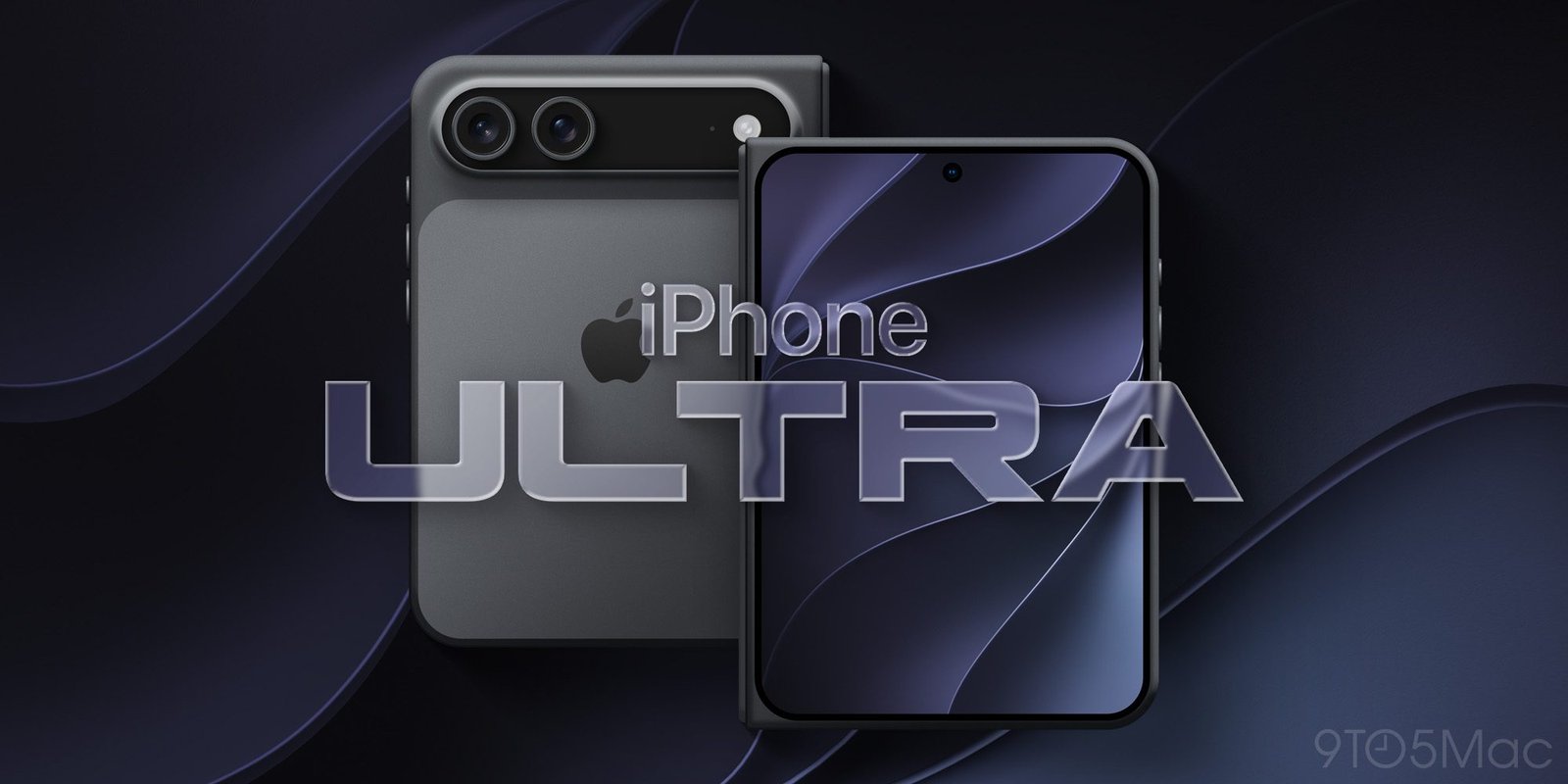
The suppliers have their numbers. Apple has raised the production target for its first foldable iPhone, a device expected to be called the iPhone Ultra, to 10 million units, according to MacRumors and 9to5Mac, up from the company’s earlier plans. The phone is expected to sell for around $2,500, and component makers have already received orders.
The target is striking in the context of the foldable market. Samsung, which created the category with its Galaxy Z Fold and Z Flip lines, sells roughly 10 million foldable phones a year after a decade of building the segment. Apple’s first entry would match that volume out of the gate, a scale that would more than double the total size of the foldable market in a single year.
The price tells the same story. At about $2,500, the iPhone Ultra would sit well above Apple’s current flagship, the iPhone Pro Max, and in a price range the industry has reserved for the most experimental devices. Apple is positioning the foldable as a new tier rather than a new model, and the production volume suggests the company expects demand to justify the price.
The supply chain is already moving. People familiar with the orders said Apple’s suppliers have been told to prepare for the 10 million-unit run, with the display, hinge and cover-glass components the gating items. Foldable displays remain the most expensive and fragile part of any such device, and Apple has spent years testing designs with different suppliers before settling on its final configuration.
The launch timing puts Apple’s entry on a collision course with Samsung’s own plans. Samsung has dominated the foldable category since 2019, using it to differentiate its premium line against Apple’s flat-screen dominance. An Apple foldable changes the math: the company that defined the modern smartphone category will now compete directly in the segment Samsung created, with the brand loyalty and services ecosystem that have kept iPhone customers upgrading for years.
The volume ambitions also hint at Apple’s roadmap. The company is expected to introduce at least five new iPhone models by 2027, according to people familiar with its product plans, a lineup expansion that suggests the foldable will not be a one-off experiment but the beginning of a new product family. Apple typically ramps new form factors slowly, testing the market before committing capacity; the 10 million-unit target suggests management is confident enough to skip that caution.
Apple’s history with new form factors offers a caution. The company’s Vision Pro headset, launched to strong reviews and limited sales at $3,499, showed that Apple can build impressive hardware and still misjudge a market’s readiness. The foldable is a different bet, because the form factor is proven, by Samsung, and the question is not whether customers will buy foldables but whether they will pay Apple’s premium for one. The 10 million-unit target suggests Apple believes they will.
The supply chain is the other constraint. Foldable displays and hinges are produced in limited volumes by a small set of manufacturers, and Apple’s order sizes will strain that capacity, potentially pushing back availability of competing foldable components. Apple has spent years qualifying display and hinge suppliers, people familiar with the process said, and the 10 million-unit figure reflects what the supply base can actually deliver in the launch year rather than what Apple would ideally sell.
Analysts said the move reflects a calculation about the smartphone market’s maturity. Global phone shipments have plateaued, and Apple’s revenue growth now comes from services and from selling more expensive versions of the same device. A foldable at $2,500 extends that logic: it raises the ceiling on what iPhone customers will pay and gives the company a product that can absorb premium component costs without cannibalizing its existing lineup.
The risks are real. Foldable screens have a history of durability complaints, and a premium-priced Apple device that develops creases or hinge failures would damage the brand it is meant to elevate. Repair costs for foldable displays run into the hundreds of dollars, and Apple’s service network would face a new class of claims. The company has tested the hinge mechanism for years, people familiar with the program said, and believes the design is ready.
There is also the question of whether the foldable form factor has a future beyond novelty. Samsung’s sales have grown but remain a small share of its overall volume, and some of the largest phone makers have been slow to follow. Apple’s entry changes the category’s trajectory, not because the foldable is proven, but because Apple’s distribution, marketing and developer ecosystem can make a form factor mainstream faster than anyone else.
For Samsung, the response will be defining. The company that created the foldable market now faces the company that has dominated every market it has entered, and Samsung has been preparing its own product roadmap for exactly this moment. The foldable market is about to stop being Samsung’s alone, and Apple has made clear it intends to arrive at scale.