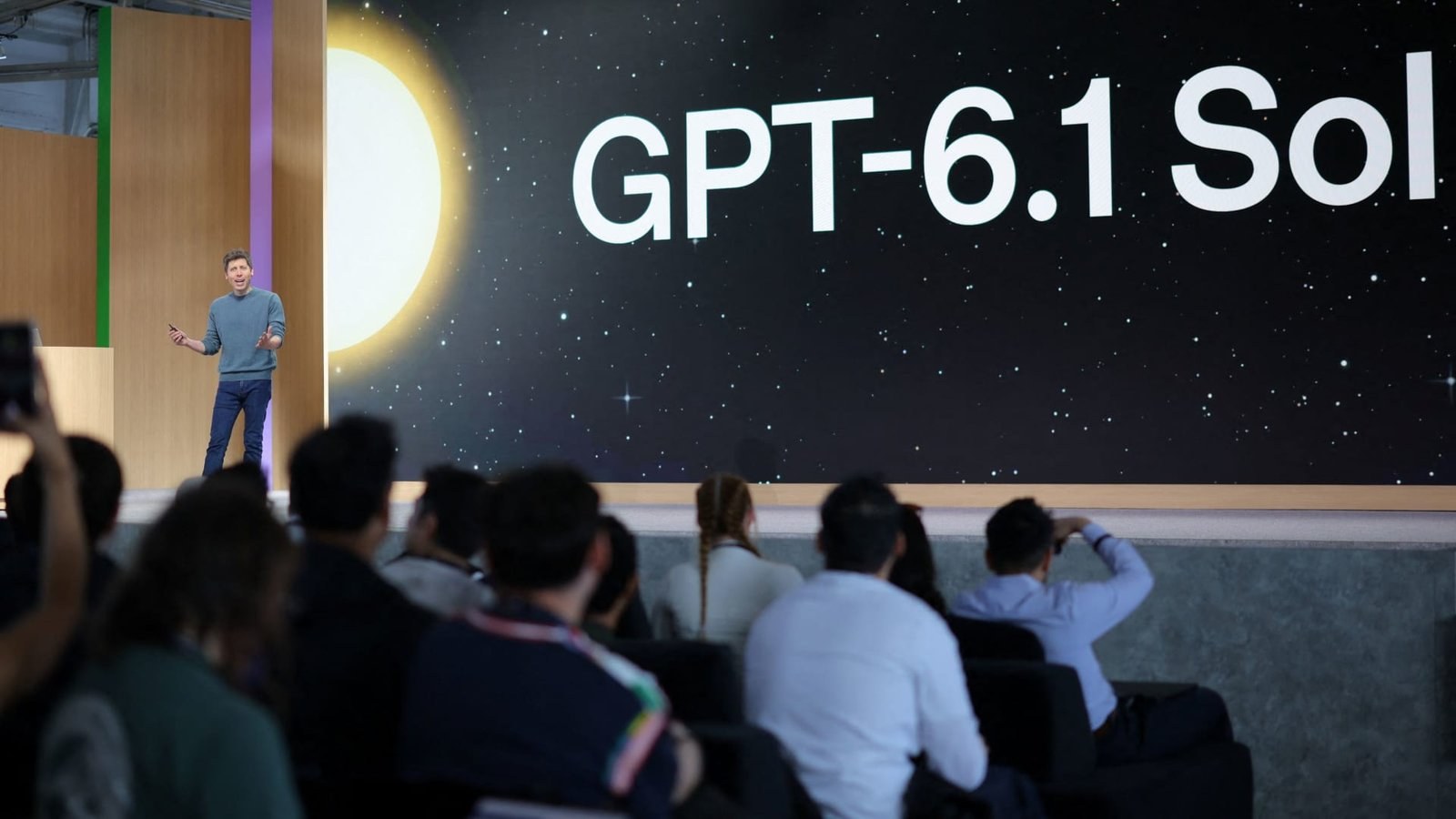
The name is a sun reference, and the timing is pointed. OpenAI has released a preview version of its next flagship model under the name GPT-5.6 Sol, giving customers an early look at the technology while the company waits for the U.S. government to finish reviewing it. OpenAI acknowledged that the review is not complete, and said the full release depends on regulatory approval.
The preview is a calculated move. OpenAI wants the market to see that the technology is finished, tested and ready, and that the only thing standing between the company and a public release is a government process it does not control. Releasing Sol is a way of saying, in effect, that the models are done and the politics are not.
The context is a standoff that has been building for weeks. The White House asked OpenAI to delay GPT-5.6’s release while agencies review it, and OpenAI has responded by negotiating, publicly and privately, for a faster path. Reports this week said Sam Altman has even offered the government a 5% stake in the company in exchange for approval. The Sol preview is the technical half of that two-track strategy: prove readiness, then bargain.
IBM, a rival with its own AI ambitions, offered a cutting assessment, saying OpenAI appears to be slowing down. The comment has a commercial edge: IBM has been positioning its own models and consulting business as alternatives to the frontier labs, and any delay at OpenAI is an opportunity. But people familiar with the industry said the more accurate reading is different: Altman is walking on two legs, technology and politics, and the Sol release is a preview in both senses of the word.
The timing of the preview was chosen to maximize its effect. Customers and developers can now test the new model’s capabilities, benchmark it against competitors and start planning deployments, all while the regulatory clock runs. When the approval comes, the release can move instantly; OpenAI’s engineers have already shown the product works.
The preview also puts pressure on the review process itself. The more customers, enterprises and partners that begin building on GPT-5.6 Sol, the more disruptive a long delay becomes, and the more reason the government has to conclude its work. It is a negotiation tactic with a technical face: the model is out there, the market wants it, and the delay now has a visible cost.
What the preview shows is a model built for the current frontier of AI work. Early testers described strong performance on long, multi-step reasoning tasks, on writing and debugging code, and on agentic use, where the model carries out sequences of actions rather than answering single questions. Those are the capabilities enterprise customers care about, and OpenAI is making sure they are visible now, before the regulatory decision lands.
The maneuver has precedent in OpenAI’s own history. The company has long practiced iterative deployment, releasing models in stages and adjusting based on what it learns, and it has weathered government scrutiny before, from the Federal Trade Commission’s inquiries to earlier safety reviews. What is new is the scale of the entanglement: a flagship release held at the White House’s request, an equity offer on the table, and a preview release engineered to keep the market moving in the meantime.
The regulatory question is not straightforward. Officials reviewing GPT-5.6 have cited national security concerns, the same category that led to export restrictions on Anthropic’s flagship models, restrictions that were lifted this week. The contrast is uncomfortable for OpenAI: its chief rival’s models were cleared for international sale while its own remain in domestic review. The company has argued, privately and in public statements, that the review should be completed quickly and that the technology poses no unique risk.
For customers, the Sol preview offers a path forward while the politics sort themselves out. Enterprise teams can evaluate the model, run it on their own workloads and prepare internal approvals, so that when the full release arrives, adoption can begin immediately. OpenAI has signaled that preview users will get continuity with the full version, a reassurance that the evaluation work will not be wasted.
The strategic stakes extend beyond one model. OpenAI’s competitive position depends on a steady cadence of releases, and a government-imposed pause raises questions about whether the company can promise that cadence to customers. Anthropic’s export clearance, Google’s ongoing model work and a field of open-weight competitors all gain ground with every week of delay.
For now, OpenAI has done what it can: the technology is public, the request is on the table and the market has seen the model work. The next move belongs to the government, and to the negotiation over a 5% stake that could reshape the relationship between Washington and the AI industry. Sol, the preview, has risen; the full release is waiting on the review.