
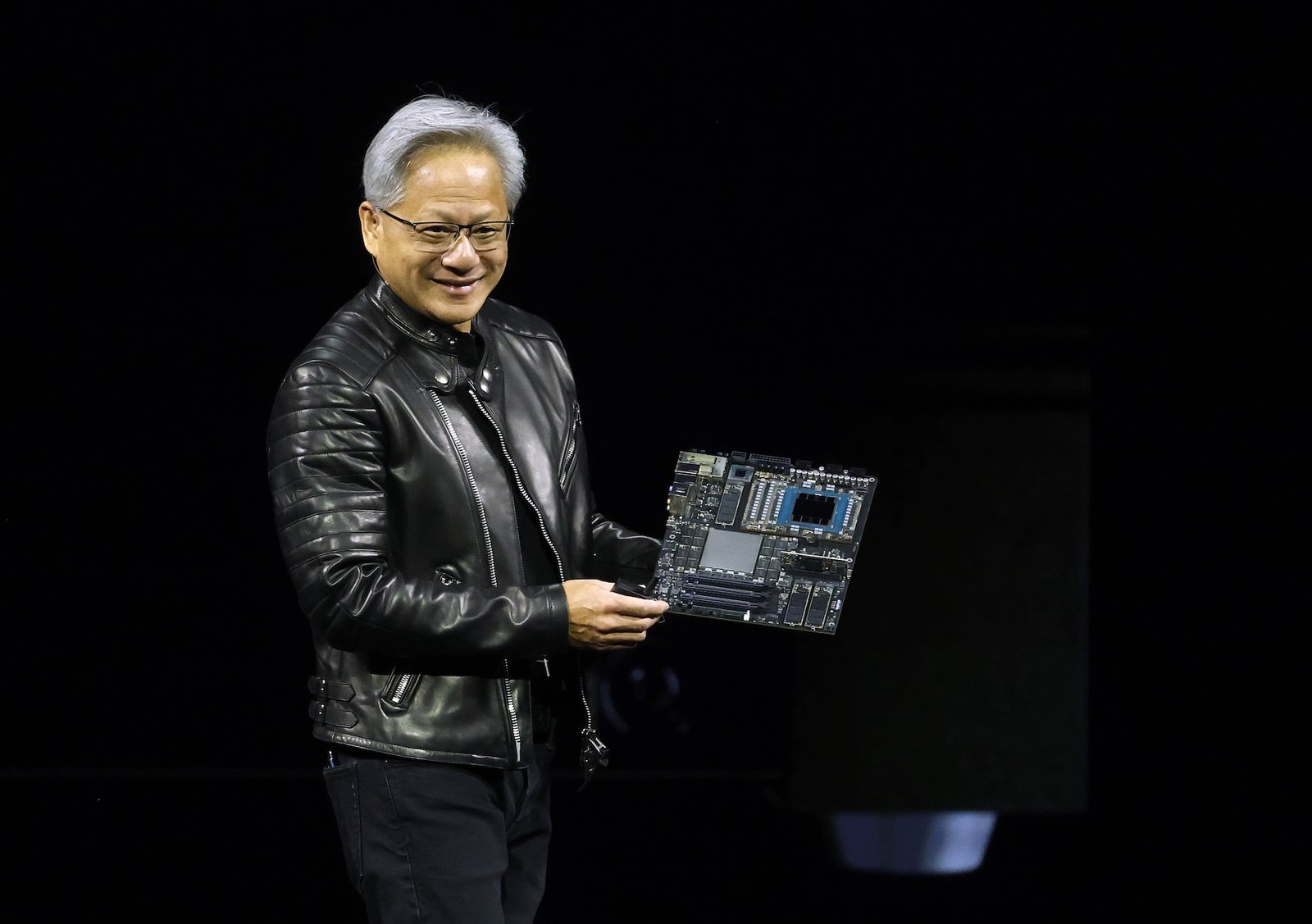
NVIDIA’s Next AI Server Rack Hits Manufacturing Hurdles
The selloff started in Asia before most investors in the United States had logged on for the day. Shares of printed circuit board makers across the region tumbled Tuesday morning on reports that NVIDIA’s next-generation artificial-intelligence server rack, a system called Kyber NVL144, had hit manufacturing trouble and would arrive more than a year later than planned.
The reports, citing unnamed people familiar with the matter, said the setback occurred in the PCB manufacturing stage. The rack architecture demands thicker, more complex circuit boards than earlier designs, and suppliers have struggled with yields, the people said. NVIDIA’s response came quickly: “Our roadmap has not changed.”
The statement helped steady the stock. Yahoo Finance reported NVIDIA shares recovered some ground after the company’s response, trimming earlier losses. Goldman Sachs analysts weighed in with a research note calling the current valuation, about 21.7 times forward earnings, “attractive” for long-term investors.
The episode shows how tightly the AI supply chain now moves with NVIDIA’s product calendar. The Kyber NVL144, whose name suggests a configuration of 144 GPUs per rack, would be the densest AI server system the company has shipped, analysts said. Each new generation raises the bar for the circuit boards, power systems and cooling gear that surround the chips.
The progression has been steady. NVIDIA’s earlier rack-scale system, the NVL72, paired 72 graphics processors with networking and power into a single unit that customers could plug in like an appliance. A 144-GPU variant roughly doubles the density, which means the boards inside must carry more layers, handle higher currents and dissipate more heat, all within the same rack footprint. Manufacturing that board reliably at volume is a different problem from designing it.
For PCB makers in Taiwan, South Korea and Japan, NVIDIA orders have become a major source of growth. The companies had been building capacity and pricing in a rapid ramp of the new system. A delay does not cancel those orders, but it reshuffles timing, and investors marked down the names most exposed to AI server demand.
The jitters were not confined to circuit boards. Suppliers of power components and connectors also came under pressure in Asian trading, brokers in Taipei said. Some investors read the reports as evidence that the AI buildout is running into physical limits, from available power to manufacturing precision.
Others took the opposite view. A year’s slip in a product that has not been formally announced is a scheduling matter, not a demand signal, several analysts argued. Orders for NVIDIA’s current-generation systems remain strong, and the big cloud companies have not signaled any change in their spending plans. The delay, in that reading, could even help suppliers by giving them more time to qualify materials and tooling.
The episode also highlights the gap between NVIDIA’s ambitions and the state of its supply chain. The company has said it wants to sell complete systems, not just chips, a strategy that makes it dependent on a web of manufacturers for everything from printed circuit boards to liquid-cooling loops. When one link stumbles, the market notices.
There is history here. NVIDIA’s product cadence has slipped before, most notably during the pandemic years when its graphics cards for gamers were in short supply and the company struggled to secure enough substrate and memory capacity. Each time, the delays were eventually absorbed by a market hungry for more compute. The difference now is the scale of the expectations built into share prices across an entire ecosystem.
Goldman’s note pointed investors to the longer view. At 21.7 times forward earnings, NVIDIA trades below the multiples it commanded earlier in the AI boom, the bank said, and near-term noise around product timing does not change the fundamental demand picture.
The stakes are high because rack-scale systems are where NVIDIA’s growth is moving. Cloud providers have been buying complete machines rather than individual accelerators, and the company’s revenue increasingly comes from systems sold at premium prices with networking and software attached. A delayed flagship does not erase orders for the current generation, but it does push a slice of future growth to the right, and every quarter of delay matters to investors who model quarterly revenue curves.
The reports also revived a familiar argument about NVIDIA’s dominance. Some investors worry that manufacturing hiccups will open a door for rivals and for cloud companies designing their own chips. Others note that NVIDIA has weathered supply problems before and emerged with a wider lead, because its software stack keeps customers locked in. The market, for now, is treating the news as noise rather than a verdict: the stock recovered most of its early loss by the close.
NVIDIA has not said when the new system will ship beyond its statement that the roadmap is unchanged. Suppliers are left to guess when orders will firm up. For the industry, the morning showed how a single product slip can move markets across three countries: by the afternoon session in Taipei, Seoul and Tokyo, the losses had been trimmed, but the day left a mark on a supply chain that has come to measure its fortunes by NVIDIA’s calendar.



