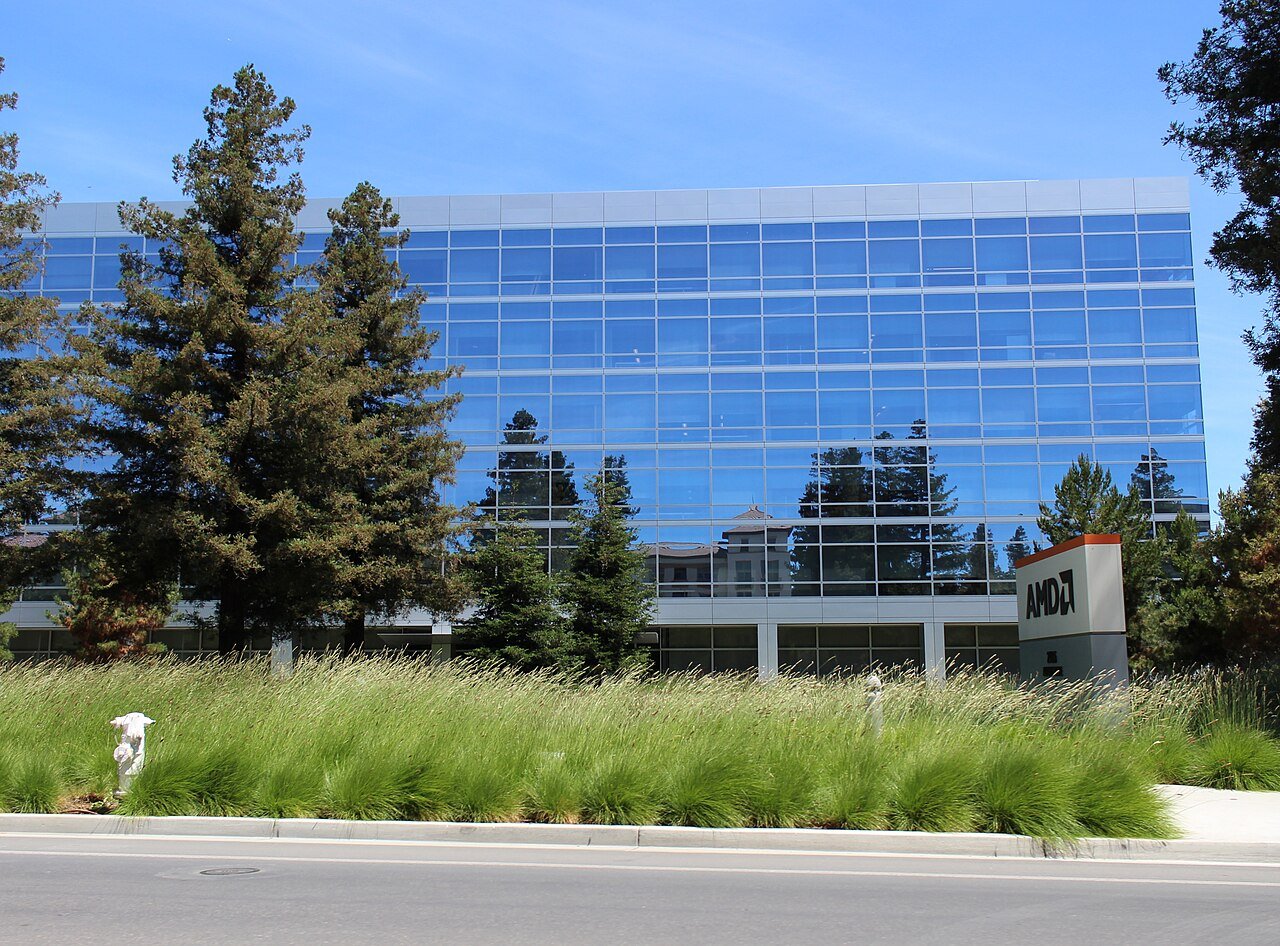
The upgrades kept coming, and the stock kept falling. Advanced Micro Devices shares slid again on Thursday, extending a run of losses, even as UBS and Bank of America raised their price targets on the company to between $680 and $725. The divergence, analysts said, captures the market’s mood toward AMD: the analysts see value, the buyers are not convinced.
The selloff has been building for weeks. AMD has lagged the semiconductor sector’s broader rally, and its shares have come under pressure as investors rotate toward names with clearer AI exposure. The same day the analysts raised their targets, the company unveiled the Ryzen 7 7700X3D, a mid-range gaming processor priced to win value-conscious buyers, a product that generated positive reviews but little market excitement.
The market’s attention was elsewhere. Thursday’s tape was dominated by Taiwan Semiconductor Manufacturing Co.’s record earnings and $100 billion Arizona expansion, and by a sharp selloff in Korean chip stocks that rippled through the sector. AMD, sandwiched between the industry’s biggest story and its biggest rout, got neither the attention its supporters wanted nor the shelter its sellers feared.
The analyst math is not hard to follow. UBS and Bank of America pointed to AMD’s data center business, where its MI-series accelerators compete with Nvidia’s market-leading GPUs, and to its server processor share gains against Intel. Both banks argued that AMD’s products are competitive, its pipeline is full and its valuation, relative to its growth rate, is reasonable. The targets imply double-digit upside from current levels.
The market’s math is different. AMD’s AI accelerator business, while growing, remains a distant second to Nvidia’s, and the gap is not obviously closing. Nvidia controls the software stack that most AI developers rely on, and its next-generation Rubin platform, announced this week in a national infrastructure deal with Japan, extends its reach into new markets. Every Nvidia announcement makes AMD’s task look harder.
The Gartner report released this week added texture to the argument. The research firm’s ranking of AI semiconductor competitiveness placed Nvidia, AMD, Broadcom, Marvell and Infineon in the top five, a list that confirms AMD’s position among the leaders but also shows how crowded the field has become. Custom chip designers like Broadcom and Marvell are winning business from the largest AI companies, adding pressure from a direction AMD has not had to fight before.
The gaming business, long AMD’s anchor, is no longer the growth story. The company’s Ryzen processors remain popular, and the new 7700X3D is a solid product at a competitive price, but the PC market has been flat, and gaming revenue has not returned to its pandemic peak. The product news this week was well received by reviewers and ignored by investors, a sign of how far the company’s fate has shifted to the data center.
The data center story is real but incomplete. AMD’s EPYC server processors have taken meaningful share from Intel, and its MI300 and follow-on accelerators have won design wins at cloud providers and AI companies. But Nvidia’s dominance in AI accelerators leaves AMD fighting for the second slot in a market where the winner takes most of the profit, and where customers standardize on the platform that works best, not the one that is second cheapest.
The selloff in Korean memory stocks and the rotation away from the broader AI trade have not helped. AMD trades as part of the AI complex, and when that complex sells off, AMD sells off harder than the leaders, because it has more to prove. The company’s shares have also been sensitive to the same question weighing on the whole sector: how long the AI build-out can continue before the spending data disappoints.
The analyst community is not giving up. Price target raises from major banks typically follow fundamental work, and UBS and Bank of America both said they expect AMD’s data center revenue to keep growing at a fast clip through next year. The banks’ models assume that AMD will win a share of the AI accelerator market that is large enough to matter but small enough to be plausible.
The company’s own message has been consistent. AMD’s executives have argued that AI computing will not be a one-company market, that customers want alternatives to Nvidia, and that AMD’s combination of CPU and GPU technology gives it a position no other company matches. The argument is credible, and it has won AMD a real business. Whether it wins the stock market is a different question.
For now, the market is voting with its feet. The upgrades are noted, the targets are recorded, and the shares keep sliding, caught between a sector rotation, a crowded field and the gravitational pull of Nvidia’s narrative. AMD’s next earnings report, due in the coming weeks, will be the first chance for the company to change the conversation. Until then, the analysts can raise their targets as high as they like; the buyers are waiting for evidence.