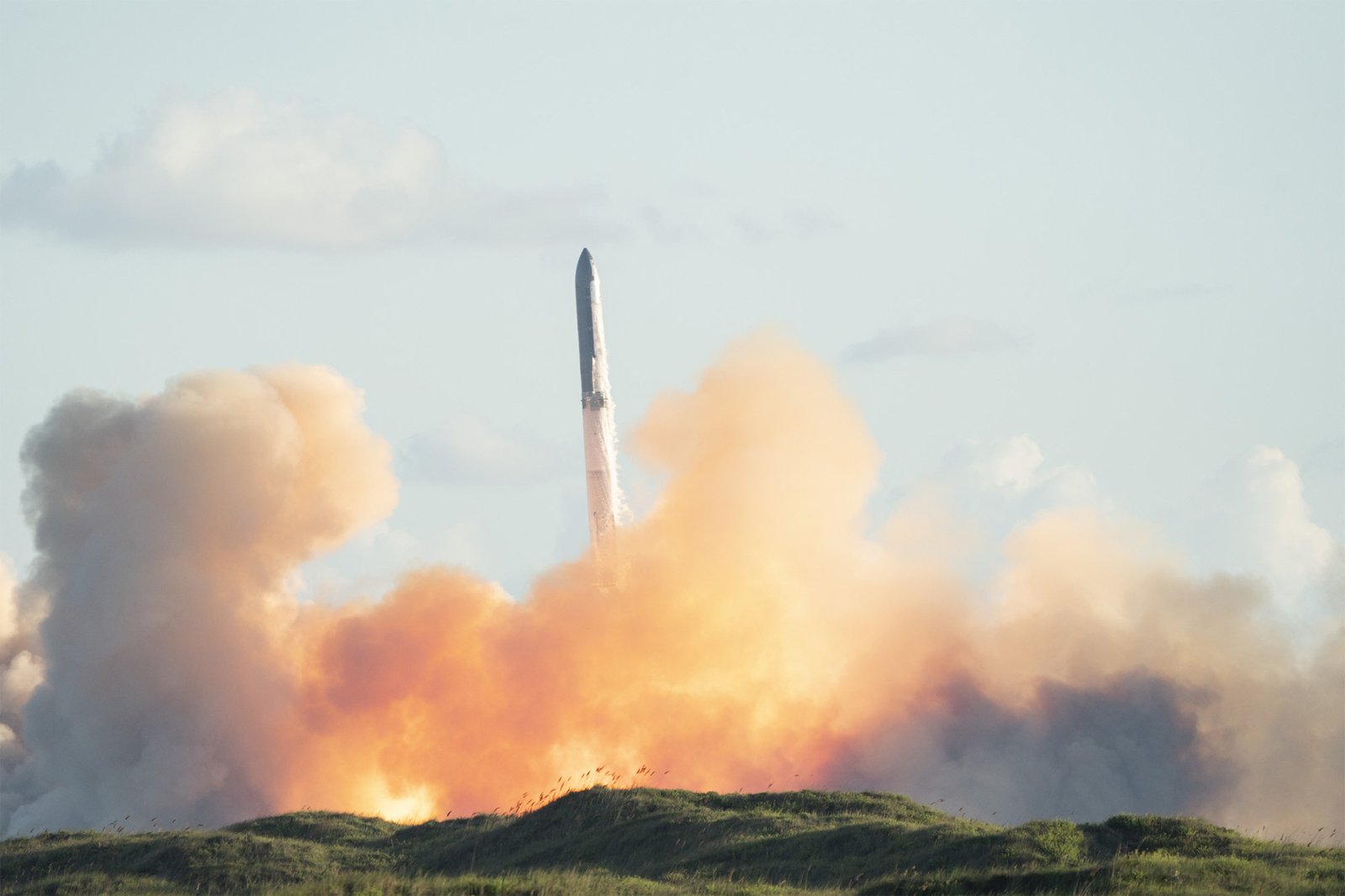
SpaceX was preparing to attempt the 13th flight of its Starship rocket on Wednesday from its launch site in Boca Chica, Texas, after engineers re-tested Booster 20, the booster slated for the mission. The flight is the latest in a test program that has transformed rocketry — and, more recently, the fortunes of the investors betting against the company.
The contrast between the launch’s engineering ambition and the stock’s recent performance captures the tension in SpaceX’s public life. Shares of the company have fallen 27 percent this month, and short sellers have collected $15.5 billion in profits since the company’s listing, making it one of the worst-performing large initial public offerings of 2026. The company went public at a valuation that made it the most valuable in the space industry, and the market has spent the months since deciding what that valuation should actually be.
The flight itself is the product of a test campaign that has normalized what was once unthinkable. Starship, the largest rocket ever built, is designed to be fully reusable, and SpaceX has used each flight to push the vehicle closer to operational service. The program’s purpose extends beyond spectacle: the rocket is central to the company’s satellite business, its plans for lunar missions and its ambition to send humans to Mars. Every successful flight reduces the risk embedded in each of those programs.
Booster 20 needed additional testing before this attempt, according to people familiar with the launch campaign, a reminder that the program’s cadence still depends on hardware behaving as designed. SpaceX has not commented on what the retest involved, but the company’s approach to its test program has been consistent: fly, find the failure, fix it, fly again. That rhythm has produced rapid progress and, occasionally, spectacular explosions — all of them treated as data.
The short-seller math tells its own story. A 27 percent decline in a month is the kind of move that attracts both bears and bargain hunters, and the $15.5 billion in short profits has been spread across the funds that built positions after the listing. Bulls argue the stock’s slide is a symptom of market structure — a large float arriving into a cautious tape — rather than a verdict on the business. Bears point to the company’s heavy spending and the long road to profitability for its most ambitious programs.
The next catalyst is scheduled: SpaceX will hold its first public earnings call on August 4. The call will be the first time the company presents its financials to a broad audience, and it comes the same day $116 billion worth of lock-up shares become eligible for sale. The combination has traders watching two questions: what the numbers show, and whether early investors rush to cash out. Both answers will move the stock more than any rocket launch.
For now, the launch is the event. A successful Flight 13 would extend the streak of progress and give the company’s supporters a counter to the bears; a failure would hand short sellers fresh ammunition. Either way, the test campaign continues, the earnings call approaches, and the market’s argument over what SpaceX is worth carries on above Boca Chica.
The listing itself was one of the most anticipated in years. SpaceX had been the largest private company in the world, with a valuation that made even late-stage investors pay attention, and its public debut was expected to be a defining event of the market year. Instead, the stock has spent its first months giving back gains, and the company now carries the label of one of 2026’s weakest large IPOs. The reversal has become a case study in how quickly sentiment can turn on a stock priced for perfection.
The fundamentals underneath the stock are less dramatic than either side of the argument suggests. SpaceX’s launch business is growing, its Starlink satellite service is profitable and expanding, and its government contracts provide a stable revenue base. The company also spends heavily: Starship development, new satellite generations and the infrastructure for both consume cash at a rate that would test any company’s balance sheet. The question investors keep asking is whether the growth justifies a valuation that prices in decades of success.
The earnings call on August 4 will begin to answer that question. SpaceX has never reported to a public audience before, and the call is expected to provide the first detailed look at its revenue mix, margins and spending plans. The simultaneous expiration of $116 billion in lock-up shares creates a separate dynamic: insiders and early investors will be free to sell for the first time, and the market will learn whether they hold or cash out. The two events together will shape the stock’s trajectory for the rest of the year.
Whatever the launch outcome, the test program proceeds on its own logic. Each Starship flight generates data that shapes the next, and the company’s engineers have shown a tolerance for failure that its investors do not share. That difference — between the engineering culture that flies rockets and the market culture that prices them — has become the story of SpaceX as a public company.