Amazon’s self-driving car unit received a federal exemption on Thursday that lets it deploy up to 5,000 steering-wheel-free robotaxis in the United States, the latest sign that regulators are warming to fully driverless vehicles. The National Highway Traffic Safety Administration granted Zoox a temporary exemption allowing it to operate up to 2,500 vehicles a year for two years, according to the agency.
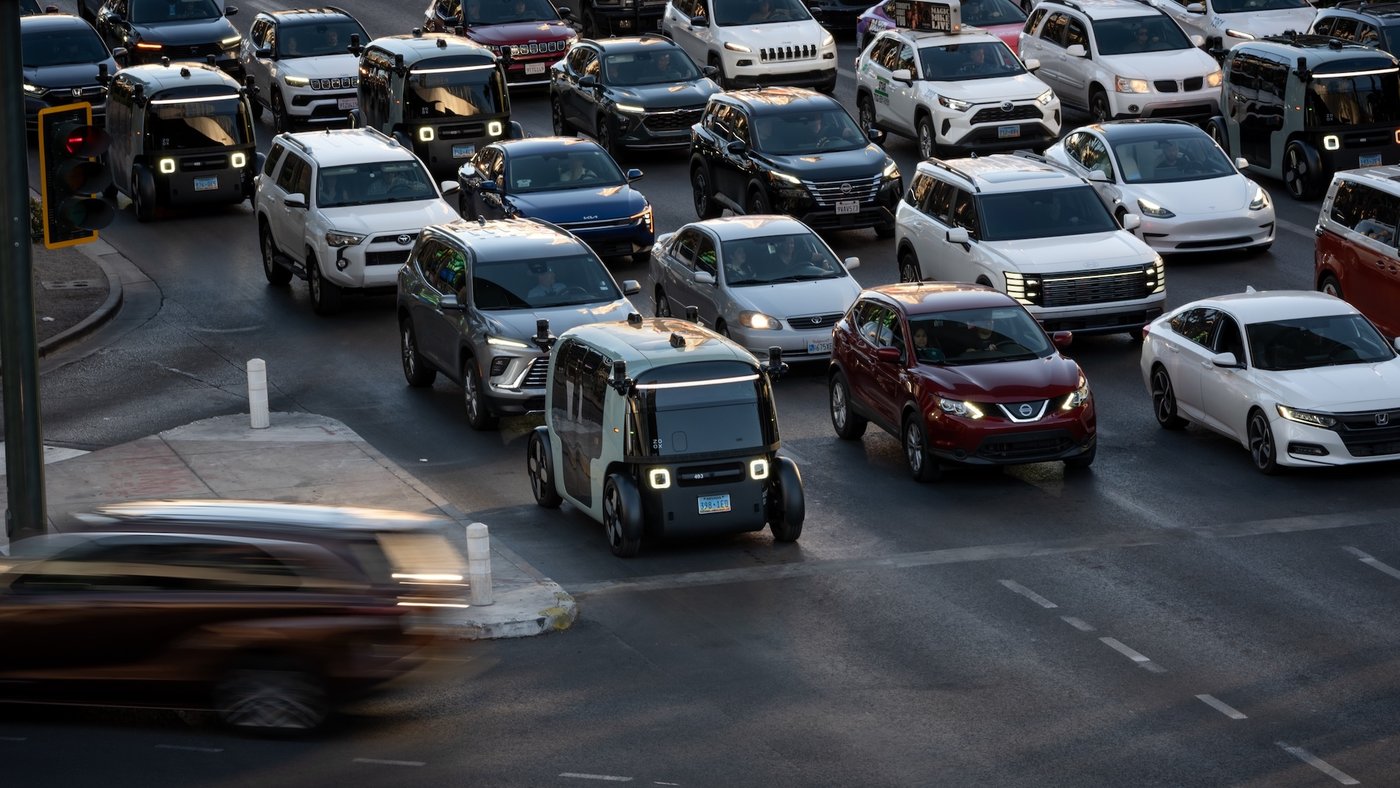
The exemption covers cars with no steering wheel, pedals or other manual controls, the configuration Zoox has championed since it began designing a purpose-built shuttle nearly a decade ago. NHTSA said the safety framework could be adjusted as the technology evolves, giving Zoox room to iterate as it gathers road data.
Zoox is the third company to clear this particular hurdle. Waymo and Cruise each won similar NHTSA exemptions in earlier rounds of the driverless-vehicle push, and their experience shows both the promise and the peril of the exemption: Waymo has expanded commercial service across several cities, while Cruise shut down its robotaxi operations after a pedestrian incident in 2023.
TechCrunch, in an analysis published Thursday, called the Zoox approval the most significant regulatory step for the robotaxi sector since those earlier grants. The exemption matters because it validates the design that defines Zoox: a symmetrical cabin with no driver position, built from scratch for autonomy rather than adapted from a conventional car.
Zoox, which Amazon acquired in 2020 for $1.2 billion, has taken a slower path than its rivals. It has spent years on its own vehicle, developed in-house, and has run limited service in Las Vegas and the San Francisco Bay Area. The company has said the symmetrical design, with four-wheel steering and no front or back, lets the car maneuver in tight spaces that confound conventional robotaxis.
The approval also lands at a moment of flux in the broader market. Tesla has promised a robotaxi service of its own, and its shares have swung on expectations about when regulators might approve a vehicle without mirrors or pedals. Zoox’s exemption, some analysts said, establishes a template that Tesla’s plans will be measured against.
Amazon’s ambitions extend beyond the taxi ride. The company has invested heavily in logistics robotics, and a driverless shuttle designed for dense urban streets fits a delivery business that already uses autonomous vehicles in warehouses and, increasingly, on sidewalks. Analysts said Zoox could eventually shuttle goods as well as people.
The economics remain unproven. Robotaxi services have struggled to reach profitability, and the cost of the sensors, software and remote monitoring that backstop autonomous fleets has kept per-mile costs high. Zoox has not disclosed its spending, but Amazon’s earnings reports show the unit absorbing losses as part of the company’s broader investment push.
NHTSA’s decision does not mean the road ahead is clear. The agency’s exemption is temporary, and states still control where the vehicles can operate. Zoox will need approval from each state it enters, a patchwork that has slowed expansion for every player in the industry.
Zoox’s roots reach back a decade. The company was founded in 2014 by Tim Kentley-Klay and Jesse Levinson, who argued that the future of autonomous driving belonged to purpose-built vehicles rather than retrofitted sedans. Amazon acquired the company in 2020 for $1.2 billion, a bet that the technology would eventually anchor a delivery and ride-hailing business inside the retail giant.
The company has been running a public service in Las Vegas, where its shuttles carry passengers along a fixed downtown route, and has tested in the San Francisco Bay Area. The scale has been small, measured in dozens of vehicles rather than thousands, which makes the NHTSA exemption a step change in what Zoox can do.
The exemption works within a specific legal framework. Federal law lets NHTSA grant temporary exemptions for vehicles that do not meet standard safety requirements, provided the applicants show the vehicles offer an equivalent level of safety. The caps, 2,500 vehicles in the first year and a similar number in the second, are among the largest the agency has granted.
The competitive context gives the approval extra weight. Waymo has expanded its paid service across several cities and is the industry’s volume leader, while Cruise has been rebuilding after shutting down its robotaxi operations. Tesla has promised a robotaxi service of its own. The regulatory lane Zoox just cleared is the one every player needs, and it is now open.
The approval process itself took time. NHTSA’s review of Zoox’s application stretched over more than a year, and the agency’s decision document addressed questions about occupant safety, emergency stopping and how the company would monitor vehicles remotely. The conditions attached to the exemption require Zoox to report safety data regularly, a structure that lets the agency adjust its oversight as deployment grows.
The company said it plans to begin scaling service in the cities where it already operates, then expand. For a sector that has spent two decades on the cusp of commercialization, Thursday’s decision is the kind of event that shifts the timeline from speculation to schedule.