
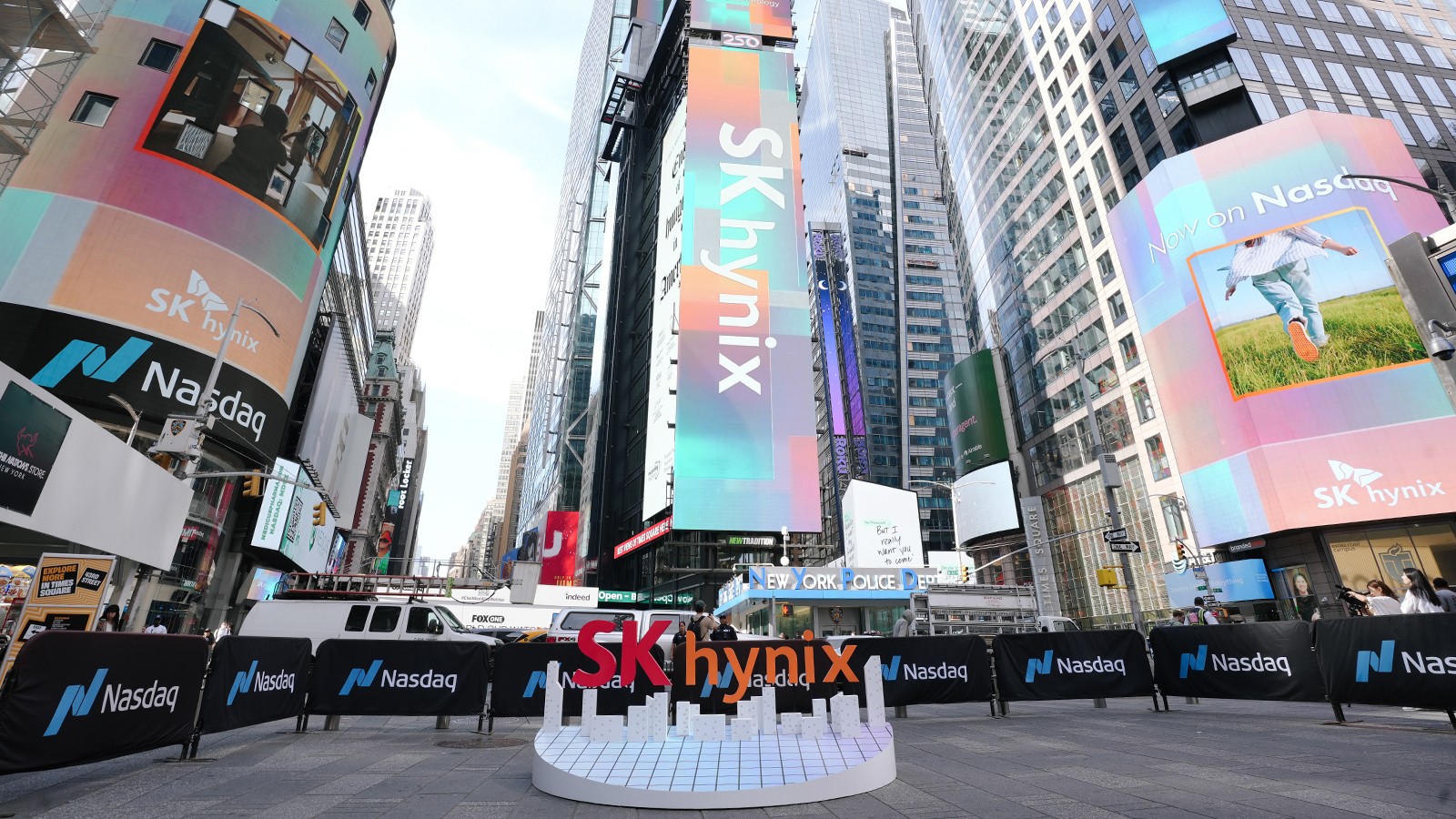
The two companies that rode the AI memory boom hardest fell hardest. Samsung Electronics and SK Hynix each dropped nearly 9% on August 3, and the KOSPI closed down 5.12% at 6257 points. The selloff hit after weeks of gains that had pushed Korean chip stocks to levels the market was starting to call stretched. The first sharp correction of the memory bull market arrived without warning, but not without reason.
The run-up had been extraordinary. SK Hynix’s ADR premium had climbed to 21% at one point, a signal of how much foreign money was chasing the stock. Korean chip exports had cleared $40 billion in each of the past two months, numbers that fed the rally and, eventually, the profit-taking.
The profit-taking thesis is the market’s own. When a stock has doubled on good news, the good news is already in the price, and any pause in the flow of buyers turns into a race for the exits. Analysts described the August 3 move as a correction within a bull market, not the end of one.
The fundamentals that drove the rally have not changed, analysts said. AI accelerators need high-bandwidth memory, and the two Korean companies control the supply. Demand for HBM continues to run ahead of capacity, and the pricing power that produced the record exports remains intact.
What has changed is the competitive dynamic. Aju Press reported on the same day that GDDR7 prices are rising and HBM4 mass production is approaching, and that Samsung is pressing its advantage in AI memory. The two companies are now in a closer fight than the market has been used to.
Samsung’s push matters. For much of the AI cycle, SK Hynix held the lead in HBM, winning the early orders from the accelerator makers. Samsung’s catch-up, and the prospect of HBM4 shipments, shifts the balance of power within the duopoly and raises the stakes for every quarter of production.
The next generation of HBM is the prize both companies are chasing, and the first to reach volume production will take the early orders from the accelerator makers. HBM4 is expected to raise performance and capacity per stack, which makes it the battleground for the coming years of AI demand. The proximity of the race is why the market is treating every production update as a price event.
The closer the race, the more volatile the stocks. When one company holds a clear lead, its earnings are predictable and its valuation is stable. When the gap narrows, every scrap of news about yield, capacity or customer allocation moves both stocks. August 3 showed the market reacting to that new reality.
The correction also has a mechanical side. The ADR premium of 21% was an invitation to arbitrage, with traders selling the premium and buying the underlying. The unwinding of that trade added to the selling pressure, according to market participants.
Supply-demand fundamentals still favor the memory makers. The AI buildout is consuming memory capacity that would otherwise go to phones and computers, and the shortage has spread into consumer electronics, visible in delivery delays and rising prices for end users. That tightness is the floor under the correction.
The question now is how long the digestion takes. Corrections in strong bull markets typically run for weeks rather than days, and the KOSPI’s 5.12% drop was one of its worst sessions in years. Analysts said the index and the memory names will need time to find a new base.
The index’s dependence on the two memory giants is part of the story. Samsung and SK Hynix together carry a large share of the KOSPI’s weight, so a bad day for memory is a bad day for the whole index. That concentration cuts both ways: when the memory trade resumes, the index will feel it just as sharply on the way up.
The global picture adds context. While Korean memory stocks fell, Taiwanese memory names rose for a second straight day, a rotation within the same supply chain that shows money leaving the leaders and moving to the laggards. The theme, analysts said, is not a loss of faith in memory, but a redistribution of it.
The depth of retail participation in the Korean market is a factor in the swings. Individual investors have poured into chip stocks through the rally, and their behavior tends to amplify both the climbs and the drops. A day like August 3 tests whether the retail base holds or joins the exit.
For investors in the Korean names, the practical advice is the same as it has been all cycle: the earnings will be volatile, and so will the shares. The second-place company pressing the leader means more competition, more news flow and more price swings.
None of that changes the underlying arithmetic. AI demand for memory is still growing, supply is still tight, and the two Korean companies still make most of the world’s high-bandwidth memory. The bull market had a bad day; it did not end.
The coming weeks will show whether the correction is a pause or a pivot. Watch the HBM4 production schedules, the GDDR7 price lists and the export numbers. Those three lines will decide whether the memory stocks resume the climb or keep digesting.



