Formlabs, the Massachusetts maker of desktop 3D printers backed by SoftBank, is in early discussions with financial advisers about an initial public offering that could raise roughly $500 million, according to people familiar with the matter. Bloomberg reported the talks. The company has made no final decisions on timing, size or whether to proceed, the people said.
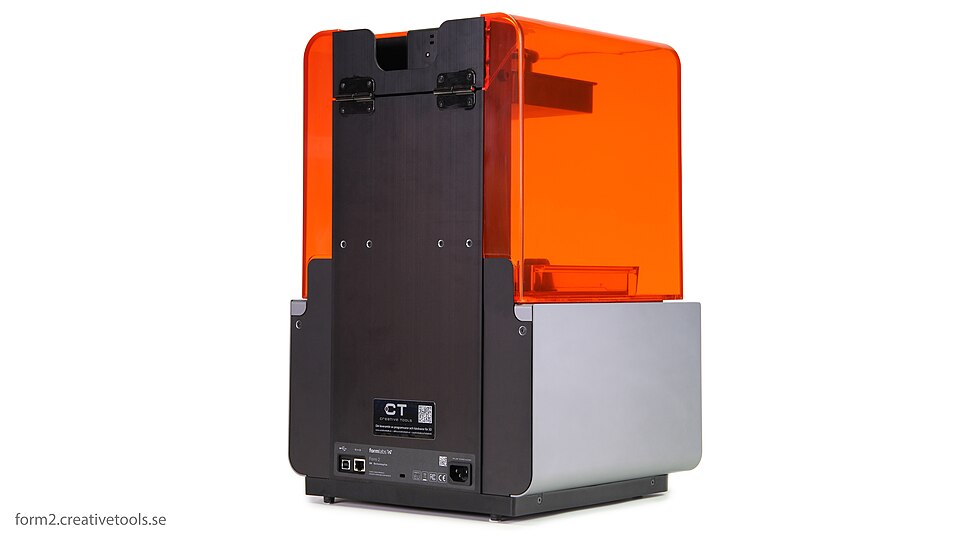
The company is one of the best-known names in 3D printing. Founded in September 2011 by three MIT Media Lab students — Maxim Lobovsky, David Cranor and Natan Linder — it raised nearly $3 million on Kickstarter for its first printer, the Form 1, and has spent fifteen years building a product line around stereolithography and selective laser sintering machines: the Form 4 and Form 4L for resin printing, the Fuse 1+ for nylon powder. Its customers include dentists, jewelers, product designers and manufacturers; Ford used Formlabs printers to prototype parts for its Electric Explorer. According to market intelligence firm CONTEXT, Formlabs held a 38% share of global hardware shipments in the professional price class in 2025, the leading position in the category.
The funding history shows a company that stayed private through the 3D printing boom and bust. It raised $15 million from New Enterprise Associates in 2018 at a valuation above $1 billion, with former General Electric chief Jeff Immelt joining the board. In May 2021, SoftBank’s Vision Fund 2 led a $150 million Series E that valued the company at $2 billion. Governance watchers noticed this year when Rob Willett, the former chief executive of Cognex, joined the board, replacing Carl Bass, the former Autodesk chief who had served since 2017 — the kind of change that often precedes a public listing. Swapping a founder-era director for a public-company veteran is the sort of move that governance analysts flag, and 3D Printing Industry had flagged it as IPO speculation before Bloomberg’s report gave the story a number.
For SoftBank, a Formlabs IPO would add another portfolio company to the public markets in 2026 and give the firm an exit path from a stake held since 2021. SoftBank has been monetizing its positions aggressively — it borrowed against its OpenAI stake to raise capital, and has watched its listed portfolio companies rally — and a Formlabs listing would be a smaller but useful data point in that strategy. The firm has spent the past two years reshaping its portfolio toward AI infrastructure, but its older bets in hardware and robotics are now reaching the age where investors expect liquidity.
The market timing is selective. The IPO window has reopened for companies with clear stories, but the giants of this cycle are AI infrastructure names: Nscale, the London-based AI infrastructure builder, has hired Goldman Sachs and JPMorgan and is targeting a $25 billion valuation after closing a $2 billion round at a $14.6 billion valuation in March. Formlabs’ potential $500 million raise looks modest next to those numbers, and that is the point. It is not chasing AI infrastructure demand. It makes and sells physical tools used to prototype and manufacture real parts — a business with a decade of installed base, a software subscription layer and a different kind of growth curve.
The sector’s history argues for caution. The first wave of 3D printing companies went public in a frenzy — Desktop Metal and Markforged listed via SPACs in 2021 and saw their shares collapse as the market repriced promises of distributed manufacturing, and Stratasys and 3D Systems, the industry’s old guard, have spent years consolidating and restructuring. Formlabs stayed private through all of it, kept shipping printers, and is now testing the window with a measured raise. Whether investors reward that discipline is an open question: the sector’s credibility was damaged by the first boom, and it will take more than one IPO to rebuild it.
The risks are the same ones that have always applied. 3D printing remains a niche in mass manufacturing; most printers still sit in prototyping departments rather than production lines. Chinese competitors have pushed prices down across the desktop segment, squeezing margins at the low end. Formlabs’ own financials are not public, so investors will be judging the company on the strength of its installed base, its software subscriptions and its position in dental and industrial verticals, where margins are better and switching costs higher. The company has expanded beyond printers into materials, software and automated manufacturing cells, businesses that carry recurring revenue but also recurring costs.
If the listing happens, it will be a test of whether the market believes 3D printing’s second act is different from its first. The company has never claimed to replace factories; it sells tools that make prototyping and small-batch production faster, and its leadership position in the professional segment gives it a story that the SPAC-era names never had. After a decade of hype and disappointment, that modest pitch may be exactly what the sector needs — and exactly what makes Formlabs a plausible public company.