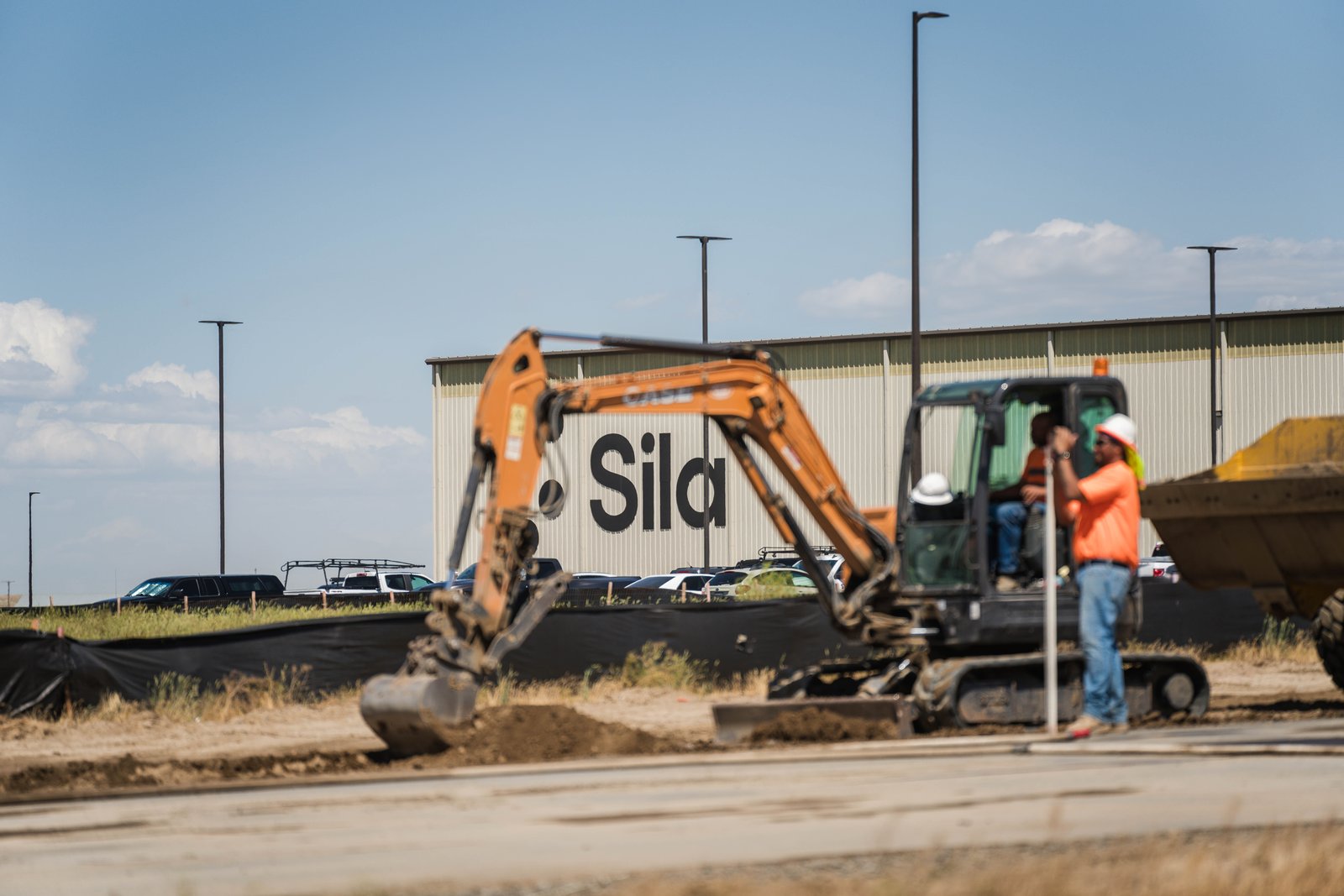
Sila, the California battery startup known for its silicon-anode chemistry, has secured a $1.4 billion loan from the U.S. Defense Department to build domestic battery production capacity, according to TechCrunch, a bet by the Pentagon on a company it sees as central to breaking China’s grip on the battery supply chain.
The loan, the report said, will fund construction of manufacturing capacity in the United States, a priority that has moved up the defense establishment’s agenda as the military’s demand for batteries, in vehicles, aircraft, drones, radios and soldier equipment, has collided with a supply chain dominated by Chinese producers. Sila’s technology replaces the graphite anode used in conventional lithium-ion cells with silicon, a material that stores more energy per gram, promising longer range and faster charging. The military has tested silicon-anode cells in everything from electric vehicles to portable power systems, and the Pentagon’s interest is straightforward: a domestic source of advanced battery technology reduces the risk that a conflict or an export ban could cut off supply.
The size of the loan is rare for a battery startup. The Pentagon has financed battery research and small-scale production before, but a commitment of this scale to a private company reflects how the calculus has changed. Washington has watched China’s dominance of the global battery industry with alarm, noting that Chinese companies control most of the refining, cell manufacturing and raw-material processing that the entire world depends on. Efforts to build a U.S. battery industry have focused on both established players and startups, and the Defense Department has become a willing lender where commercial banks see too much risk.
Sila’s story is a long one by startup standards. Founded in 2011 by a former Tesla engineer, the company spent more than a decade perfecting its silicon-anode material, raising billions of dollars from investors including venture funds and strategic partners before bringing its first commercial product to market. Its cells are designed to work with existing lithium-ion manufacturing lines, a deliberate choice that lowers the barrier to adoption: automakers and device makers can switch to Sila’s chemistry without building new factories. The company has said its technology will power everything from consumer electronics to electric vehicles, and it has announced manufacturing plans in the Pacific Northwest, where cheap hydropower and an existing battery-industry cluster have made it a preferred location.
The Pentagon’s loan lands at a moment when defense investment is flowing to technology beyond the usual categories. The AI boom has dominated the narrative around government-backed technology spending, with the Defense Department funding compute infrastructure, software and autonomous systems. Batteries are the quieter end of that story, but no less strategic: the military’s transition to electric and hybrid platforms, its drone programs and its reliance on portable power all depend on the same cells that consumer electronics and EVs consume. The department has said it wants redundancy in critical supply chains, and batteries top the list.
The loan also signals how the reshoring of critical industries is being financed. Rather than direct grants, Washington has increasingly used loans, loan guarantees and purchase commitments to pull manufacturing back to U.S. soil, a model that spreads risk between the government and private investors. The approach has drawn criticism from some budget hawks, who argue the government is picking winners, and from some industry analysts, who note that loan programs cannot fix the deeper cost disadvantages of U.S. manufacturing. Supporters counter that battery production is a national-security imperative, not a commercial market, and that the premium is the price of resilience.
For Sila, the funding removes the biggest constraint on its growth. Building battery plants is capital-intensive, with a single factory costing billions of dollars, and startup balance sheets rarely stretch that far. With the Pentagon’s money behind it, the company can build capacity and sign customers with more confidence, and its silicon-anode cells, once a laboratory curiosity, move closer to the scale that automakers and defense contractors require. The company still faces the hard work of manufacturing: producing millions of cells with consistent quality is an unforgiving discipline, and the startup’s credibility will ultimately rest on its yield rates, not its funding announcements.
The broader picture is one of an industry being reorganized by government money. China built its battery dominance with decades of state support; the United States and Europe are now using loans, tax credits and procurement rules to build alternatives. Sila’s $1.4 billion is one data point in that effort, notable for its size and for the direction of the money, from the Pentagon to a startup that most consumers have never heard of. If the bet pays off, the military gets a domestic supply of advanced cells, and the startup gets the scale to compete. If it does not, the loan joins a long list of government efforts to out-engineer a supply chain that did not go as planned.