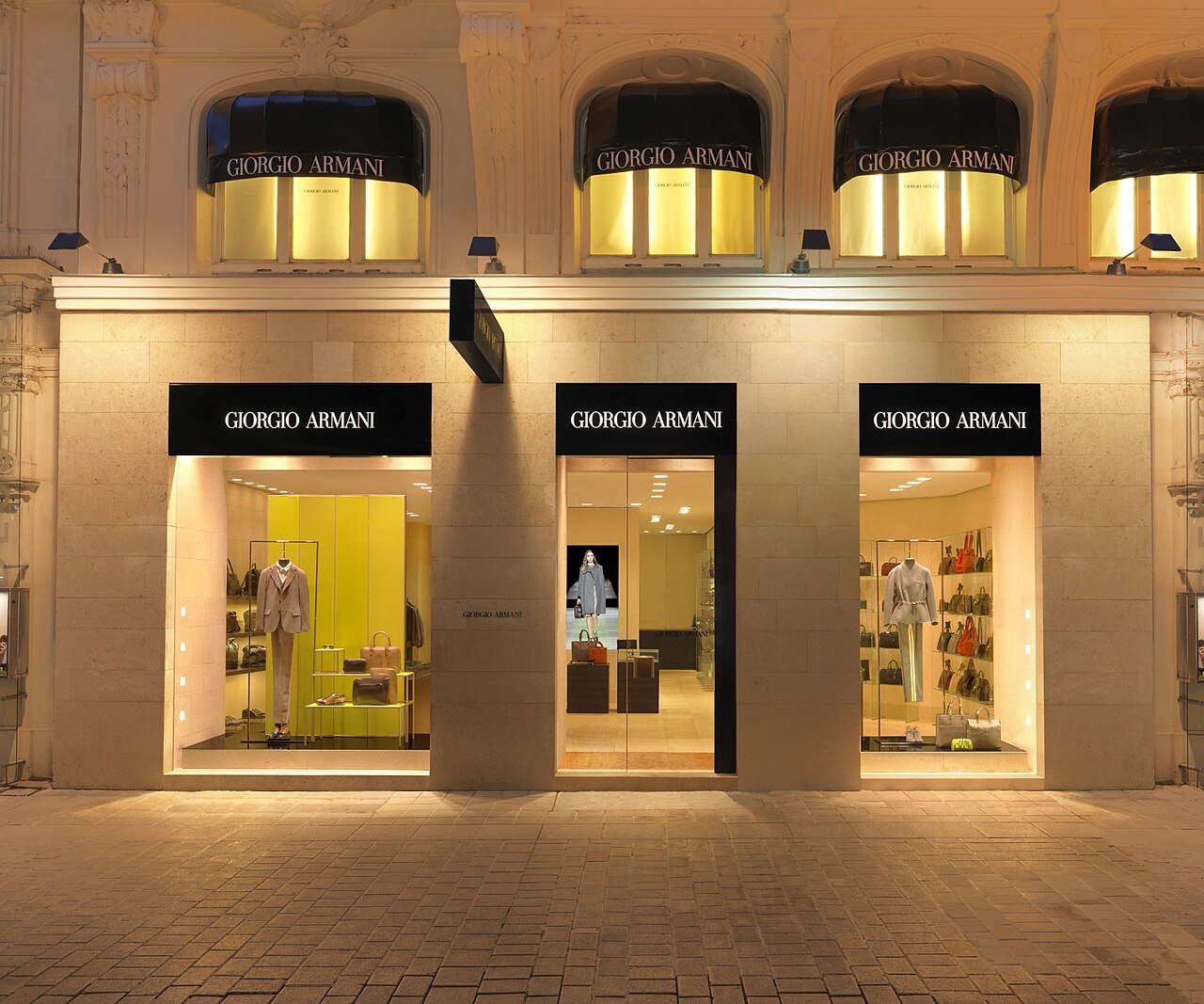
Giorgio Armani put a calendar in his will. The founder, who died in September 2025, instructed his heirs to sell 15% of the fashion group that bears his name within 18 months of his death, a deadline that lands in March 2027. He also required them to transfer another 30% to 54.9% of the shares to the same buyer within three to five years, a structure designed to keep the house under one owner while his foundation retains at least 30.1%.
That timetable is now in doubt. Corriere della Sera, citing people familiar with the matter, reported that the sale of the 15% stake may not be completed by the deadline. The report said the luxury market remains difficult and that negotiations over the terms of a deal will take time. Executives involved in the process regard the will’s timing clauses as nonbinding, the newspaper said, and the priority is securing the best possible terms rather than hitting a date.
The group had planned to move faster. Luxe.co, a Chinese fashion-industry publication that has tracked the process closely, reported earlier that Armani had begun restructuring its business and intended to formally start the stake sale this September. A spokesman for the group confirmed that work on a business plan was underway but declined to provide details.
The stakes are unusually high for a family house. Armani, founded in 1975, is one of the last large independent fashion groups in Italy, a country where most of its storied names have passed into the hands of LVMH, Kering, or Swiss private equity. The succession plan Armani wrote before his death was an attempt to avoid that fate while still raising capital: sell a minority stake to a single investor, hand over a controlling share later, and keep the foundation as a guardian of the brand.
The market is not cooperating. Luxury demand has cooled across Europe and Asia, with Chinese shoppers, once the industry’s engine, spending more cautiously. Analysts said that environment makes buyers choosier about valuations and slower to commit, and that a deal of this size takes time to structure no matter how eager both sides are.
The market backdrop is measurable. The largest luxury groups have reported falling sales in China and softer demand in the United States, and analysts have trimmed sector forecasts for the rest of the year. Italian houses with heavy exposure to Asian tourism have felt the slowdown most directly, and private equity buyers have pulled back from fashion deals after several high-profile investments disappointed. For a family that must sell, the timing is unlucky: the founder’s death landed in the middle of the industry’s weakest stretch since the pandemic. A single buyer for two successive blocks of stock is a demanding requirement, they said, because it narrows the field to investors with both the capital and the patience to hold a fashion house through a downturn.
The field of likely buyers has been the subject of speculation in Italian business circles since the founder’s death. Private equity firms with consumer portfolios and rival luxury groups have both been mentioned by analysts as plausible suitors, though no formal bidder has emerged publicly. The will’s structure complicates matters: any buyer must be prepared to take a minority stake now and a majority later, on terms set by a foundation that is not primarily interested in maximizing price.
Armani has long declined to publish detailed financial statements, a rarity for a group of its scale. Analysts estimate annual revenue in the region of 2.5 billion euros, with licensing income from fragrances, eyewear, and accessories providing steady cash flow alongside the core clothing business. The private structure makes valuation difficult for outsiders: buyers must underwrite their own diligence, and the sellers must decide what price justifies handing a measure of control to an investor, however patient that investor promises to be.
A delay would not be the first for a succession of this kind, and industry executives said it should not be read as a failure. The 18-month clause was written by a founder who wanted momentum, but the people managing the process are professional advisers who answer to the estate, not to a calendar. Selling into a weak market simply to meet a deadline would undermine the very value the will was designed to protect.
The house remains profitable and cash-generative, with a broad business spanning clothing, accessories, cosmetics, and hotels. Its challenge is different: replacing a founder who was also its chief designer, its chairman, and its public face. Armani had stepped back from day-to-day design duties before his death, handing creative direction to a team of longtime deputies, but the transition has still been watched closely by retailers who depend on the brand’s consistency.
For the wider industry, the Armani process is a case study in how the great independent houses of the twentieth century hand themselves on. Gucci, Versace, and Fendi all passed to conglomerates in the 1990s and 2000s; Armani was the last big holdout. Whether the foundation can preserve independence while bringing in outside capital will tell investors a great deal about the future of the family-owned fashion business.
People close to the process say the group is in no rush. The will’s later tranche gives the estate until 2030 to transfer the controlling block, and a buyer who signs early for 15% knows a larger position is coming. The advisers’ calculation, according to those familiar with their thinking, is that a well-priced deal announced in late 2027 or early 2028 beats a rushed one in March 2027. The founder’s calendar may slip; his intent is intact.