In a tax-incentive application posted by the Texas Comptroller, Tesla has laid out plans for the largest manufacturing investment it has ever put on paper: a $10.1 billion solar factory south of Houston, code-named Project Crystal Sun. The documents, filed on July 22 and surfaced publicly in early August, describe a vertically integrated solar cell plant on roughly 3,050 acres near Richmond in Fort Bend County, with construction through 2028 and commercial production scheduled for the first quarter of 2029.
The scale is striking even by Tesla’s standards. The application breaks the $10.116 billion total into about $1.5 billion in real property and $8.6 billion in manufacturing equipment, and it projects 9,712 permanent jobs once the plant reaches full operation, along with 1,147 peak construction jobs. The company wants a 10-year property tax limitation under the Texas Jobs, Energy, Technology and Innovation Act, requested through the Lamar Consolidated Independent School District, which stands to gain the tax base if the plant is built.
The incentive is not a formality; it may decide where the plant goes. Tesla said in the filing that it is actively evaluating a competing site outside Texas, and it framed the tax limitation as the factor that would make the Fort Bend County location competitive. That wording is standard in such applications, but the company’s willingness to hold the project hostage to incentives signals how it views the economics of solar manufacturing, a capital-intensive business with thin margins and global overcapacity.
The factory is part of a goal that Tesla’s chief executive, Elon Musk, has stated publicly: building 100 gigawatts a year of solar manufacturing capacity in the United States. The company has not disclosed the plant’s annual output in the application, but analysts said a project of this size would be the foundational piece of that ambition, producing the cells and panels that feed Tesla’s residential solar and energy storage businesses. The company has said it needs domestic capacity to meet demand for its products and to reduce dependence on imports.
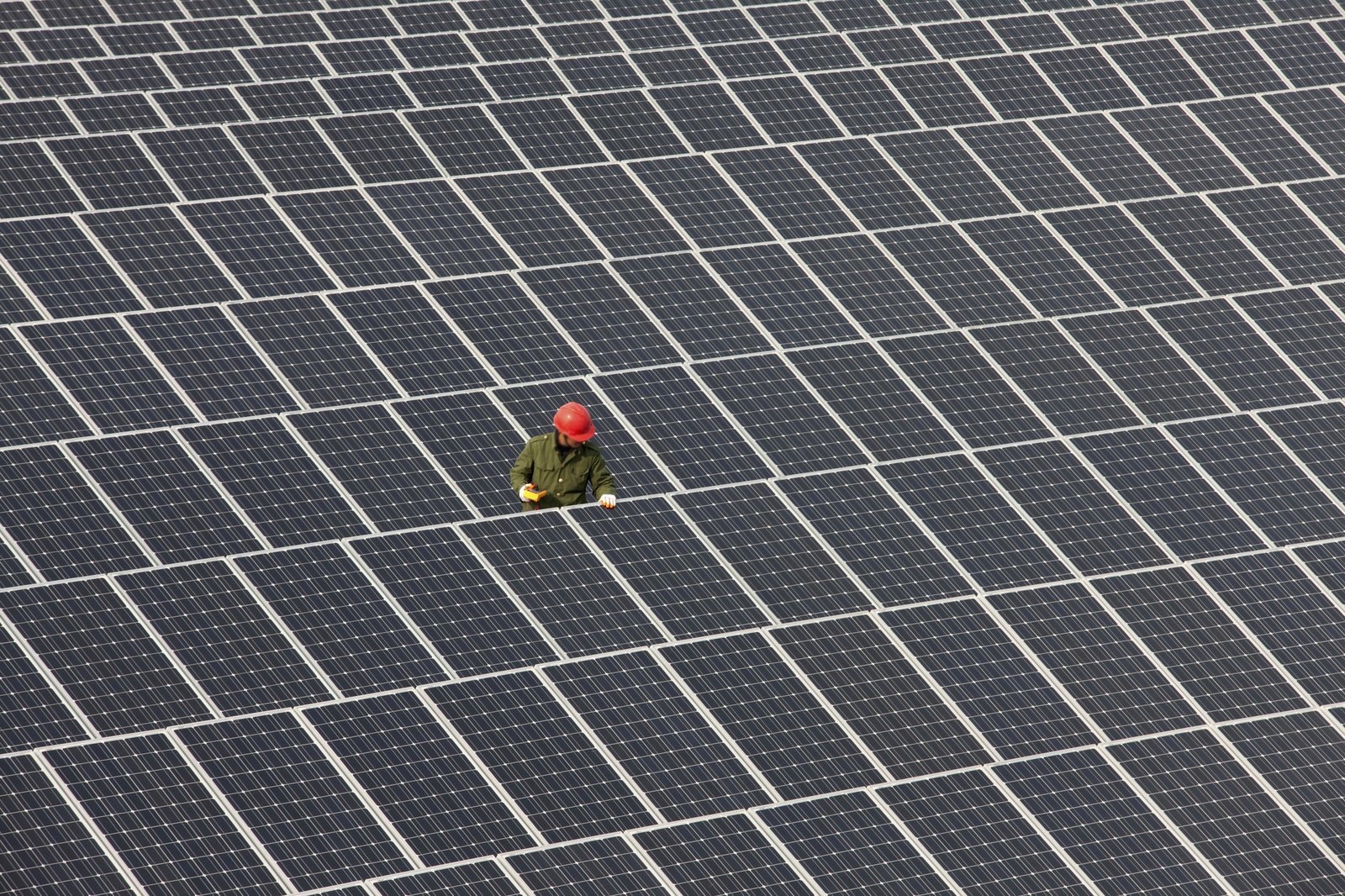
The factory’s product mix is also a question. Solar cells are the components that convert sunlight into electricity, the step of the supply chain that has proven hardest to manufacture profitably outside Asia, and Tesla has said it wants to control that step rather than buy cells from suppliers. The company has not said whether the plant will also produce the finished panels, batteries, and other components that make up its energy systems, but analysts said a campus of this size would likely house more than one line.
The timing links the project to the rest of Musk’s Texas empire. Days before the solar filing surfaced, SpaceX confirmed that its chip-making factory, a $16.8 billion project, would be built in Grimes County, northwest of Houston. The two announcements, arriving within a week, sketch a manufacturing footprint across the state that spans AI chips, rockets, and solar panels, and that leans on Texas incentives at every step.
Tesla’s energy business has been a bright spot in its finances. The unit that sells solar, storage batteries, and grid-scale systems has grown faster than the car business in recent quarters, and Musk has said energy will eventually match or exceed the vehicle division. A domestic solar cell plant would let the company capture more of that value chain, from raw silicon processing to the panels installed on rooftops, instead of buying cells from Asian suppliers.
The economics of solar manufacturing in the United States remain difficult. Panel prices have fallen for years, and domestic factories have struggled to compete with Asian capacity on cost. The industry’s answer has been policy: tax credits, domestic-content requirements, and state incentives have all been used to make American manufacturing viable. Tesla’s application leans on the Texas incentive, and its stated goal of 100 gigawatts depends on a policy environment that keeps the math working.
The incentive application itself offers a window into the project’s sensitivities. Tesla asked for a property tax limitation for a decade, and it attached the out-of-state alternative to the request, language that tells the district exactly what it is competing with. Local officials have greeted the project warmly, but the public hearing process and the school district’s vote will test whether the politics of the tax break match the economics of the plant.
Execution is the risk. Tesla has a history of announcing ambitious factory projects and scaling them to fit reality, and a project of this size will take years to build and longer to reach the capacity the company says it needs. The 2029 start date gives the company time, and the site near Houston gives it access to ports, highways, and a workforce that is growing fast.
The Fort Bend County decision will come in the coming months, as the school district and county weigh the tax deal against the alternative that Tesla says is waiting out of state. For Texas, the project would be a prize: one of the largest industrial investments in the state’s history, and a vote of confidence in its model of low taxes and fast permitting. For Tesla, the factory is the piece that makes its energy ambitions real. The filing is on paper now; the question is whether the factory follows.
If approved and built, the plant would reshape where America’s solar panels are made. The country’s manufacturing base for cells and modules is small, and most panels installed in the United States are assembled abroad from imported components. Tesla’s project, at the scale proposed, would be one of the first attempts to build the whole chain on American soil, and its success or failure would be read as evidence about whether that is possible. The filing is the opening bid in that test.