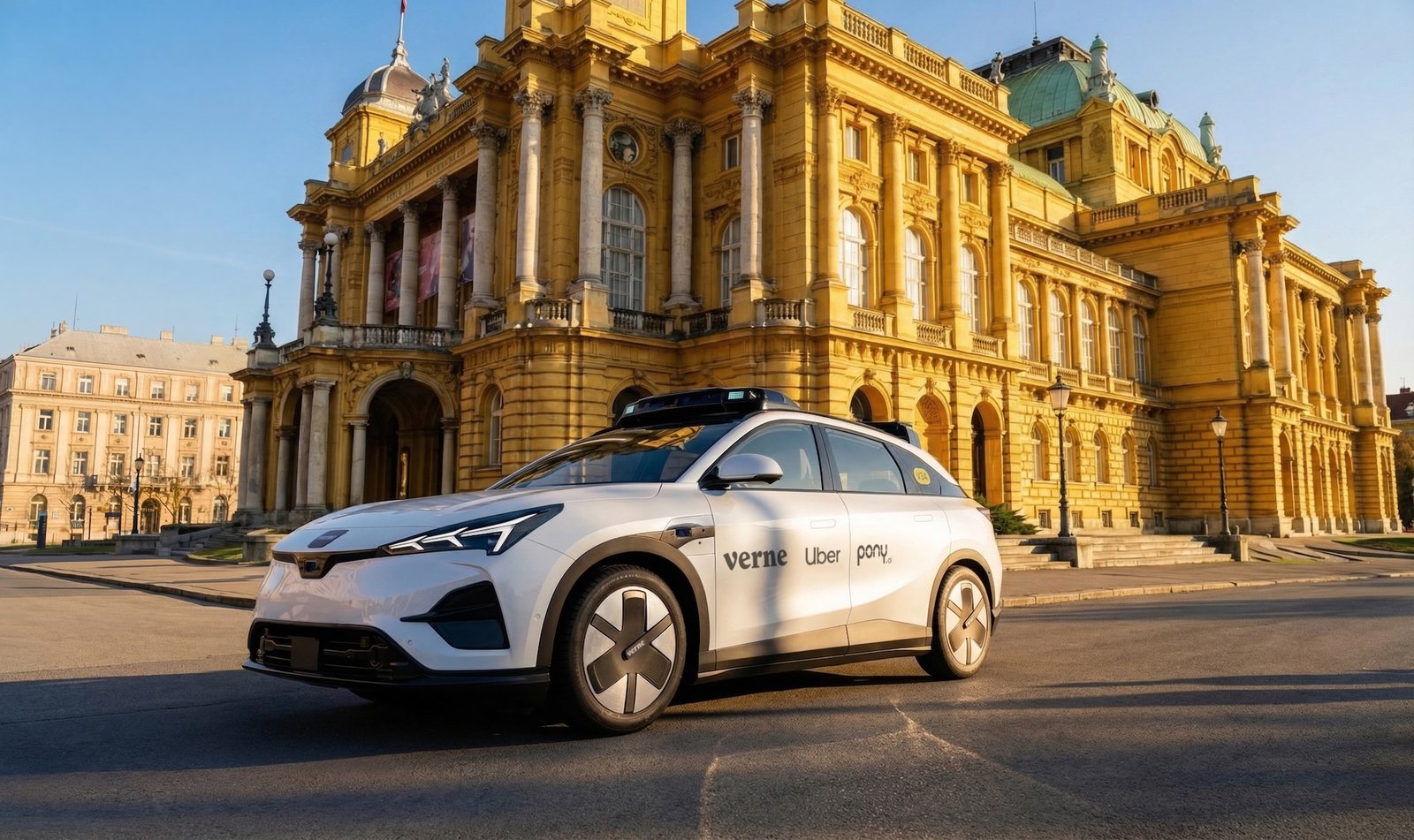
Uber’s driverless expansion is crossing the Atlantic. The ride-hailing company said on August 15 that it is expanding its partnership with Pony.ai, the Chinese autonomous-driving company, to deploy more than 2,000 robotaxis across five European cities. The two companies already operate together in parts of the United States, and the new agreement extends that relationship to a continent where autonomous taxis have so far been a test phenomenon rather than a commercial product.
The scale of the plan is what separates it from earlier experiments. Two thousand vehicles, distributed across five cities, would make the European program one of the largest robotaxi deployments outside the United States and China. The announcement does not specify which cities are first, when vehicles begin carrying passengers, or how the fleet will be phased in, details that people familiar with the plan say will be announced as regulatory approvals are secured.
The structure of the deal follows the pattern Uber has established in the United States. Uber does not build its own autonomous vehicles; it operates the network, supplies the demand, and handles dispatch, payments, and customer service, while partners such as Pony.ai, Waymo, and others provide the technology and the cars. The model lets Uber spread across multiple autonomous platforms without betting its balance sheet on any single one, and it lets partners plug into Uber’s rider base without building a consumer brand from scratch.
Pony.ai brings a specific set of strengths. The company, founded by former Baidu and Google engineers, has operated robotaxi fleets in Chinese cities for years and has been testing in the United States, where it holds permits in California and other states. Its vehicles have logged millions of miles of autonomous driving, and its technology has been validated in some of the most complex urban environments in the world. Europe’s cities, with their narrow streets, heavy pedestrian traffic, and varied weather, will test that technology in new ways.
The regulatory environment is the main obstacle. Unlike the United States, where states such as California and Texas have created pathways for robotaxi deployment, the European Union regulates vehicles through a combination of EU-wide type approval and national road rules. A robotaxi that meets EU standards still needs permission from each member state, and some cities have already signaled skepticism about driverless vehicles in their centers. Uber and Pony.ai’s five-city plan implies parallel negotiations with multiple regulators, a process that typically takes longer than technology development.
The field of competitors is crowded and shifting. Waymo, the Alphabet subsidiary that leads the U.S. robotaxi market, has expanded to multiple American cities and has said it is studying international markets. Tesla has promised its own robotaxi network. European automakers, including Volkswagen and BMW, have invested in autonomous technology through partnerships. Uber’s approach of partnering with multiple autonomous companies, rather than betting on one, reflects its experience: the company spent more than a decade and billions of dollars building its own self-driving unit before selling it and pivoting to partnerships.
The economics of the European expansion depend on costs that are still falling. Autonomous vehicles remain expensive to build, and the sensors, computers, and software that replace a driver add tens of thousands of dollars to each car. Operating costs, including remote monitoring, maintenance, and insurance, are also higher than for conventional taxis. Uber and Pony.ai have said the long-term math works because the vehicles can run longer hours than human drivers, but analysts who track the industry note that no robotaxi operator has yet demonstrated sustained profitability at scale.
The announcement also carries a geopolitical dimension. Pony.ai is a Chinese company operating in European markets with American backing, a combination that regulators on both sides of the Atlantic have begun to scrutinize. The company has structured its operations to comply with data rules in each market, and Uber has emphasized that rider data will be handled under European law. But the same concerns that have driven scrutiny of Chinese technology companies in telecom and cloud computing are likely to surface in autonomous vehicles, and the partnership’s success will depend in part on how regulators weigh those concerns against the benefits of competition.
For Uber, the European plan is part of a broader strategy of preparing for a driverless future without owning it. The company has said it expects autonomous vehicles to become a significant share of its trips within a few years, and its partnerships with Pony.ai, Waymo, and others give it a hedge across technologies and regions. The five-city European deployment, if it proceeds on schedule, would make Uber the first ride-hailing platform to operate robotaxis at scale on three continents.
The coming months will reveal the details that the announcement left open: the cities, the timeline, the vehicle model, and the price per ride. The answer to each question will be negotiated with regulators, insurers, and city governments, and the pace of those negotiations will determine whether the 2,000-vehicle target is reached next year or later. What is already clear is that the competition among robotaxi networks has moved from the United States to the world, and that Uber has chosen to fight that battle in partnership rather than alone.