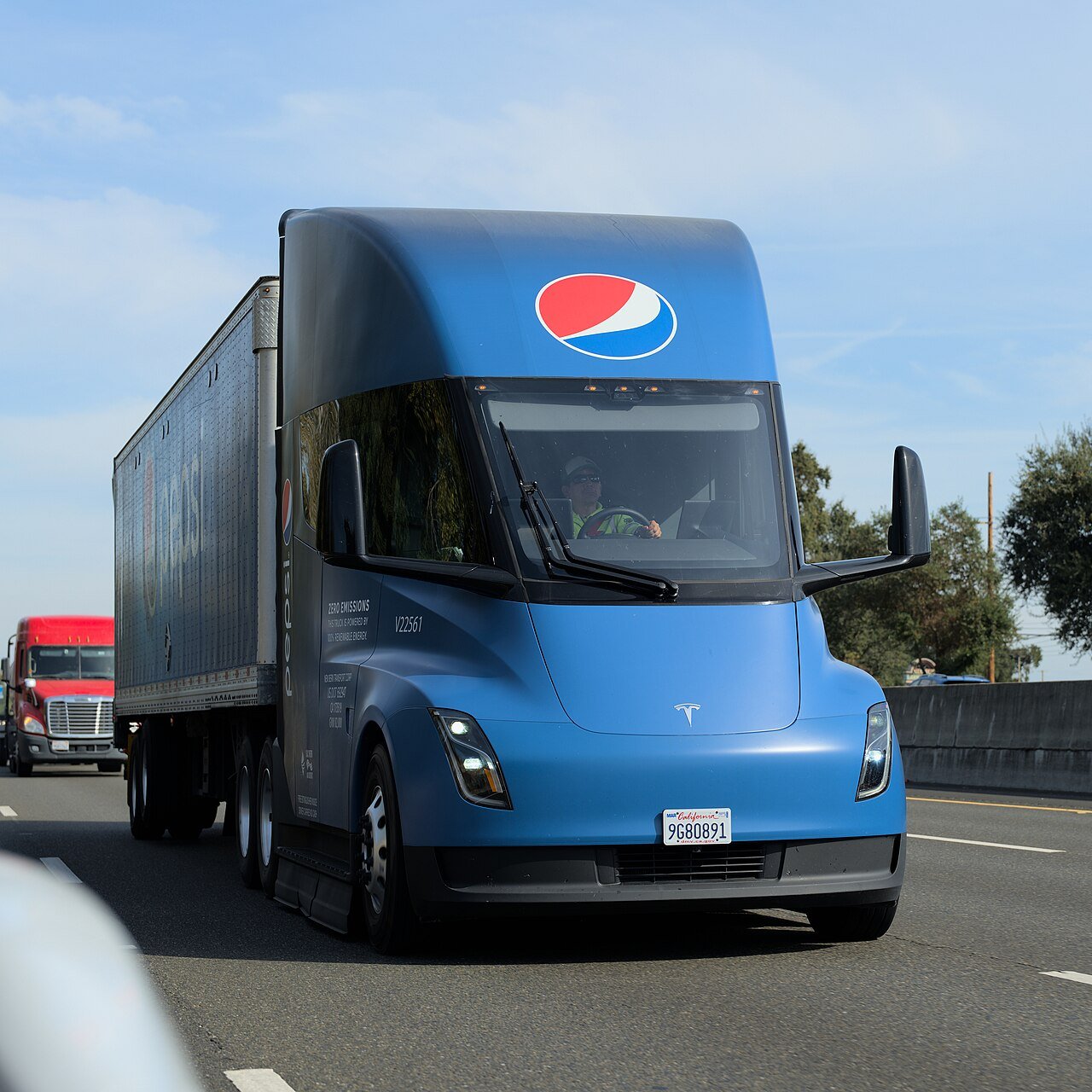
Einride, the Swedish company that sells electric trucking as a service, said it will buy 500 Tesla Semis for its North American fleet, the largest deployment of the electric heavy truck announced to date, Reuters reported on Aug. 17. The trucks will carry freight for customers including Amazon, managed through Einride’s Saga AI platform, and deliveries are expected to roll out in stages across North American routes.
The order is the most substantial commercial validation the Tesla Semi has received since the truck’s production began in earnest. The Semi was unveiled with great fanfare in 2017, promised as the vehicle that would electrify long-haul freight, but its production ramp has been slow and its customer base thin, made up mostly of pilot fleets and early adopters measuring the truck’s range, charging times, and total cost of ownership against diesel incumbents. A fleet operator committing to 500 units is a different category of demand.
The numbers behind Einride explain why the deal matters to both companies. Einride reported first-half revenue of $27 million, up 26% from a year earlier, and the company expects growth in the second half to roughly double, according to the report. For a company of that size, an order of 500 Semis is a bet on the category as much as on the vehicle, and it signals that the electric trucking model is moving from pilot projects to commercial scale.
Einride’s business model is unusual in the industry. The company does not simply sell trucks; it operates them, managing fleets, drivers, charging, and routes for shippers through its Saga platform, which uses AI to plan the most efficient operations. The Amazon contract fits that model, with Einride providing the capacity and Amazon providing the freight. The 500 Semis give Einride the hardware to serve large shippers who want electric transport without building the expertise themselves.
For Tesla, the order is a vote of confidence at a critical moment. The Semi is the company’s entry into commercial trucking, a market with different economics than passenger cars, and Tesla has repeatedly pushed back the truck’s production schedules. A customer of Einride’s type, with a platform that optimizes truck utilization, is exactly the kind of operator that can prove the Semi’s viability on real routes with real schedules.
The electric truck market has been waiting for this kind of commitment. Heavy trucks are among the hardest vehicles to electrify, because the batteries needed for long ranges add weight that cuts into payload, and the charging infrastructure for big rigs is still being built. Analysts said the Einride order shows that the economics have reached a point where at least some operators see electric trucks as viable on their routes, particularly where routes are predictable and charging can be planned.
The charging question remains the industry’s bottleneck. A fleet of 500 Semis will need depots, chargers, and grid capacity that most freight corridors do not yet have, and Einride will have to build or contract for that infrastructure alongside its vehicle order. The company’s experience running electric fleets in Europe, where it has operated for years, gives it a head start on the operational knowledge that less experienced buyers would lack.
The deal also reflects the changing structure of freight transport. Shippers are under pressure from customers and regulators to cut emissions, and the demand for electric delivery is growing faster than the supply of electric trucks. Companies like Einride that can offer turnkey electric capacity are positioned to capture that demand without asking their customers to build anything. The 500 Semis are the hardware behind that promise.
For the industry, the order is a sign that the electric truck era is shifting from demonstration to deployment. The Semi has always had the range and the performance to compete; what it lacked was a scaled buyer willing to put it to work. Einride has now answered for 500 of them, and the question that follows is whether other fleet operators will follow.
The Semi’s journey to this order has been long. Tesla unveiled the truck in 2017 with promises of a 500-mile range and dramatic savings on fuel, began delivering units in late 2022, and has since scaled production gradually while building out the charging network the truck needs. The truck has earned praise for its performance and criticism for the slow pace of its rollout, and the Einride order is the strongest sign yet that the production line can attract commercial buyers beyond the early adopters.
The operational details will determine whether the deal works. A fleet of 500 electric trucks needs charging infrastructure sized to the routes, and Einride will have to build or lease the depots and chargers that keep the trucks moving, with the company’s Saga platform planning routes around charging availability. The company’s experience running electric fleets in Europe, where it has operated for years, gives it the operational playbook that less experienced buyers lack.
The market context favors the bet. Freight customers face mounting pressure to cut emissions, fuel prices remain volatile, and the total cost of ownership for electric trucks has improved as battery prices fell, and analysts said the economics have reached the point where the right operator on the right routes can make electric trucks cost less than diesel. Einride is betting that it is that operator, and Tesla is betting that a scaled buyer can finally prove the Semi’s case.