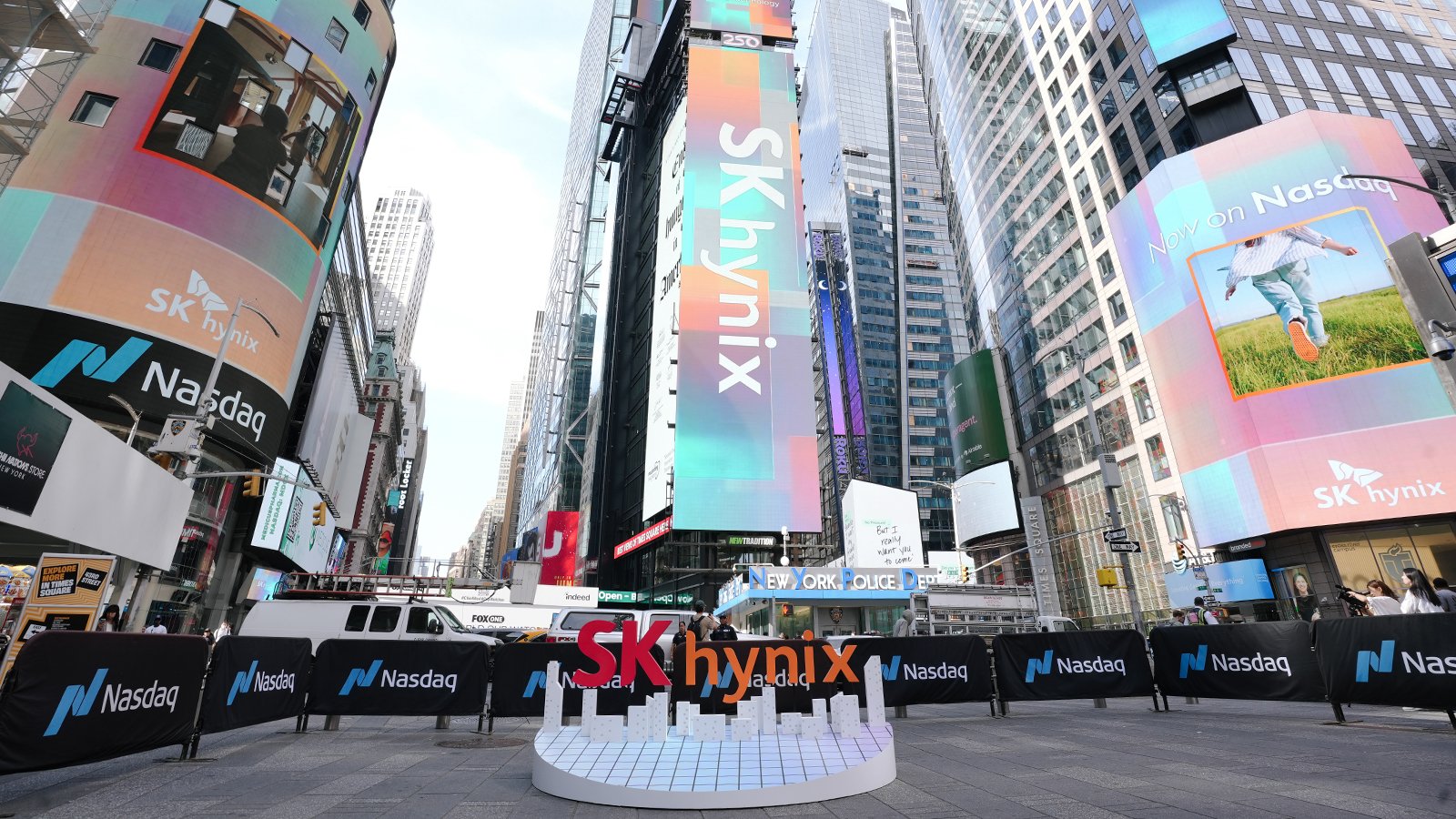
The announcement landed at 8 a.m. in Seoul, before the market opened, and for a few hours it worked. SK Hynix said Wednesday it would buy back and cancel about 40 trillion won, roughly $28.6 billion, of its own shares, a response to a slide in its stock price that the company said had left its valuation out of step with the value of its AI memory business. Shares rose nearly 5% on the news.
Then the market’s mood turned. South Korea’s KOSPI index fell 5.7% on the same day, and Samsung Electronics, the country’s largest company, dropped 7.8%, as investors digested a surge in global bond yields and escalating tensions in the Middle East. The buyback, the largest of its kind in the history of the Korean stock market, was suddenly one of the few bright spots in a bad week for Seoul.
The scale of the move is what sets it apart. Korean conglomerates have long been stingy with buybacks, preferring to hoard cash or reinvest in plants, and a repurchase of this size from a company that is simultaneously building new memory fabs would have been unthinkable a year ago. SK Hynix is choosing to return capital rather than pour it all into capacity, and that choice, analysts said, says as much about the state of the AI memory cycle as any earnings report.
The company’s reasoning is straightforward. SK Hynix has been the dominant supplier of high-bandwidth memory, the specialized chips packed into Nvidia’s AI accelerators, and its order book stretches years into the future. Yet its shares have been under pressure, caught in a broader retreat from AI-related stocks that has punished even the sector’s clear winners. Management said the market’s valuation of the company fails to reflect the durability of that demand.
The buyback is also a defense of a specific narrative. HBM is a business with enormous barriers to entry: SK Hynix, Samsung and Micron are effectively the only suppliers, and the technology gets harder to make with every generation. The company’s argument, in effect, is that owning the bottleneck of the AI buildout should command a premium, not a discount, and that the market’s current pricing is a temporary error the buyback is designed to correct.
The timing, however, is delicate. The same day the buyback was announced, Korean markets were hit by the worst one-day drop in months, driven by worries that higher yields will choke the borrowing that funds data centers and by fears that conflict in the Middle East could disrupt energy supplies. A company buying back stock into that kind of tape into that kind of tape is making a statement about its own fundamentals, not about the market’s mood.
The broader picture is one of a memory industry at an inflection. DRAM and NAND prices have soared over the past two years, pushing Samsung, SK Hynix and Micron to record profits, and all three have announced enormous expansion plans. The question investors are now asking is whether the boom is peaking. SK Hynix’s decision to allocate a substantial portion of its cash to buybacks rather than to new capacity suggests management itself sees limits on how much more it wants to build.
That reading is shared by analysts who follow the sector. Memory makers have historically blown their profits on capacity that floods the market and destroys prices; the current leaders have been unusually disciplined, and the buyback is the strongest signal yet that the discipline will hold. If the cycle turns down, the reasoning goes, SK Hynix will enter it with fewer shares outstanding and a stronger balance sheet, not with a new fab it cannot fill.
The market’s initial reaction suggests the signal was received. The near-5% pop in SK Hynix shares, even as the broader index collapsed, is evidence that investors read the buyback as confidence, not capitulation. Samsung’s bigger drop, by contrast, reflects its own exposure to the same macro storm without a matching announcement.
For South Korea’s stock market, the episode is a test of whether its biggest companies can support their own share prices. Foreign investors have been sellers of Korean stocks this year, and the government has pressed the country’s conglomerates to improve shareholder returns. SK Hynix, with one announcement, has done more than a year of policy encouragement. Whether Samsung follows, and whether the buyback holds up against the macro forces that knocked the whole market down, will determine whether this moment reorders Korean capital markets or simply fades into the tape. SK Hynix has made its bet; the market will now decide whether it was the right one, and whether the memory boom that made the buyback possible has more room to run.