Anthropic wants to buy about $250 million of chips from a London startup most people have never heard of. That order is now at the center of one of the year’s most closely watched funding rounds.
Fractile, a company designing processors that perform computation inside memory, is in talks to raise money at a valuation of about $6.5 billion, according to people familiar with the matter. Anthropic has reached an agreement to purchase roughly $250 million of the startup’s chips, a commitment that gives the young company both revenue and a marquee customer before its products ship at scale. The talks were reported by The Information.
Fractile’s pitch is about the physics of AI inference. Large language models generate answers token by token, and the process is limited less by raw compute than by the speed at which data can be moved between memory and processor. Fractile’s approach places computation directly in the memory array, eliminating much of that movement. The company says the design cuts the cost of running models dramatically and speeds up responses, which would make it attractive to companies that serve AI at massive scale.
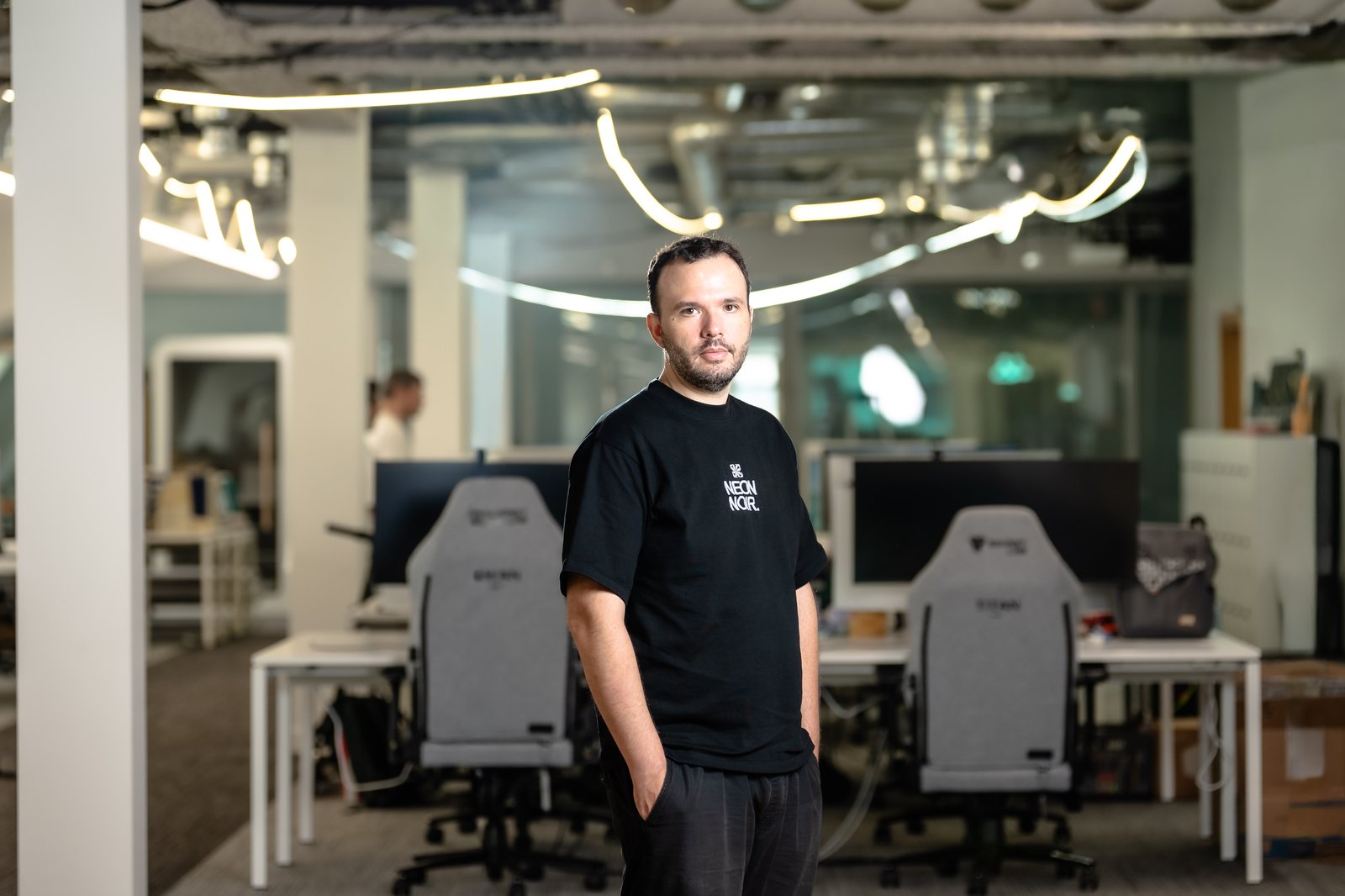
The startup was founded in London and has raised venture capital from investors including Kindred Capital, Oxford Science Enterprises and UCL Technology Fund. Its founder, Walter Goodwin, came from Cambridge University, where his research focused on in-memory computing. The company emerged from stealth with a claim that its chip could run large models far more efficiently than conventional designs, and it has spent the intervening years turning that claim into silicon.
The potential deal with Anthropic changes the company’s trajectory. Most AI chip startups sell a vision and hope for design wins; Fractile would enter the market with a purchase commitment from one of the two or three most important AI labs in the world. Anthropic, which runs some of the largest model workloads outside the hyperscalers, has been explicit that it wants to control more of its compute destiny, and a supply agreement with a memory-computing specialist fits that strategy.
The talks come as the custom chip market fragments. Nvidia dominates AI accelerators, but a wave of startups is attacking specific weaknesses in its architecture: inference cost, memory bandwidth, power consumption. Fractile’s bet is that inference, not training, will be the dominant cost of AI as models proliferate, and that a chip designed around the memory bottleneck will win on price and speed.
A $6.5 billion valuation would be a steep price for a company whose chips have not shipped in volume. The comparison set is unforgiving: established inference chipmakers with revenue trade at multiples that make young startups’ valuations look speculative, and several well-funded rivals have stumbled in production. Investors in the round would be betting that Fractile’s in-memory architecture works at scale and that Anthropic’s order converts into a durable relationship.
The deal also signals where the balance of power in AI hardware is shifting. Labs like Anthropic have become power buyers of specialized hardware, using their scale to secure capacity and shape product roadmaps. An order of this size, even before general availability, gives a startup the credibility that years of marketing cannot buy. For Anthropic, it is a hedge: a supply of chips from outside the Nvidia ecosystem, designed for exactly the kind of workload the lab runs.
If the round closes at $6.5 billion, Fractile would join the top tier of European AI hardware companies, a group that has struggled to match American peers on funding and customer access. The company’s location is part of its identity; London has become a hub for AI research but has produced few hardware winners, and a Fractile success would change that narrative. People familiar with the talks said multiple investors are evaluating the round and that terms could still shift. The interest reflects a broader scramble: venture funds that missed the early rounds of Nvidia’s rise are hunting for the next independent chip winner, and companies with differentiated architectures and named customers are drawing the most attention. Fractile’s London base also gives European investors a rare homegrown hardware candidate, and some of the round’s prospective backers are regional funds looking to anchor a local champion.
For the broader market, the deal is a data point on inference economics. If in-memory computing delivers the cost savings its backers claim, the technology could reshape how AI is served, cutting the price of running models and expanding the market. If it does not, Fractile’s valuation will look like another chapter in the AI hardware bubble. The $250 million order from Anthropic, analysts said, is the strongest evidence yet that at least one major lab believes the technology is real, and the round’s success will hinge on whether other buyers follow.