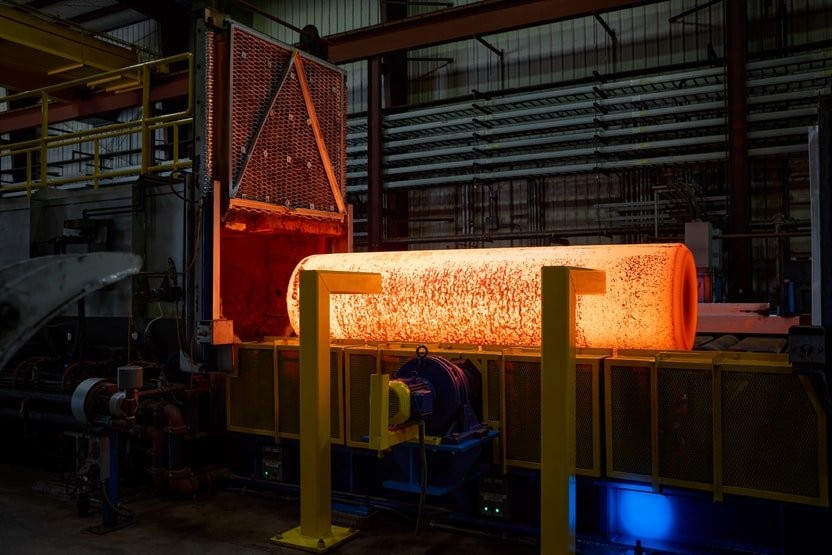
The first rack of Etched computers sits in a Jane Street data center, running inference workloads for the trading firm that just led the AI chip startup’s latest funding round.
Etched said it raised $700 million at a valuation of $21 billion, doubling its worth in less than a month. Jane Street, the quantitative trading firm, led the round and disclosed that it is also the company’s first customer, having tested the hardware, bought a rack and installed it in its own facility. “We’re excited to now have our own rack running in our data center,” the firm said. The round includes Kleiner Perkins, Sequoia Capital, Andreessen Horowitz, Tiger Global, Bain Capital Ventures, Neo, Primary, Stripes, Positive Sum and Blackstone.
The valuation leap is steep even by the standards of 2026’s AI hardware market. Etched closed a Series C in July at a valuation of $10.3 billion, a figure Sequoia described as the largest Series C round it had ever led. In December, the company was worth about $5 billion. The latest round brings its total funding to roughly $1.9 billion, a tally that includes Peter Thiel, HRT, Jump Trading, Two Sigma and Ribbit Capital among earlier backers.
Etched emerged from stealth in June with more than 400 employees and a working chip, having achieved first-pass silicon success in under three years from seed funding. The company builds what it calls frontier inference clusters, rack-scale systems designed to run already-trained AI models rather than train them. It argues that inference, the phase where models answer questions, is becoming the dominant cost in AI computing and that purpose-built silicon can undercut general-purpose chips on speed and power.
The architecture rests on two technologies. The first, low-voltage inference, packs more compute into the same power envelope by running the chip at a far lower voltage than comparable designs. The second, cluster-scale memory, creates a shared low-latency memory pool across an entire rack, attacking the bandwidth bottleneck that slows large models when they generate responses. The chips are produced on TSMC’s N4P process, and the company says the design runs much cooler than rival parts, allowing denser transistor packing.
The product philosophy has shifted along the way. Etched originally built its architecture around the bet that a single frontier model would dominate long enough to justify fixed-function hardware. That plan is no longer the product; the company now says its systems run any frontier model, and executives have been correcting the record with customers who still assume otherwise. Chief executive Gavin Uberti called the Jane Street deployment “a small step forward in our mission to run the world’s inference.” It took three years to deliver the first rack, he said; the next one will be faster.
The funding is a bet on the inference market’s shape. Nvidia still commands the bulk of AI chip spending, accounting for roughly 80 percent of demand for training chips, and its CUDA software stack gives developers a reason to stay inside its ecosystem. Etched is positioning itself on the other side of the ledger, where models already exist and the economics of serving them at scale decide winners. Its rack-scale approach resembles what Nvidia calls AI factories, complete clusters rather than bare chips.
Investors see a land grab in AI infrastructure. Estimates of cumulative spending on AI compute have reached as high as $7 trillion by 2030, and a widening field of funds is backing hardware startups that can plausibly claim a slice of the inference market. Kleiner Perkins managing partner Mamoon Hamid said few investors have had a clearer view of that opportunity. The risk, skeptics note, is that a $21 billion valuation for a company shipping first-generation hardware to a small number of customers requires Etched to take a meaningful share of Nvidia’s inference revenue within the next two years to justify the entry price.
The competitive field has thinned, which cuts both ways. Over the past six months, several venture-backed chip companies have been acquired or gone public, leaving fewer independent players. Etched is among the few remaining, and its investor roster has become a who’s-who of AI infrastructure backers. But consolidation also means fewer companies to prove the category, and the market’s tolerance for loss-making silicon startups has narrowed since the 2021 peak.
Jane Street’s role gives the company something most rivals lack: a reference customer that deployed the hardware in production. The trading firm is known for buying infrastructure it intends to use, and its decision to lead the round after testing Etched’s gear carries weight in a market where claims of performance are cheap. Etched says it is building three generations of hardware in parallel and plans to ship racks far faster than the first one took.
The skeptics’ case is straightforward. Nvidia’s inference dominance rests on more than silicon; the software, the developer tools and the installed base form a moat that a new architecture must cross. Etched’s answer is that the physics of inference favors specialized designs and that the price-performance gap will widen as models grow. The next test is whether more customers follow Jane Street through the door before the valuation’s arithmetic turns against the company.