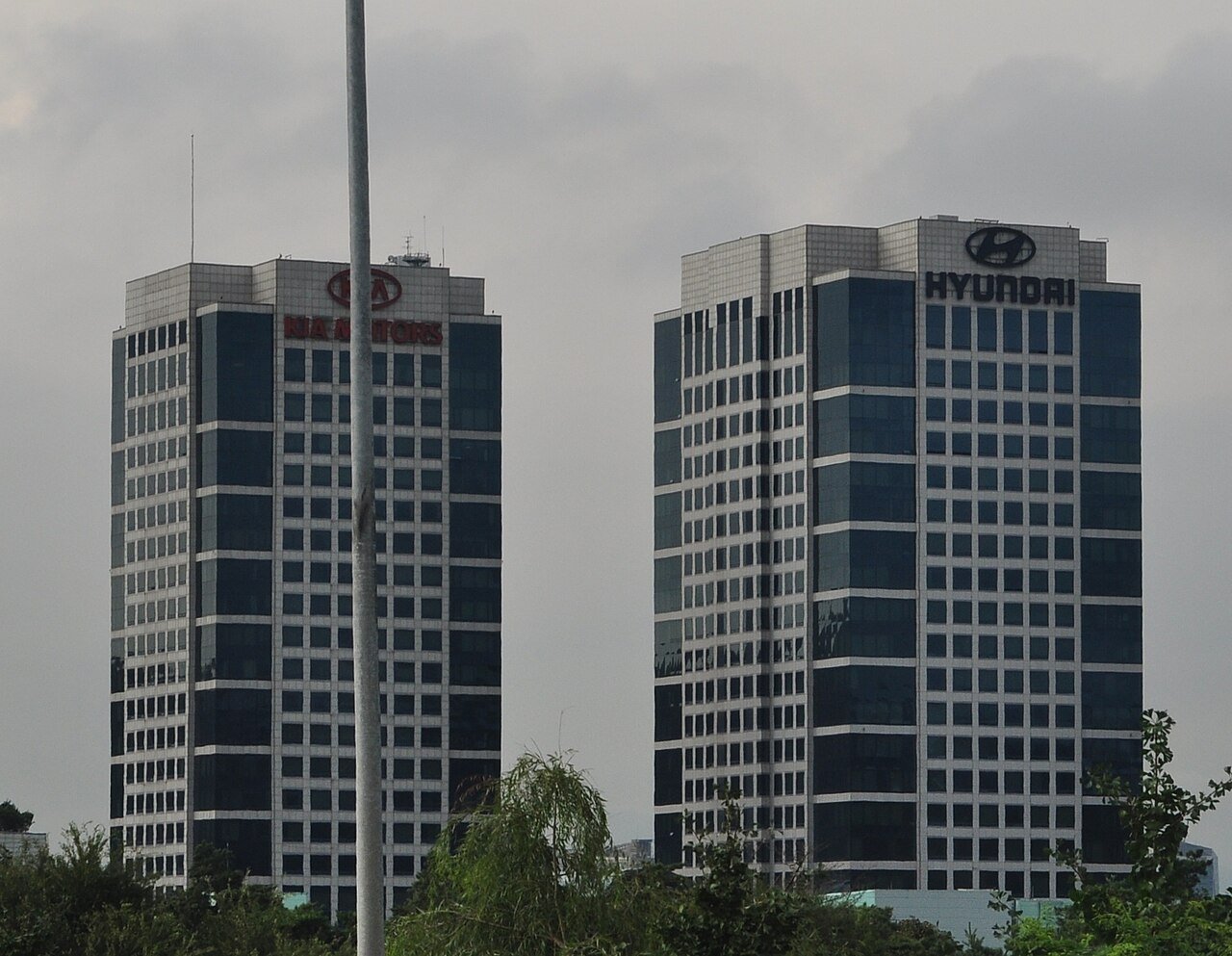
The assembly lines at Hyundai Motor’s plants in South Korea went quiet on Friday morning as roughly 40,000 union members walked off the job, the first full-scale strike at the company’s domestic operations in ten years. The walkout shut down production of passenger cars and the Genesis luxury models that have driven Hyundai’s recent growth, and the company said the stoppage had already pulled more than 55,000 vehicles out of the production plan.
The dispute is about pay, but it is also about something newer. Union leaders say the core demand is a guarantee that workers keep their jobs as Hyundai pushes artificial intelligence and automation deeper into its factories. The union wants the company to commit that no regular employee will be converted to contract status as robots take over assembly tasks, and it is pressing for wage increases, larger bonuses, and a higher retirement age alongside that job security.
Hyundai’s management has made no secret of its ambitions in robotics. The company owns Boston Dynamics, the maker of the Spot and Atlas robots, and it has been selling industrial automation to other manufacturers through a dedicated robotics unit. That strategy is a point of pride for executives and a source of anxiety for the union, which sees every robotic arm installed in a Korean plant as a potential replacement for a worker. Hyundai has said publicly that it aims to automate a growing share of its production processes over the next decade.
The financial stakes are already visible. Hyundai estimated that the strike has halted production of about 55,200 vehicles and caused losses exceeding 2.3 trillion Korean won, roughly $1.7 billion at current exchange rates. Each additional day of the walkout adds to that bill, and the company is heading into a quarter in which it faces intensifying competition in global markets, particularly from Chinese automakers whose cost structures Hyundai’s Korean plants cannot match.
Negotiations have been deadlocked for weeks, according to people familiar with the talks. The company has offered wage increases and improved bonuses but has resisted the union’s demand for binding commitments on automation and job security, arguing that it cannot freeze its workforce structure while competitors invest in more efficient plants. The union says the company’s refusal to guarantee jobs makes the other offers meaningless. Both sides have accused the other of walking away from the table, and the union has signaled that further strikes are planned if no agreement is reached.
The walkout comes at a delicate moment for Hyundai’s Korean operations. The company has invested heavily in electric vehicles and in its premium Genesis brand, and it has bet that its home market can serve as a showcase for the technology it sells abroad. A prolonged strike threatens that positioning, delaying deliveries and giving competitors an opening in segments where Hyundai had momentum. Analysts who follow the company note that the strike is a test not just of wages but of how a major manufacturer reconciles automation with the social contract that built its domestic workforce.
South Korea’s labor environment has been changing. The country has a history of militant unionism, but strikes at large manufacturers have become rarer as companies have shifted production overseas and as the government has pushed for more flexible labor markets. Hyundai’s last full strike was a decade ago, and both sides are aware that the current dispute could set a precedent for how other Korean manufacturers handle the automation question, a question that every industrial employer in the country now faces.
The union’s demands reflect a broader anxiety across Korean industry. Surveys of manufacturing workers show widespread concern that artificial intelligence and robotics will eliminate jobs faster than new ones are created, and unions in other sectors have begun pressing for similar guarantees. Hyundai, as the country’s largest automaker and a vocal champion of robotics, has become the natural battleground. Labor experts say the outcome of these negotiations will be studied by unions and employers throughout the region.
Management counters that Hyundai’s robotics push is itself a form of job protection. Executives argue that without automation, Korean plants cannot compete on cost with overseas rivals, and that losing share would cost far more jobs than robots will. They point to the company’s expansion plans in electric vehicles as evidence that the Korean workforce still has a future, provided the plants become more efficient. Union officials dismiss that argument as a prediction designed to justify layoffs they believe are already planned.
The strike also complicates Hyundai’s international strategy. The company has been expanding production in the United States, where it operates a large plant in Alabama and is building additional capacity, partly to serve American buyers with vehicles assembled in America. A prolonged stoppage in Korea could shift more production to those overseas plants, a prospect that alarms the Korean union, which fears the company will treat the strike as a reason to move work abroad permanently.
For now, both sides appear dug in. The union has scheduled further walkouts, and Hyundai has said it will continue trying to reach a negotiated settlement while warning that the stoppage will hurt its quarterly results. The vehicles already lost to the strike are unlikely to be recovered; the more lasting question is whether the two sides can agree on what automation means for the people who built the company.
The resolution, when it comes, will be watched far beyond Seoul. Every automaker in the world is installing robots and software that replace human hands, and every one of them is asking the same question Hyundai’s workers are asking: what happens to the people who are no longer needed to do the work? Hyundai’s answer will not settle that question for the industry, but it will be one of the first large-scale attempts to write it into a labor contract.