
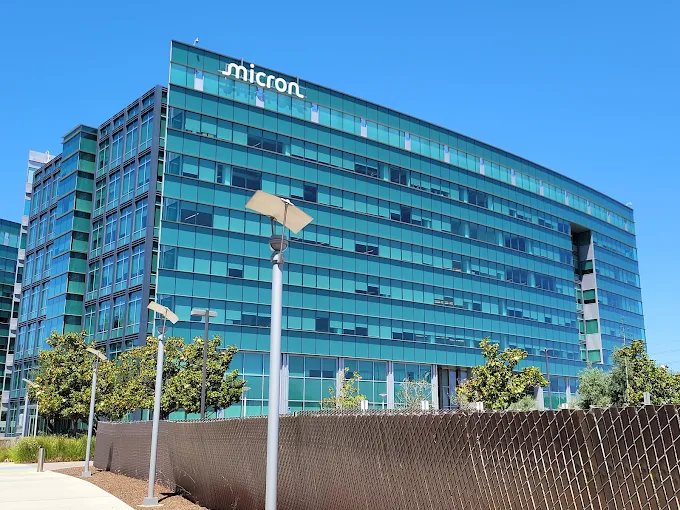
The order book tells the story. Micron Technology Inc., one of only three companies in the world that make high-bandwidth memory, said its production capacity is now reserved through 2028, with AI server demand consuming its entire output. Executives described the situation in an investor presentation on Aug. 21: every wafer the company can make is spoken for, and the customers are paying ahead to hold their place in line.
The detail that matters is which memory is sold out. High-bandwidth memory — HBM, the ultra-fast memory stacked beside AI accelerators — is the product every AI server needs and the one with the tightest supply. Micron’s HBM line is fully booked, and its conventional DRAM capacity is running at levels it has not seen in years. The company said the constraint is not demand volatility but a structural shortage that the industry’s existing fabs cannot close.
The numbers behind the shortage are stark. An AI server carries roughly six times the DRAM and eight times the NAND of a traditional server, according to industry estimates, and the newest accelerators consume memory at a rate that has surprised even the suppliers. When Nvidia designed its Vera Rubin platform, the current generation of AI hardware, it certified Micron alongside Samsung Electronics and SK Hynix to supply the HBM4 memory the platform requires — a certification that turned into a multi-year order book.
Micron is responding on both axes of the business. On capacity, the company is running its fabs at full tilt and converting lines from commodity DRAM to HBM, where margins are higher. On research, it recently announced a $10 billion investment in an AI memory research lab, aimed at the next generation of memory architectures. The investment is a bet that the memory bottleneck in AI is not a cycle but a feature of the industry’s structure for years to come.
The financial consequences are visible in the stock. Micron shares have climbed sharply over the past year as investors re-rated the company from a cyclical commodity maker to a supplier of mission-critical AI hardware. The company’s pricing power has followed: HBM contracts signed in the current environment carry prices that would have been unthinkable when the memory industry was drowning in oversupply two years ago.
The shortage has an echo in every part of the AI supply chain. Nvidia told its largest customers last week that AI server prices will rise more than 15%, citing rising memory costs. Server makers are quoting longer lead times. Cloud providers are competing for memory allocation the way they once competed for accelerators. The bottleneck in the AI buildout has moved from compute to memory, and the companies that own the memory are setting the terms.
The three suppliers — SK Hynix, Samsung, Micron — control essentially all of the HBM market, and all three are sold out. That concentration is the source of their pricing power and the source of their customers’ anxiety. There is no fourth supplier coming online at scale, and the capital cost of a new memory fab — on the order of $20 billion, with years of construction — means the shortage will not be solved by newcomers.
The demand side shows no sign of cooling. The largest AI companies have committed hundreds of billions of dollars to data centers, and each new facility needs memory in proportion to its compute. Model developers want bigger contexts, which need more memory per chip. The trajectory, executives at memory makers say, is higher: the industry that once sold memory in gigabytes is now selling it in terabytes per server, and the curve is steep.
There are risks in the bullish case. Memory is a cyclical industry, and every cycle has ended with overcapacity and collapsing prices. The current boom has already drawn investment commitments that will arrive in 2027 and 2028, and if AI demand grows more slowly than expected — a scenario that would require the biggest cloud buildout in history to stumble — the surplus that always follows could arrive on schedule. Micron’s management has acknowledged the risk without wavering from its forward bookings.
The counterargument is that this cycle is different. Previous memory booms were driven by consumer gadgets — phones, PCs, servers in a steady-state industry. This one is driven by AI infrastructure that is still being built, with the biggest spenders committed through the end of the decade. The forward bookings through 2028 are contracts, not forecasts, and contracts are harder to break than assumptions.
For Micron’s customers, the takeaway is a planning problem. A company that needs HBM in 2027 must secure allocation now, at today’s prices, or risk having nothing to run its accelerators with. The result is a self-reinforcing dynamic: the more customers lock in capacity, the longer the backlog extends, and the more urgency the next customer feels. Micron’s sold-out status through 2028 is both a fact and a marketing statement.
The company’s leadership has been clear about the ambition. Micron says it expects the AI memory opportunity to be measured in decades, not quarters, and it is structuring its investments — the $10 billion lab, the capacity conversions, the long-term contracts — around that view. The order book through 2028 is the first tangible evidence that its customers share it.
Whether the bet pays off depends on the world keeping its appetite for AI compute. For now, every signal points one way. The memory lines are full, the orders are signed, and the company that once suffered through the industry’s worst downturns is now telling investors, without irony, that it cannot make enough.



