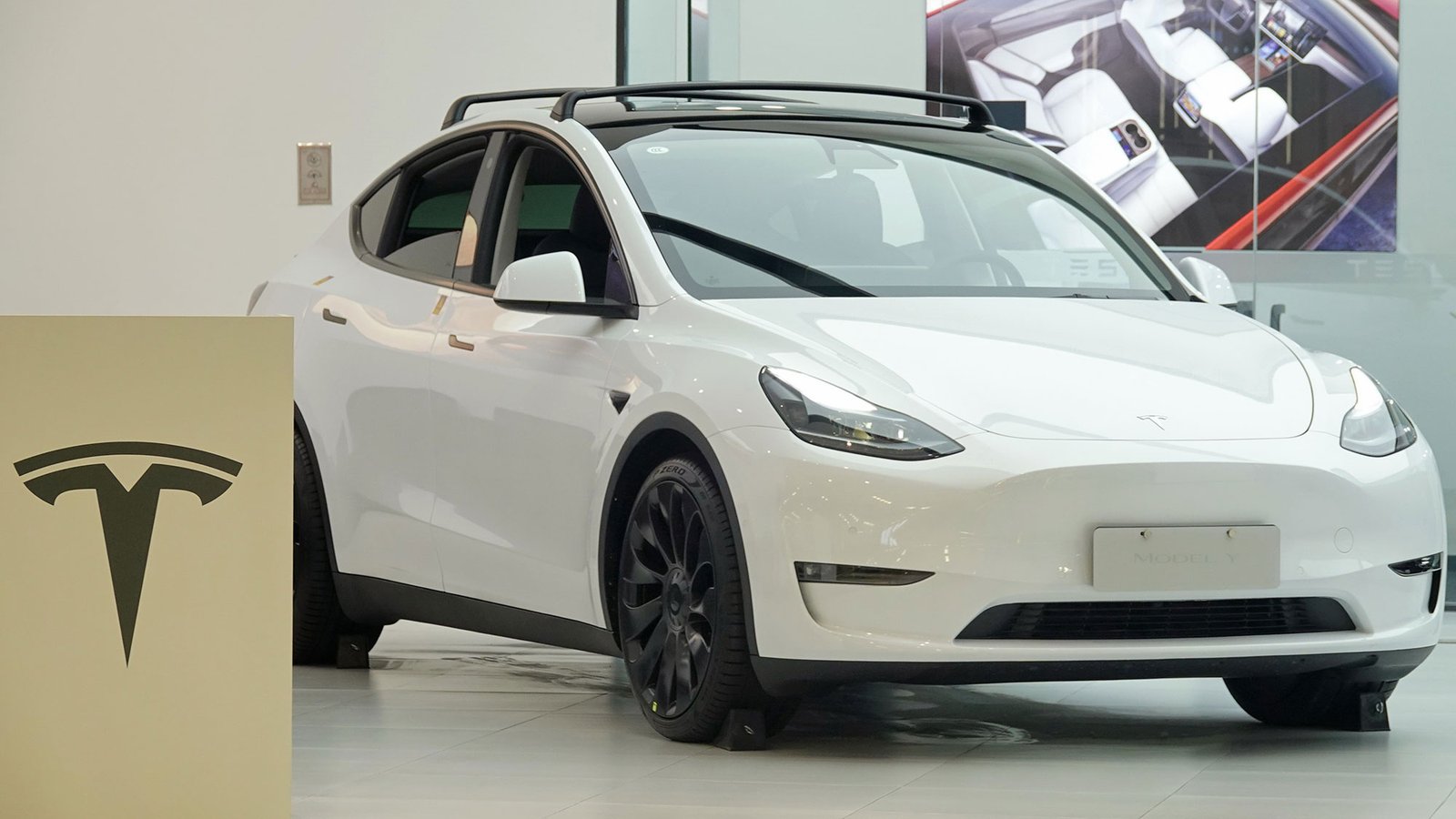
On a collision, the low-voltage electrical system that powers the door buttons dies. The occupants reach for handles that look like part of the trim and are hard to find in the dark and the panic. Regulators concluded that the design — the flush door handles Tesla made famous — can keep people inside a damaged car. On Aug. 21 and 22, the company moved to fix it, recalling nearly 3 million vehicles in China, its largest recall ever in that market.
The recall covers 2,975,910 vehicles, spanning the Model 3, Model Y, Model S and Model X built between 2018 and 2026, according to China’s market regulator. Tesla will affix warning labels to cars that lack them and push an over-the-air software update that adds a strategy for lowering the windows after a crash, giving occupants and rescuers another way out. The company said it is acting voluntarily.
The scope of the fix is a measure of how far the flush-handle design spread. Once a signature feature — a smooth door surface interrupted by nothing — the handle became a point of vulnerability when regulators in China began asking what happens in an emergency. The answer, they concluded, is that emergency mechanical releases inside the car are difficult to identify and operate because their color matches the interior trim, and in a severe collision the failure of the low-voltage system can leave doors unopenable.
China’s response goes beyond this recall. The government has required that all new car models from 2027 include mechanical interior and exterior door handles, effectively banning the hidden-handle design that Tesla popularized. Tesla is not the only company caught in the sweep: regulators also ordered a recall of nearly 400,000 Xiaomi SU7 sedans over difficult-to-see emergency door handles, a sign that the scrutiny applies to every brand, domestic or foreign.
The China recall is the latest in a string of door-handle troubles for Tesla. In 2025, the family of a driver who died in a fire sued the company, alleging a design flaw in the Model S prevented escape after a crash. There have also been questions about whether occupants of a Cybertruck could free themselves after an accident. The company has not commented on the new recall beyond its regulatory filing.
The same week brought a different kind of announcement. Tesla said it will hold an unveiling event for the Cybercab, its robotaxi without a steering wheel, on Sept. 3 in Austin, Texas, according to people familiar with the plans. The event is intended to prepare the ground for commercial operations of the driverless service, which Tesla has been testing in Texas and California. A date for a public ride-hailing launch has not been set.
The third piece of news was quieter but equally significant: Tesla has discontinued its Solar Roof product line, removing the solar shingles from its website. The company is focusing on conventional solar panels instead, according to people familiar with the matter. The Solar Roof, announced in 2016 and launched to production volumes years later, never became the mass-market product Tesla once pitched, and its departure frees engineering and manufacturing resources for other work.
Taken together, the three moves in a single week — a giant recall, a robotaxi event, the death of a product line — say something about where Elon Musk is placing his bets. The recall addresses the past, an expensive correction of a design choice that regulators no longer tolerate. The Cybercab event points to the future, the driverless business Tesla insists will be worth more than everything else the company does. The Solar Roof shutdown clears the deck.
The financial stakes are real. A recall of this size carries costs for replacement parts, software development and logistics, though over-the-air fixes are far cheaper than the physical repairs of an earlier era. Analysts said the larger risk is reputational: in China, Tesla’s sales have been under pressure from domestic rivals, and a recall touching nearly every Tesla on the road hands competitors an opening in the world’s largest electric-vehicle market.
The door-handle episode also carries a lesson for the wider industry, which has spent a decade copying Tesla’s minimalist cues. Flush handles, hidden latches and button-operated doors have spread across luxury and electric cars from multiple manufacturers. Regulators in China have now drawn a line, and other markets are watching. A design detail marketed as elegance has become a compliance risk.
For Tesla, the question is whether the recall slows the autonomous-driving push that Musk has made the company’s center of gravity. The Cybercab event is the next test of that strategy, and the Sept. 3 date means the company is not letting the recall interrupt its calendar. Investors, who have long tolerated Tesla’s volatility in exchange for its robotaxi ambitions, will be watching both: how cleanly the recall is executed, and whether the Cybercab event delivers the commercialization detail the stock has been waiting for.
Musk’s own framing has been consistent for years: Tesla is an autonomy company that happens to sell cars. The recall shows that the car business still has to be operated safely in the meantime. The Solar Roof, once a piece of the clean-energy vision, is gone. What remains is the bet on the robotaxi, and the events of the week have made the stakes of that bet, and the operational realities around it, harder to ignore.