
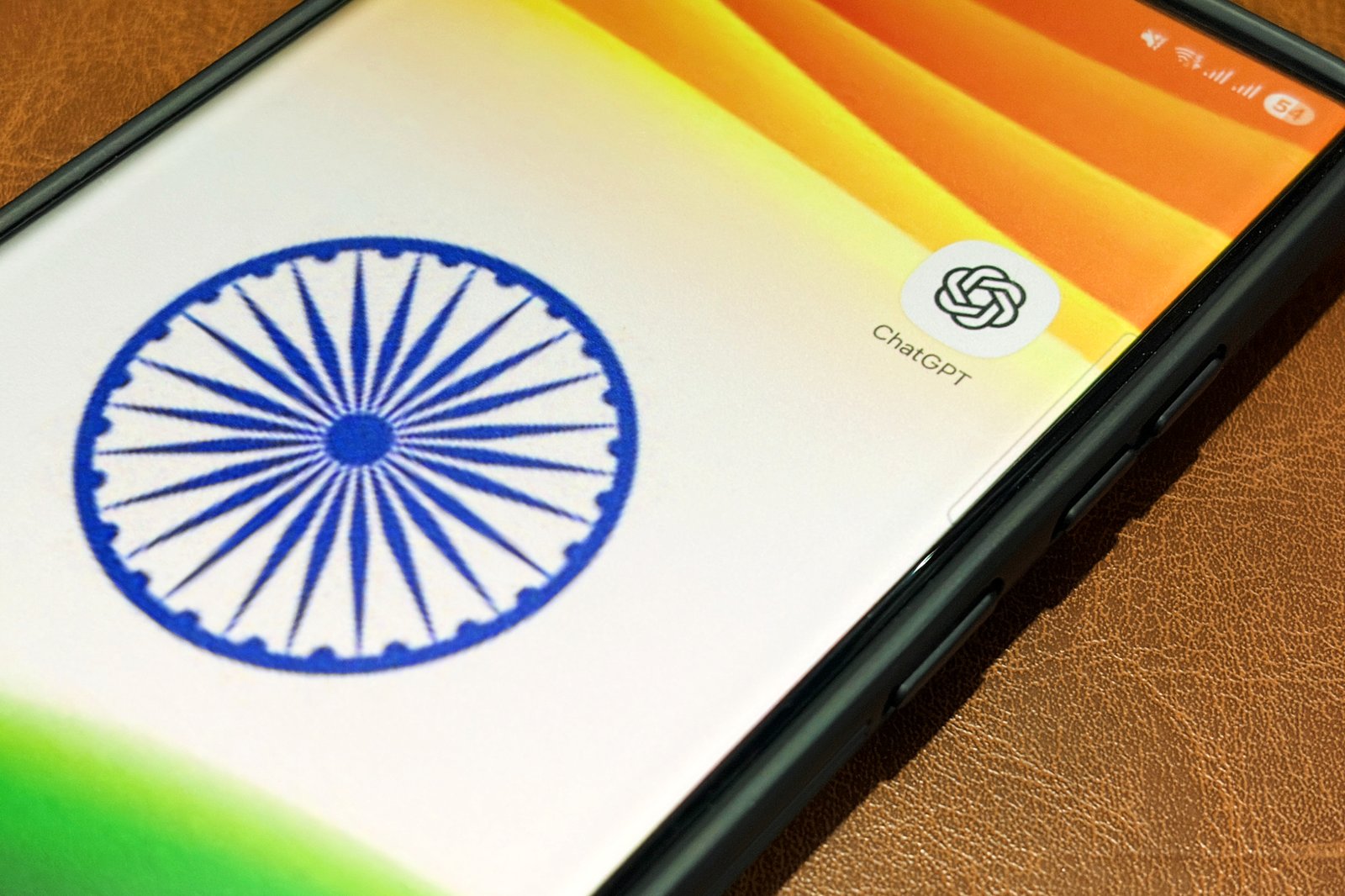
The first banner appeared this week inside the ChatGPT app: a brand’s name and a tagline where a suggestion used to sit. OpenAI has begun selling advertising in its chatbot, and it chose India as the launch market, a country where the company says more than 100 million people use ChatGPT every week. The rollout, announced in a company post, marks the beginning of OpenAI’s most direct attempt yet to turn its massive free distribution into revenue.
The mechanics are straightforward. Ads will run on the free tier of ChatGPT and on the Go subscription tier, which OpenAI introduced this year as a lighter-priced option below its premium plans. The first wave includes about 50 brands, working with the advertising groups WPP and Omnicom, and OpenAI said it will launch an ad manager next month so advertisers can buy placements directly. The minimum daily budget is set at 725 rupees, about $7.6, a figure low enough to make clear the company is courting small businesses, not just global brands.
The India choice is strategic. OpenAI has said India is one of its largest markets, with weekly active users above 100 million, a number it disclosed in February. The country’s advertising market is growing quickly, and its mobile-first internet population matches ChatGPT’s free-tier demographic almost exactly. By launching where it has scale but not yet monetization, OpenAI can test pricing, formats, and advertiser demand without the scrutiny it would face in the United States or Europe, where regulators are watching its every move.
The company has been preparing the ground for months. Earlier this month, OpenAI amended its terms of service to allow advertising, and on Aug. 23 it announced that ads would be coming to 31 European countries. The sequencing, Europe first in announcement, India first in practice, suggests a rollout that is being tuned market by market, with the formats and pricing expected to vary. OpenAI has said the ads will be labeled clearly and will not use conversation content for targeting, an attempt to pre-empt the privacy objections that have met ad-supported AI elsewhere.
The business logic is a return to the oldest model in media. OpenAI has spent years building one of the largest consumer audiences in technology, and it has monetized that audience with subscriptions, which require payment friction, and enterprise contracts, which serve a different market. Advertising lets the company collect revenue from users who will never pay, the same arithmetic that built Google and Meta. The difference is that ChatGPT is a conversation, not a search page, and the question of how ads fit into that experience is one the company is now answering in real time.
The stakes are tied to OpenAI’s finances. The company has raised enormous sums and spent most of it on compute, and its path to profitability runs through every available revenue stream. Advertising is the largest addressable pool of money in digital media, and OpenAI’s distribution, more than a billion users across its products by some estimates, gives it the raw material to build an ad business quickly. Analysts said the India rollout will be watched for two things: whether advertisers see ChatGPT placements as effective, and whether users tolerate them without defecting.
The move completes a monetization arc that began with the launch of ChatGPT’s paid tiers in 2023. Subscriptions became OpenAI’s first revenue stream, enterprise deals followed, and the company has since added API revenue, custom models for corporate customers, and now advertising. Each addition has broadened the base of users who can be monetized, and advertising is the only one that reaches the entire free user base. The company has said it will keep the free tier, which it views as essential to its scale and to the data advantages that scale provides, and ads are the mechanism that makes that posture financially sustainable.
The advertising market OpenAI is entering is dominated by two companies that have spent two decades refining it. Google and Meta control the bulk of digital ad spending, and both have built sophisticated measurement, targeting, and auction systems that OpenAI cannot replicate overnight. What OpenAI brings is a different asset: a conversational surface where intent is expressed in natural language, and where a user asking about a product or a service is already halfway to a purchase. Advertisers have long paid premium rates for intent, and the question for OpenAI is whether it can package that intent without violating the trust that makes people willing to talk to the chatbot at all.
India itself is a demanding first test. The country’s digital advertising market is growing at double-digit rates, driven by e-commerce, fintech, and a smartphone-first population, and ChatGPT’s penetration there is among the highest in the world. But Indian users are also price-sensitive and advertising-saturated, and the formats that work in Western markets do not always transfer. OpenAI’s choice to launch with a low minimum budget and a partner model, agencies WPP and Omnicom handling the first campaigns, suggests a cautious approach: prove the product works for a few dozen brands, learn from the data, and expand only when the metrics justify it. The company’s next update on the ad business will be judged against that discipline.
The risks are real. Chatbots are trusted with sensitive information, and a single misstep with ad targeting or a jarring ad format could damage the product’s reputation in a way that search advertising never had to worry about. OpenAI has promised that ads will be clearly separated from answers and that they will not influence the model’s responses, a line it will be held to. The company’s answer to every question about the business, from data use to model integrity, will now be tested in the market where it chose to begin.



