
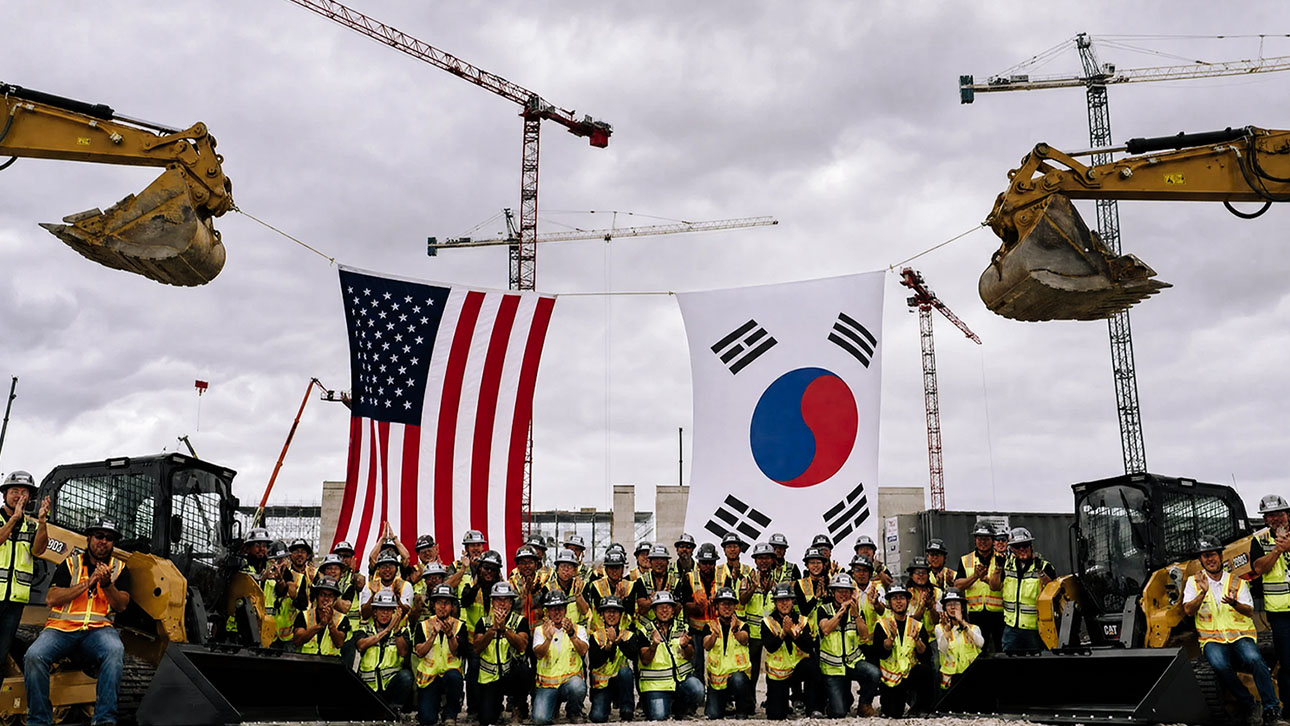
SK Hynix held a groundbreaking ceremony on Aug. 27 for its first U.S. high-bandwidth memory packaging plant, a facility in West Lafayette, Indiana, that will cost more than $4 billion and is scheduled to begin mass production in the second half of 2029. The site, spanning about 133.5 acres, will be the company’s first HBM packaging base on American soil.
Chief Executive Kwak Noh-Jung said the plant’s cleanroom is expected to be ready in October 2028, with production of next-generation HBM starting the following year. At full operation, the facility is expected to employ about 1,000 people. Kwak used the ceremony to deliver a warning: the shortage of AI memory will last at least until 2030.
The Indiana plant is the clearest sign yet that the memory industry’s most advanced manufacturing is moving beyond its traditional home in Asia. SK Hynix, the dominant supplier of HBM, the specialized memory that sits beside AI accelerators in data centers, has until now made the chips in South Korea, mostly at its facilities around Icheon. The U.S. plant represents the first time the company will package HBM domestically.
The project has been shaped by politics as much as engineering. Washington has pressed chipmakers to bring advanced manufacturing to the United States, offering grants and tax incentives under the CHIPS Act, and memory companies have been under pressure to follow the lead of logic-chip makers such as TSMC and Intel, which are building large U.S. factories. SK Hynix’s decision to package HBM in Indiana, rather than simply ship finished modules from Korea, signals that the company sees the U.S. as a market it must serve from within.
Demand for HBM has exploded as AI companies build out data centers. The memory is stacked in layers and placed directly alongside processors such as Nvidia’s accelerators, and it has become one of the most constrained components in the AI supply chain. SK Hynix, along with rivals Samsung Electronics and Micron Technology, has been selling every unit it can produce, and customers have signed contracts years in advance.
Kwak’s warning about a memory shortage lasting until 2030 aligns with projections from suppliers and analysts. Building new production capacity takes years, and the industry’s biggest constraint is not demand but the pace at which cleanrooms can be completed and equipment installed. The Indiana project, with its 2028 cleanroom and 2029 production schedule, illustrates the timelines the industry is working with.
The choice of Indiana was not accidental. The state courted semiconductor investment aggressively, and the site sits in a region with an existing manufacturing workforce and logistics links. The facility will receive support from state and federal programs, though SK Hynix has not detailed the exact mix of incentives. The company has also said it will work with local universities to train engineers for the plant.
There are risks. HBM packaging requires highly specialized equipment and skilled technicians, and the industry has no track record of running this type of facility in the United States. Executives acknowledged that ramping production in a new location, with new workers, will take time and that early output may be slower than at established Korean plants. Delays, in this market, carry real costs: every quarter of missed production is a quarter of lost sales in a market where buyers commit years ahead.
The plant also changes the geography of the memory trade. South Korea has long dominated the memory industry, and the U.S. has relied on imports for the chips that power its data centers. Moving HBM packaging to Indiana gives Washington a stake in the most valuable segment of the memory market, and it gives SK Hynix a hedge against any future disruptions in shipping routes or trade policy.
For the industry, the project is a test of whether advanced memory manufacturing can work outside Asia. Logic chips have already moved in that direction, with TSMC building plants in Arizona and Samsung and Intel expanding U.S. operations. Memory has lagged, partly because the economics favor concentration in a few massive sites. SK Hynix’s bet is that the AI boom has changed those economics.
SK Hynix’s financial position gives it room to take that bet. The company has posted record profits during the AI memory boom, and it has signaled it will keep reinvesting in capacity rather than returning more cash to shareholders. Its relationship with Nvidia, which buys the bulk of the industry’s HBM supply, has made it the most direct beneficiary of the AI buildout, and the Indiana plant is part of a plan to keep that position as the market grows.
The company, for now, is signaling full commitment. Kwak said the West Lafayette plant is part of a broader strategy to serve U.S. customers with local production, and that more U.S. investment could follow depending on demand. The memory industry has spent the past two years selling every chip it can make. The question now is where those chips get made, and how much of the supply chain Washington will succeed in pulling home.



