The Finnish agency running Europe’s most storied supercomputer has made its choice. LUMI-AI, the country’s national AI supercomputer, will run on AMD hardware, with deployment planned for the second half of 2027.
The machine is part of the EuroHPC program, the European Union’s effort to build sovereign computing capacity across the continent. EuroHPC has funded a network of supercomputers in member states, and the Finnish system has been among its most successful: the existing LUMI machine, operated by the CSC research center in Kajaani, has ranked among the most powerful supercomputers in the world since it came online.
LUMI-AI extends that legacy into AI workloads. Where LUMI was built for classical simulation, the new machine is designed for training and running large models, the workloads that have come to define the computing frontier. The choice of AMD hardware puts the company at the center of a system that will serve researchers across Finland and the wider Nordic region.
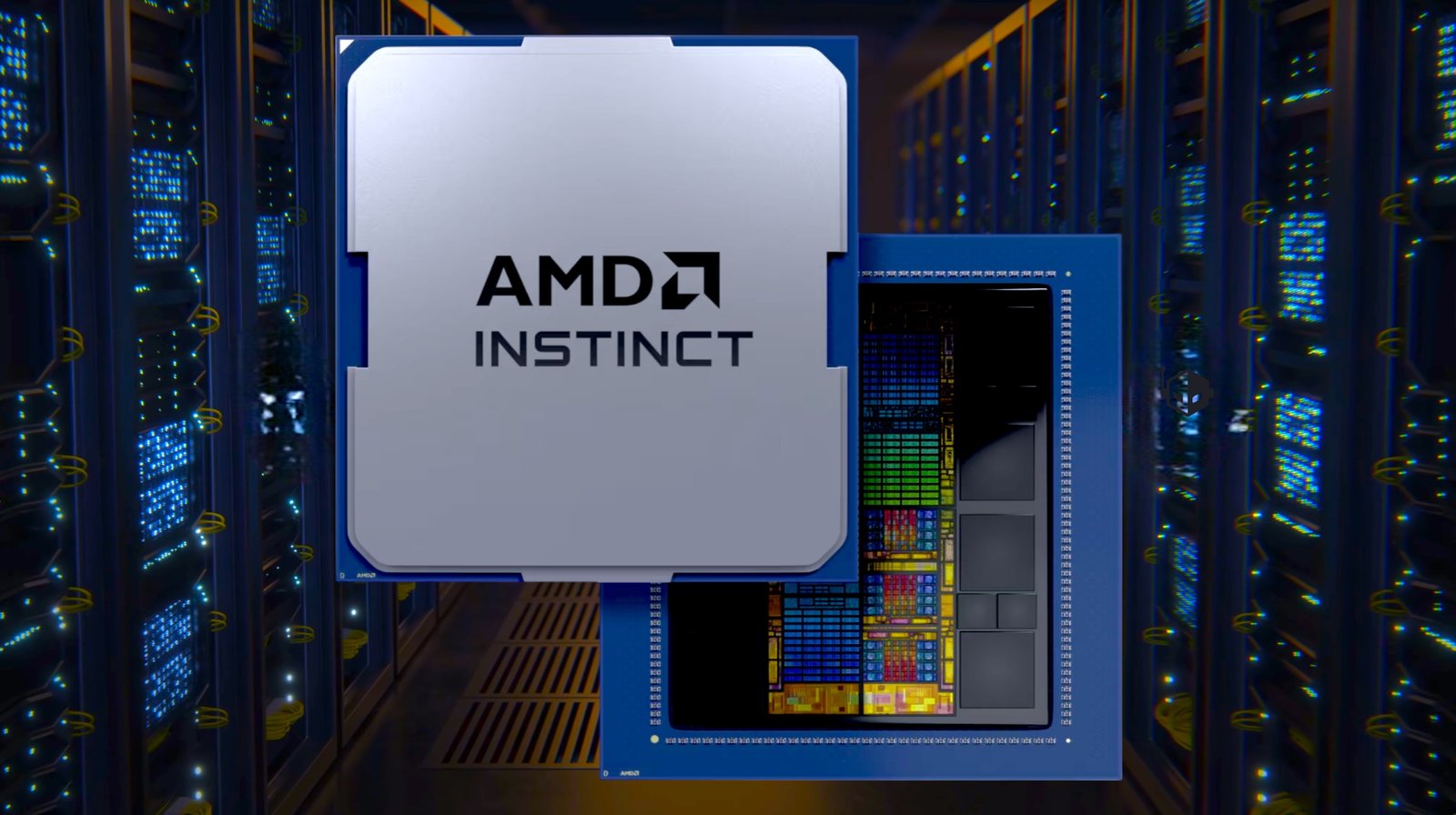
For AMD, the win is another brick in a European wall. The company’s share of AI server chips remains far behind the industry leader, but European sovereign AI projects have become an important base, and LUMI-AI is the latest in a series of EuroHPC wins. The pattern is not accidental: Europe’s governments have made clear that they want alternatives to a single dominant supplier, and AMD has positioned itself as the alternative.
The European motive is sovereignty as much as performance. Dependence on a single US supplier for AI infrastructure has become a political as well as technical concern, and the EU has pushed its member states to diversify their computing supply chains. The EuroHPC procurement process has tilted toward AMD in part because of price, and in part because European governments want a second source they can rely on.
The competitive dynamics are straightforward. The industry leader dominates AI accelerators with a commanding share and a software ecosystem that developers know. AMD’s challenge has always been the software: its hardware is competitive, but the ecosystem, the libraries, the tools and the trained engineers, has lagged. European procurements give AMD a market where its hardware advantage can win deals even before the software catches up.
The deployment timeline reflects the scale of the project. Systems of this class take years from procurement to operation: the hardware must be specified, built, delivered, installed and brought to operational quality, and the site must be prepared for the power and cooling it demands. The second half of 2027 is consistent with a procurement that began this year and a build that will occupy most of next year.
The stakes for AMD go beyond the single contract. LUMI-AI will be visible, a named system that researchers cite in papers and that governments point to as evidence of sovereign capability. Every such system is a reference site for the next procurement, and the company’s European portfolio is compounding: each win makes the next one easier.
The procurement’s other details matter for what they reveal about the market. The LUMI-AI system will use AMD’s latest accelerator architecture, and the deployment is expected to include the full stack: processors, accelerators, networking and the software layer that makes them usable. The Finnish operator has said it expects the system to be among the most powerful AI machines in Europe when it comes online, a claim that will be tested against the region’s other national systems.
The win also carries a message for AMD’s broader strategy. The company has been expanding its data center line aggressively, and European sovereign projects have become a reliable source of wins while the US market remains dominated by its larger rival. Analysts have noted that the European pattern, many smaller systems rather than a few enormous ones, suits AMD’s current position: each win is a reference site, and the reference sites compound into a credible alternative for the next procurement.
For the researchers who will use the machine, the choice of hardware is less important than the capability it brings. Finland has built a research ecosystem around LUMI, and LUMI-AI extends it: the new machine will train models on Finnish and Nordic data, support industrial research in areas from materials to medicine, and keep the country at the center of European computing. The machine’s AMD heart will be a detail in the papers that result; the capability will be the point.
For Finland, the choice is a statement about ambition. In the race for AI capability, small countries can still build national champions, and LUMI-AI will serve Finnish and Nordic researchers alongside the European research community. The machine’s AMD heart will also be a visible answer to a question European governments have been asking for years: can Europe compute without depending on a single vendor’s roadmap? The answer, at least in Kajaani, will be built on AMD silicon.