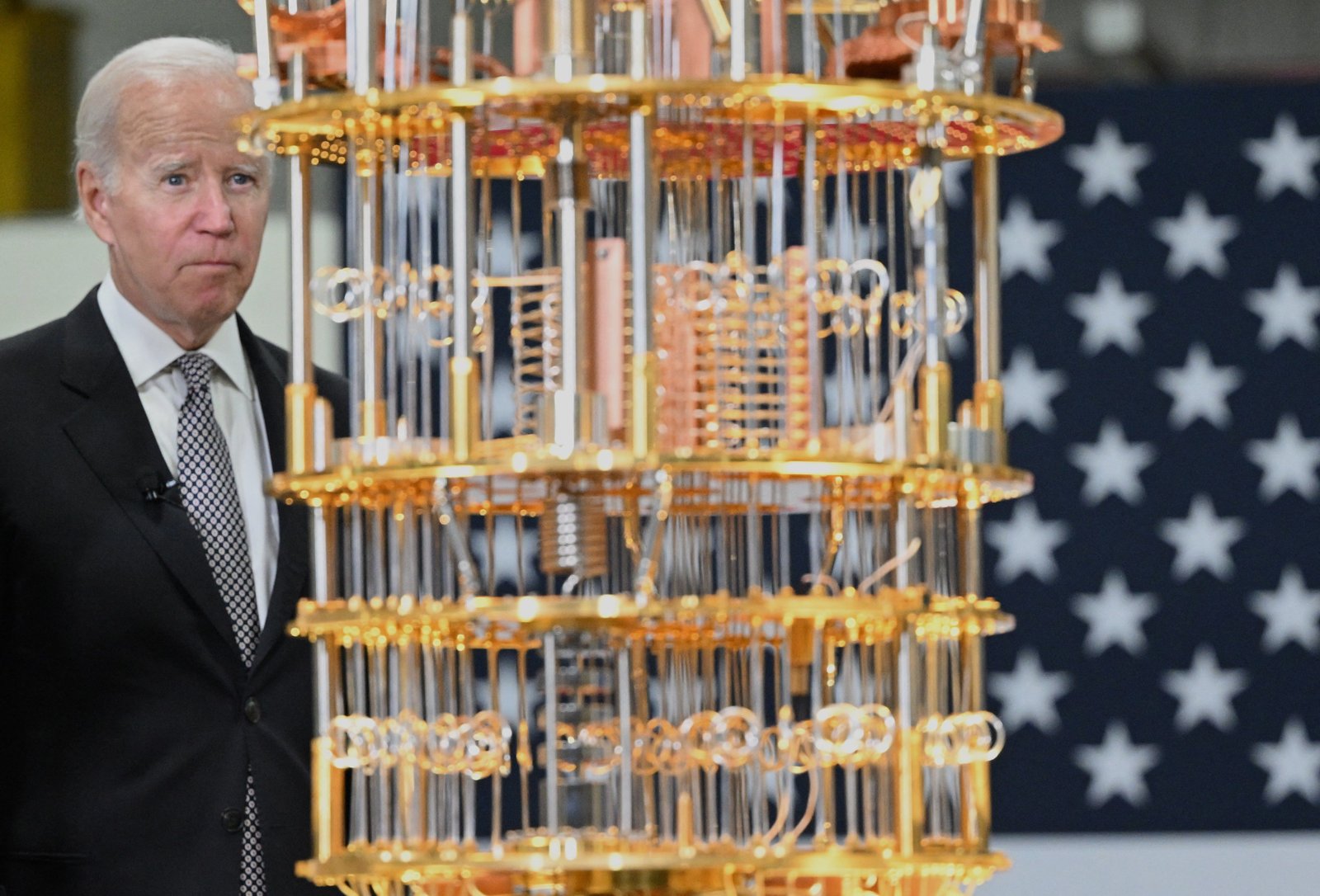
The calculation took 15 minutes. On a classical computer, the same problem would take effectively forever, a task the researchers describe as practically impossible. The result, published on August 30 on a preprint server, is IBM’s latest claim in its long-running campaign to show quantum machines doing real work.
The research describes a computation in a regime that classical machines cannot reach, and the preprint gives the field something it has often lacked: a concrete, checkable claim that a quantum processor performed a task beyond classical reach in a bounded time. The details will be scrutinized by the community over the coming months, as every claim in quantum computing is.
The context strengthens the claim’s significance. IBM completed its acquisition of HRL Laboratories last month, adding the storied California research lab to its quantum operation, and the company has been expanding its quantum footprint steadily: new processors, new error-correction results, and a growing roster of commercial clients.
The quantum advantage debate has defined the field for a decade. Google claimed supremacy in 2019 with a task designed to be hard for classical machines, IBM pushed back, and the goalposts moved from supremacy to utility: what matters now is not whether quantum machines can beat classical ones at a contrived task, but whether they can do useful work that classical machines cannot. IBM’s 15-minute result is an entry in that argument, a data point in a debate that has become increasingly technical and increasingly important as the hardware improves.
IBM’s technical approach differs from its rivals’. The company builds superconducting qubits, the same underlying technology Google uses, but its roadmap emphasizes error correction: the ability to detect and fix the errors that arise in every quantum computation. The company has laid out a series of staged goals, each designed to reduce errors and increase the scale of useful computation, and the 15-minute result is presented as evidence that the roadmap is producing results.
The skeptics’ questions are standard and unavoidable. Can the result be reproduced on other machines? Was the classical comparison fair, or did the classical baseline understate what a well-optimized classical algorithm could achieve? Does the task have practical value, or is it another demonstration that impresses specialists and changes nothing? IBM’s answer, in the preprint and in its public statements, is that the task was chosen for its difficulty and its relevance to the kinds of problems quantum computers are expected to solve.
The HRL acquisition fits the strategy. HRL, known for its work in materials science and quantum research, brings expertise that quantum computing needs: better qubit materials, better fabrication, and a research culture that has produced breakthroughs for decades. IBM has said the lab will work on the components that make its processors more reliable, and the timing of the acquisition, completed just before the 15-minute result, gives the company a story of momentum.
IBM’s commercial push continues in parallel. The company operates a quantum network of clients in finance, pharmaceuticals and chemistry, who pay to run experiments on IBM’s processors, and the 15-minute result is the kind of evidence that helps sales: here is a task a classical machine cannot do in any reasonable time, done in 15 minutes on our hardware. The commercial framing matters because IBM’s quantum program is one of the few that must justify itself to shareholders as well as to scientists.
The practical context is worth stating plainly. Quantum computers remain years from the scale needed for most commercially valuable applications: factoring, drug discovery and materials design at useful problem sizes are still beyond current hardware. The 15-minute result is not an application; it is evidence that the hardware is improving along the dimensions that applications require, and the field’s progress is measured in exactly this kind of incremental evidence.
IBM’s roadmap gives the claim a framework. The company has said it will reach error-corrected logical qubits in meaningful numbers within a few years, and each experimental result, including this one, is positioned as a step on that path. The company’s competitors have their own roadmaps and their own results, and the field’s health is visible in the pace at which all of them publish: results that were extraordinary two years ago are now routine, and the 15-minute computation will be superseded, by IBM or by someone else, within the year.
For the researchers who run such machines, the result matters in a different way: it gives them a workload that classical clusters cannot reproduce, which means their time on the quantum hardware is justified by capability rather than curiosity. The preprint’s circulation will determine how quickly other groups attempt to reproduce the result, and the community’s response will set the tone for the next round of claims.
The 15-minute result is a data point, not a revolution. The field’s standard is still: what can a quantum computer do that matters, reliably, at scale? The preprint is a step toward that standard, and its value will be determined by what comes next: verification by other groups, follow-on experiments, and the slow accumulation of tasks that shift from impossible to merely expensive. IBM says the result shows its roadmap is working, and the community will spend the coming months checking the arithmetic. The preprint is out, and the verification, as always in quantum computing, will take longer than the computation itself.