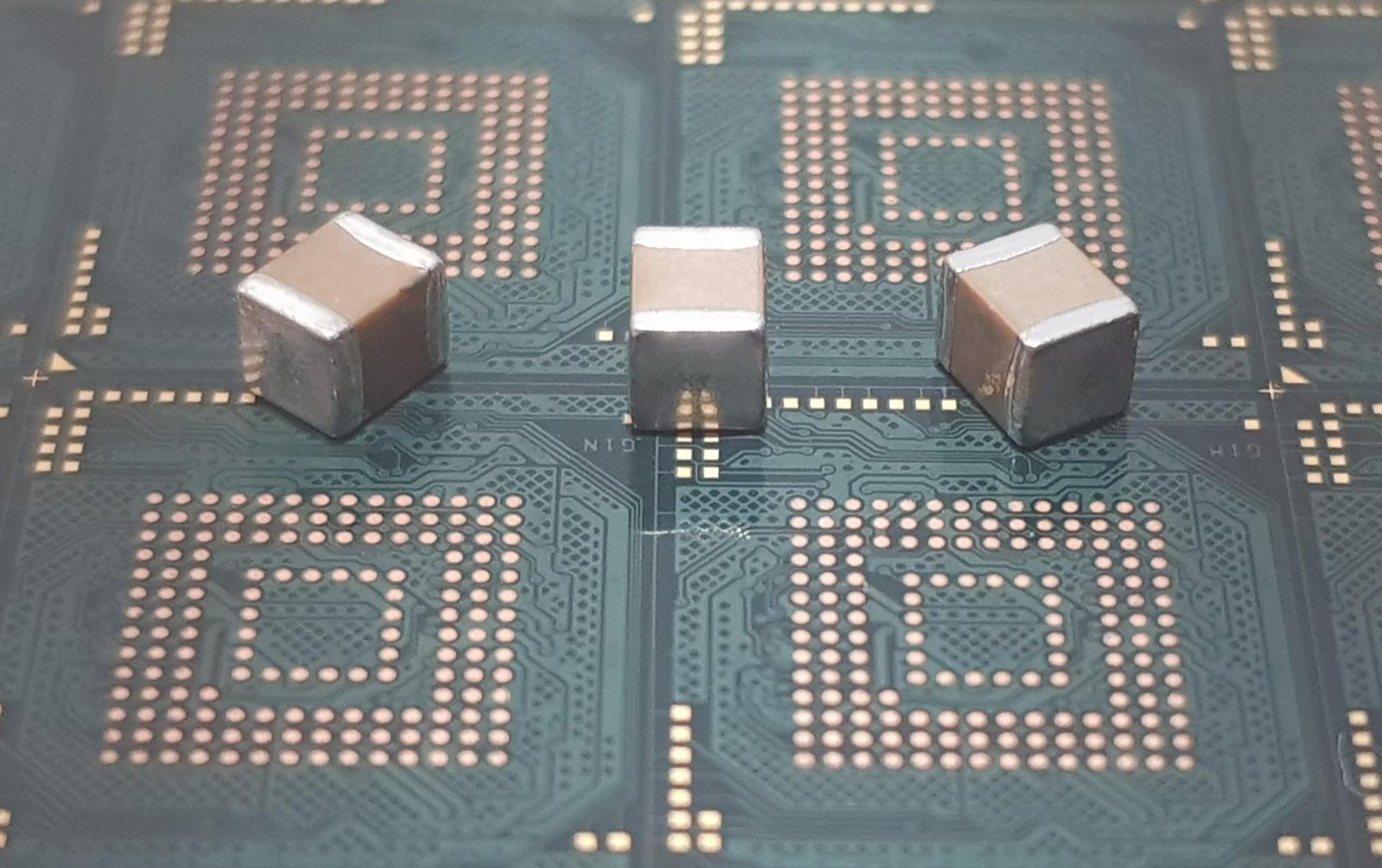
SEOUL—The most important parts inside an artificial-intelligence server are also the easiest to overlook. Alongside the accelerators that do the computing sit thousands of multilayer ceramic capacitors, tiny components that store and release electrical charge to keep power flowing steadily to the chips. Samsung Electro-Mechanics said Wednesday it has signed a long-term supply agreement worth 1.07 trillion won, roughly $800 million, to provide those capacitors for AI servers to a global technology company that it did not identify.
The contract runs for one year, from Jan. 1 to Dec. 31, 2027. The South Korean components maker, an affiliate of the Samsung group, described the agreement as the largest single MLCC supply contract in its history.
The scale is unusual for the market in which Samsung Electro-Mechanics operates. MLCCs are sold by the billion at prices measured in fractions of a cent, and supply agreements in the capacitor business tend to be smaller and shorter than the long-term deals that have become standard in the memory-chip industry. A contract of this size, locked in more than a year before it takes effect, is a sign of how the AI buildout is changing the customs of the component business.
The customer, whoever it is, is buying certainty. AI servers consume capacitors at several times the rate of conventional servers, because every accelerator and its power-delivery system needs stable voltage under punishing loads. One rack of the most powerful machines can carry capacitors in numbers that would have seemed absurd a decade ago: each part is cheap, and each one is capable of bringing down a system if it fails. The parts sit closest to the processors, where swings in current are sharpest, and their failure modes are unforgiving: a single cracked capacitor can take an entire board offline.
The market that makes these parts is dominated by a handful of manufacturers, with Japan’s Murata the clear leader and Samsung Electro-Mechanics among the largest challengers. For years the company built its capacitor business on smartphones and consumer electronics, where volumes are enormous but prices are disciplined by competition. AI infrastructure offers the opposite profile: smaller volumes, higher specifications, and buyers willing to pay for reliability at data-center scale.
The shift is visible across the industry. Rivals from Japan and Taiwan have been steering capacity toward the high-end capacitors that AI systems need, and demand for those parts has been running ahead of supply. Suppliers, usually the quiet end of the AI supply chain, have been among its beneficiaries: prices for premium capacitors have firmed and lead times have lengthened as data-center orders swell. The agreement suggests one large customer decided it could not afford to wait until 2027 to reserve capacity.
The timing of the contract is itself informative. It begins in January of next year, after the current round of AI capacity is already committed, which suggests the customer is planning its next generation of systems now. Signing more than a year ahead also hedges against a market that could tighten further: if capacitor supply stays constrained, the customer has its line secured, and if supply loosens, it has still locked in terms.
The identity of the buyer is the question the market will chew on. Samsung Electro-Mechanics named no one, and the field of companies building AI servers at a scale that would justify a contract of this size is small: a handful of technology giants constructing data centers by the dozens, along with the server makers that supply them. Analysts will try to match the agreement against the purchasing plans that those companies have disclosed.
The one-year term is short by the standards of the largest component agreements, which can run three years or more. In the capacitor business, where specifications change with each generation of chips, a single year lets both sides reset terms as 2027 approaches. It also leaves the door open for renewal: a supplier that performs in the first year is well placed to win the second.
For the balance sheet, the contract is significant without being transforming. Spread over a single year, it gives Samsung Electro-Mechanics revenue visibility that most of its rivals in the passive-components business do not enjoy at this scale, and it answers a question that has trailed the company for years: whether it could convert its position in phones into a position in AI. The company has been steering investment toward high-specification capacitors, and the deal suggests the strategy is finding buyers.
The agreement also says something about how AI demand has reached down the supply chain. The marquee names of the boom sell chips and software; the quieter winners sell the pieces that make the machines run. A contract worth roughly $800 million for components that cost fractions of a cent is a measure of how much hardware is being built. If Samsung Electro-Mechanics’ largest single supply deal is now an AI-server contract, the capacitor business has found its next cycle. For the wider Samsung group, whose memory-chip affiliate sells into the same AI boom, the agreement adds another revenue line tied to data centers.