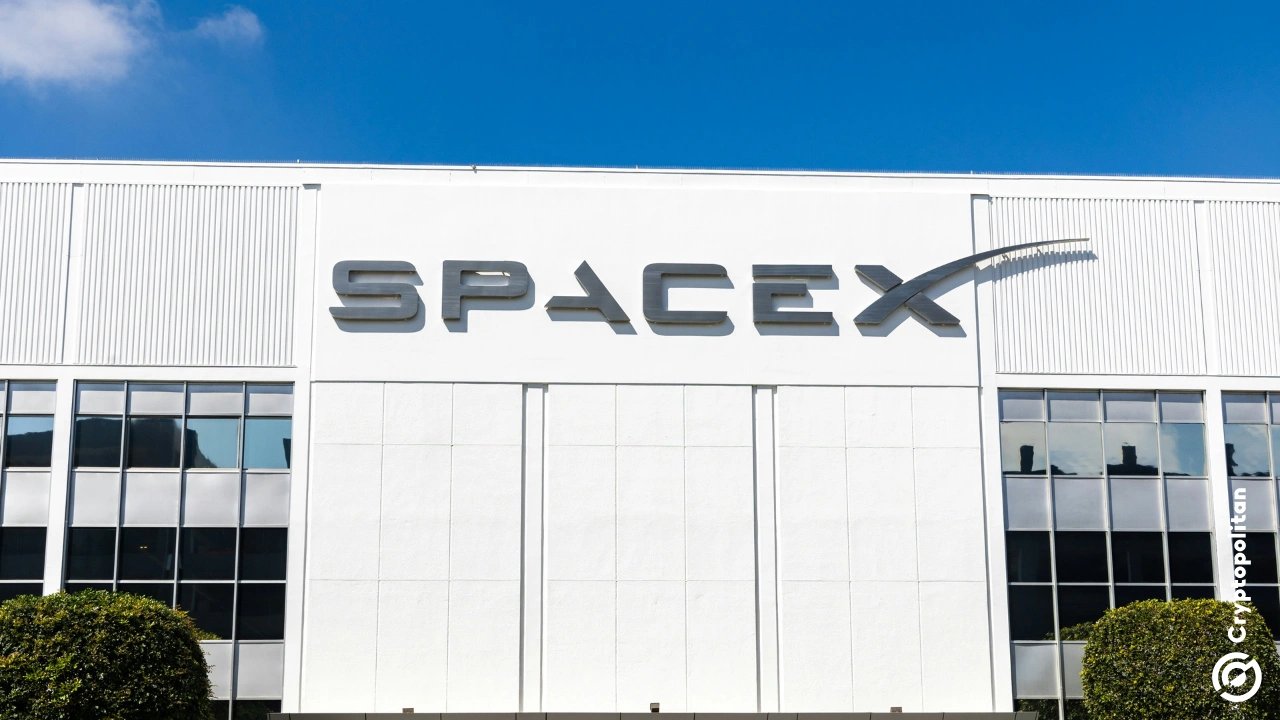
SpaceX has put Michael Nicolls, a longtime Starlink executive, in charge of its AI data-center operations after a string of departures among the executives who built them, according to people familiar with the matter. The Information reported the move.
The change puts an engineer who runs one of the world’s largest satellite fleets in charge of computing facilities tied to the AI effort Elon Musk is pursuing under xAI. The people familiar with the matter said the facilities have fallen short of their reliability goals as expansion ran ahead of the infrastructure needed to support it.
The problems are visible in how the facilities were built. The flagship site, a campus known as Macrohard in South Texas, leans on equipment meant to be temporary: mobile gas turbines, Tesla Megapack battery systems and more than 100 mobile chillers, according to people familiar with the operations.
The improvisation has had costs. Training runs have been interrupted frequently, and actual availability at the site has run below the internal 99.9% target SpaceX set, the people said. Facilities in Tennessee and Mississippi operated for months without backup cooling or backup power, leaving them one equipment failure away from extended downtime.
The pattern reflects a wider squeeze in the AI industry. Developers are racing to bring computing online faster than utilities can deliver grid power, and temporary generation has become the stopgap of choice across the sector, with gas turbines and batteries filling in while permanent substations and transmission lines crawl through years of permitting.
The same stack has become standard across the AI buildout. Mobile gas turbines can be ordered and trucked to a site in months, battery systems store power for the moments between turbine output and demand, and portable chillers add cooling without waiting for a permanent plant. Grid interconnections in the U.S. routinely take years to complete, so operators from the largest clouds to startup clusters have learned to assemble power on their own land.
SpaceX’s answer includes building more of the temporary equipment itself. Elon Musk confirmed that the company is setting up a foundry in Bastrop, Texas, to cast blades and vanes for gas turbines, components that were holding up deployment. Making the parts in-house, Musk said, could cut the time to bring turbines online by roughly 18 months.
Turbine lead times have stretched as data-center operators order them in volume, and the hot-section parts that wear fastest are among the most constrained items in the supply chain. By casting its own blades and vanes, SpaceX shortens a queue that has delayed AI sites across the industry.
Temporary power brings its own risks. Turbines and batteries run on fuel deliveries and maintenance schedules rather than the steady reserves of a utility grid, and mobile cooling can fail in ways permanent plants are designed to absorb. Facilities that operate without redundant cooling and power are making a bet that nothing fails twice, and the outages at SpaceX’s sites suggest the bet has not always paid off.
Nicolls brings a different discipline to the assignment. He has spent years overseeing Starlink’s engineering and operations as the network grew to thousands of satellites, a job built around infrastructure that has to keep working without technicians on site. His new mandate treats data centers the same way.
The orbital ambitions extend the same logic. In a separate filing with the Federal Communications Commission, SpaceX has sought authority to launch up to one million satellites intended to act as orbital data centers, an idea Musk has floated publicly as a way to put computing where solar energy is abundant.
The filing is at an early regulatory stage, and any orbital computing network would face questions about congestion, spectrum and the cost of moving data to and from space. Analysts described space-based computing as a project for the long term, with the reliability problems on the ground far more pressing.
The leadership shuffle also signals the stakes. Data-center executives have departed in recent months as the company pushed through a breakneck buildout, the people said, and handing operations to a Starlink veteran suggests SpaceX now wants operational rigor over further speed.
The executive departures that preceded Nicolls’s appointment underscore how hard the assignment has been. The buildout combined skills the company rarely needed before, from grid-scale power to industrial cooling, and the people who knew how to run those systems were not always the people who had built satellite networks. Talent is scarce across the industry, as data-center operators compete for the same small pool of engineers who understand high-voltage power, liquid cooling and fleets of GPU servers.
The reliability gap carries real costs for the AI push: interrupted training runs waste expensive compute time and delay the models the facilities exist to produce. For a company whose satellite business is built on the opposite principle, the contrast is difficult to ignore.
The target SpaceX set for itself is the industry standard: 99.9% availability allows less than nine hours of downtime a year, a number most enterprise clouds treat as a floor rather than an ambition. Facilities that ran for months without backup power cannot meet that number by design, which is why the company is now rebuilding, rather than merely defending, the systems it rushed into service.
For SpaceX, the bet is that the discipline of running a constellation, building systems that survive without a human watching them, can be applied to buildings full of GPUs. The interruptions of recent months show how far the facilities still are from that standard.