Waymo has spent the past several years turning a research project into a commercial ride-hailing service, one city at a time. On September 18, the company named its next city, and it chose one outside the United States. Singapore will be Waymo’s first market in Southeast Asia, with a fully autonomous ride-hailing service planned for 2028.
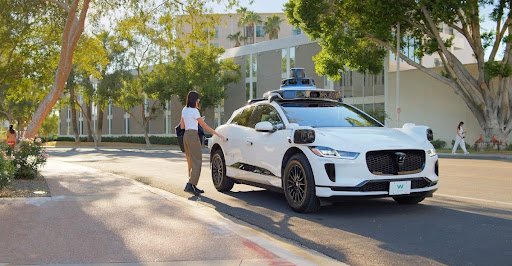
The announcement came at Google’s Asia-Pacific headquarters, a setting that underlines the ties between the self-driving company and its parent. Waymo said it will work with Singapore’s Ministry of Transport and the Land Transport Authority, and that riders will book through the company’s own app. The first vehicles will be Jaguar I-PACE electric SUVs, which are expected to arrive in the city in the coming months.
The 2028 date is the headline, but the work starts almost immediately, and it starts with people. During 2027, the company will hire autonomous-driving specialists locally and have them drive the vehicles manually first, giving the system time to learn the roads, the traffic and the monsoon weather that defines the region’s driving conditions. The same year, Waymo will apply to the Land Transport Authority for approval of its autonomous system.
That preparation period is the company’s standard method. Waymo does not drop a self-driving service into a new city; it spends months, sometimes years, building a map of the place and letting its system observe before it drives. Singapore’s conditions, dense traffic and sudden tropical rain, are different enough from the company’s existing markets that the learning period matters more than usual.
The expansion sits on top of a busy year. In February, Waymo raised $16 billion at a valuation of $126 billion, capital that is meant to fund exactly this kind of geographic push. The company has said it will run fully autonomous commercial taxis in Tokyo this year, and London and Munich are next in line behind Singapore.
Singapore was a natural choice for the first Asian market outside Japan. The city-state has spent years positioning itself as a testbed for autonomous vehicles, with a regulatory regime that is structured rather than improvised, and a government that sees self-driving as part of its urban planning. A company that wants to prove it can operate in a dense, regulated city finds a receptive audience in Singapore.
The choice of the Jaguar I-PACE is also a signal. The I-PACE is the vehicle Waymo has already integrated into its fleet in other markets, which means the company can bring the platform to Singapore without starting a new integration from scratch. Using a proven vehicle lowers the cost and the risk of entering a new country.
The competitive picture is worth noting. Waymo is expanding internationally at the same time that rivals are pushing into new American cities, and the international markets offer something the American ones do not: room to build a business before the competition arrives. Singapore has no incumbent robotaxi operator at scale, and the first mover there gets to define the market.
The regulatory hurdle is the one that will set the real timeline. The Land Transport Authority’s approval is not automatic, and the 2028 launch depends on it. Waymo has learned in other markets that the regulator moves at its own pace, and the company has learned to build its plans around that pace rather than against it.
The timing also reflects a maturing industry. Waymo spent years as the only serious player, and the money it raised in February was raised in a market that now has several competitors. The international push is, in part, a move to build scale in cities where the competition has not yet arrived, and to do it before the window closes. Singapore, Tokyo and the European cities are the front edge of that effort.
The 2028 date, then, is a commitment with conditions attached. The vehicles arrive soon, the specialists start driving in 2027, and the approval application follows. If the regulator agrees, Singapore becomes the first Southeast Asian city with a fully autonomous ride-hailing service run by an American company, and the map of the self-driving industry gets a little wider.
The Singapore launch is also a statement about where the industry’s growth will come from. The American market is filling up with competitors, and the cities that remain are getting harder to enter. Asia, with its dense, well-governed cities and its appetite for new mobility, is where the next stage of the race will run. Waymo is not the only company looking at the region, but it is the one with the balance sheet and the experience to move first, and Singapore is the market it has chosen to prove the point.
The commitment also carries expectations beyond the launch itself. A successful Singapore service would give Waymo a model for the rest of Southeast Asia, a region of large, dense cities that have watched the autonomy race from a distance. The company is spending its preparation year building more than a map; it is building the argument that the model travels.