When xAI shipped Grok 4.7 on Sunday, the company did something unusual in a market where every new model seems to cost more: it kept the price exactly where it was. The new model costs 2 dollars per million input tokens and 6 dollars per million output tokens, the same as Grok 4.6, while xAI says it is faster and better at the tasks developers care most about.
The pitch is built around coding and long-running work. Grok 4.7 uses a larger base model than its predecessor and was trained with a longer reinforcement-learning run weighted toward problems that take hours to complete, according to the company. It is designed to check its own work more carefully and manage longer context, the qualities that matter when an agent is left to run on its own.
The same-price strategy is aimed squarely at enterprise customers who measure models by what they can do per dollar. xAI’s argument is that a model that improves without a price increase is, in effect, a discount on capability.
Third-party evaluations tell a more mixed story. The new model clearly improves on Grok 4.6, but it still sits behind Claude and GPT-6 on several benchmarks that developers use to pick a model for real work. The gap has narrowed, according to the tests, but it has not closed.
That gap is the problem for xAI. When a company chooses a model to power a product, it is not choosing between Grok 4.7 and Grok 4.6. It is choosing between Grok 4.7 and the best available models from Anthropic and OpenAI, and on that comparison, a lower price only helps if the capability is close enough.
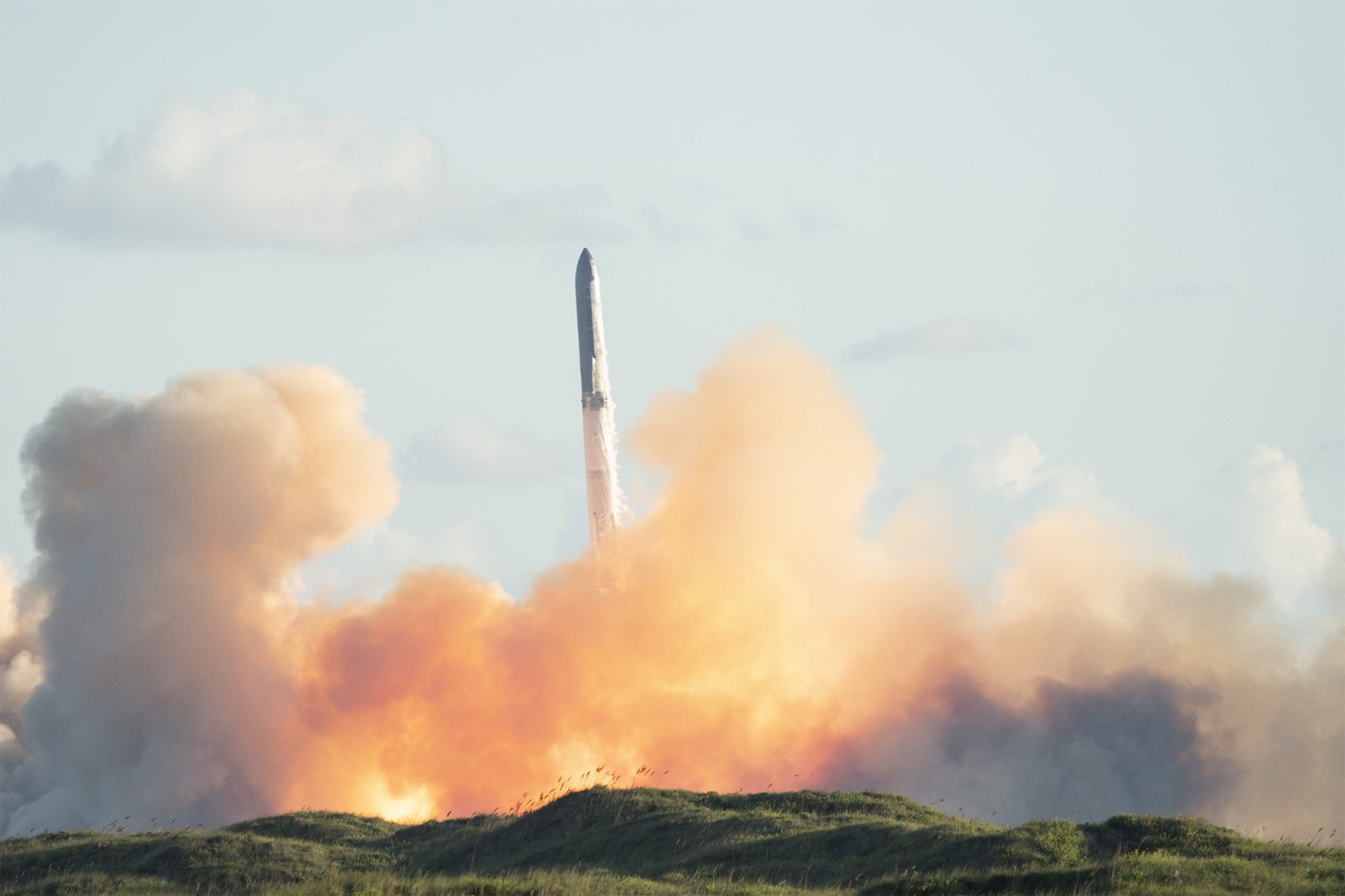
Elon Musk signaled where the company is heading next. Shortly after the release, he suggested that Grok 5, the next generation, could scale to around 3 trillion parameters, a size that would put it among the largest models ever built. The comment was a preview of xAI’s answer to the capability gap: brute-force scale.
Musk has never been shy about the strategy. He has argued that the way to catch the leaders is to spend more on compute and data than anyone else, and xAI has assembled a supercomputer in Memphis with more than 100,000 GPUs to do exactly that. The bet is that enough scale eventually overcomes whatever advantages the incumbents hold.
On CursorBench 4.0, a test that stresses longer-running coding tasks, the company says Grok 4.7 sits at the frontier in price-performance, posting gains over Grok 4.6 on software-engineering and electrical-engineering benchmarks. The model also ships with a higher-effort setting that spends more time reasoning through the hardest problems.
Grok 4.7 also ships with what xAI calls an entirely new safeguard stack, with improved refusal and jailbreak resistance and stronger performance on biosafety and cybersecurity benchmarks. The company has begun giving select security partners invite-only access to the model’s red-teaming capabilities, a step aimed at courting enterprise trust.
The release comes as xAI pushes Grok into more places. The model is available in the Cursor coding tool and in Grok Build, the company’s developer environment, as well as through its API and third-party platforms. Distribution has become part of the strategy: a model is only useful if developers can reach it without changing their workflow.
xAI was founded in 2023 by Musk, who had helped start OpenAI and later left after clashing with its leadership. He has since framed the company as a rival that will tell the truth where he says others censor, and Grok sits inside X, his social network, as well as in the developer tools xAI is now selling. The consumer reach of X gives the model a distribution channel its competitors lack.
The market xAI is chasing has hardened. Anthropic and OpenAI have spent the past year selling frontier models to enterprises on the strength of reliability and safety rather than price, and both have models that outperform Grok 4.7 on the tests that procurement teams run before signing a contract.
Analysts said the unchanged price is a sign of how much xAI needs share more than margin. Keeping Grok cheap costs revenue in the short term but lowers the barrier for developers to try it, and every developer who builds on Grok is a developer who is not building on a competitor.
The question is whether price-performance alone can close a capability gap that the company’s own benchmarks acknowledge. On some tests Grok 4.7 is competitive; on others, particularly the hardest software-engineering tasks, the leaders still pull ahead.
For xAI, the stakes are larger than one model release. The company has raised billions on the promise that it can challenge OpenAI and Anthropic at the frontier, and its valuation depends on investors believing that promise will eventually be kept. A model that improves while standing still on price is progress, but it is not yet proof.
Musk’s hint about Grok 5 suggests he believes the proof is coming. The market, for now, is still grading on the absolute, not the relative.