Microsoft’s quantum ambitions have been described in decades, not quarters. On September 23, the company gave them a street address, opening a quantum research center in Maryland, minutes from Washington, with a direct line to the defense establishment.
The center, in a location adjoining the capital, will give the Defense Advanced Research Projects Agency direct access to Microsoft’s quantum hardware, the company said. The arrangement places qubits built on the topological design Microsoft has pursued for more than two decades into the hands of the agency that funds some of the most ambitious research in the country.
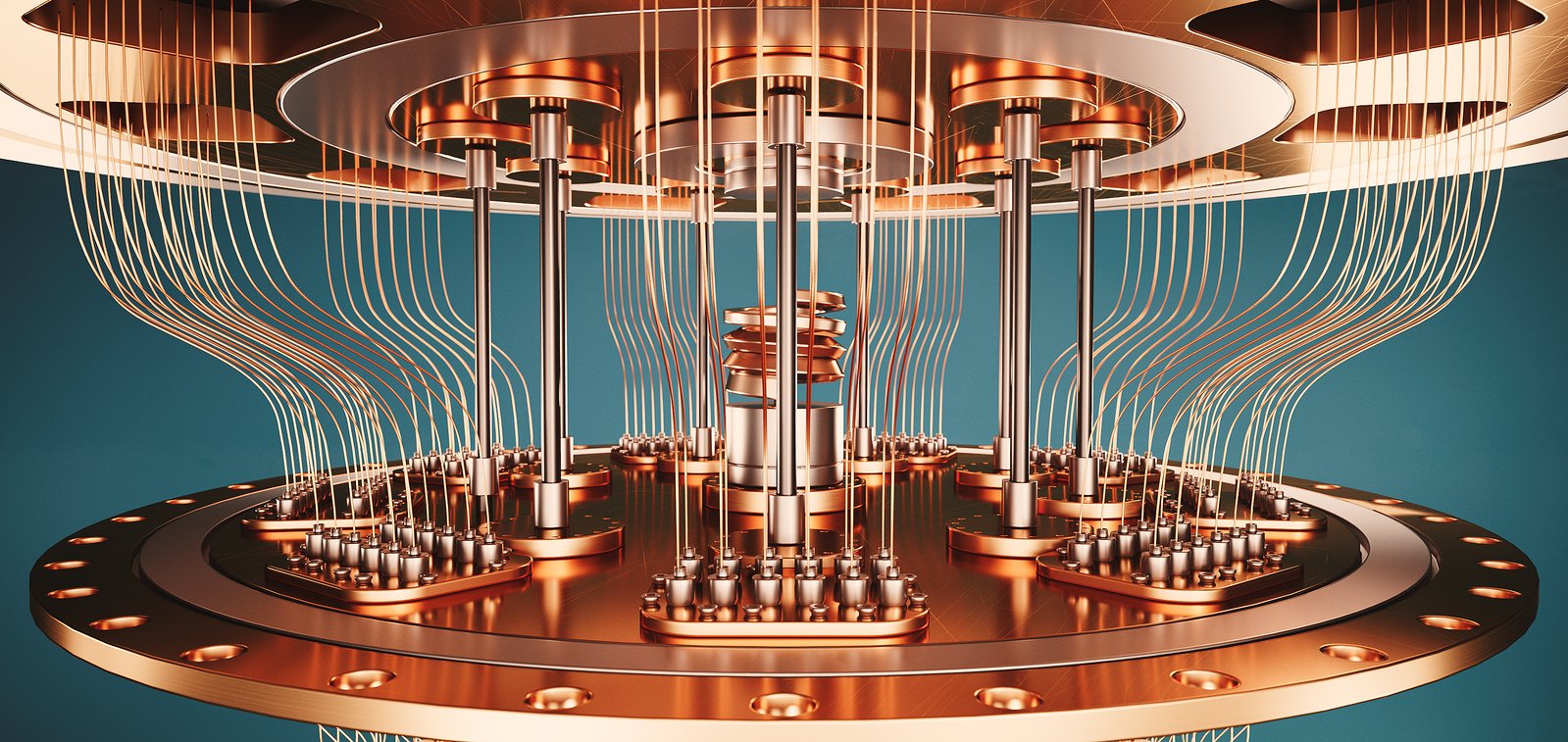
The opening is the latest step in a program Microsoft has run longer than most of its rivals. In February 2025 the company unveiled Majorana 1, a chip built on what it calls topological qubits, a design it argues will prove more stable and easier to scale than the superconducting and trapped-ion approaches favored elsewhere. The work traces back to Station Q, the research effort Microsoft funded for years in the belief that the right physics, patiently pursued, would eventually yield a machine that could run error-resistant calculations.
The scientific bet behind the center has been contentious. Microsoft’s team reported observing the exotic particles, known as Majorana fermions, that underpin topological qubits in 2018, only to retract the paper in 2021 after questions about the evidence. The 2025 announcement of Majorana 1 was an attempt to put that episode behind the company, and the willingness to open the hardware to DARPA suggests Microsoft now believes the physics is sound enough for outside engineers to scrutinize.
DARPA has been a recurring partner in that effort. The agency has funded Microsoft through programs aimed at deciding which quantum designs can actually scale, and the new center formalizes a relationship that people familiar with the matter said has been deepening as Microsoft’s hardware has moved from theory toward working systems. Giving the agency direct access is both a vote of confidence in the technology and a claim on its future.
The move also positions Microsoft against rivals whose quantum programs are further along in certain respects. Google has demonstrated error correction on superconducting qubits, and IBM has put its machines behind a commercial cloud for years. Microsoft’s counter is that its approach, if it works, scales differently, needing far fewer physical qubits to produce a reliable one.
The timing matters because quantum has become a national-security question as much as a scientific one. Governments in the United States, China and Europe are racing toward machines that could eventually break the encryption protecting financial and military systems, and the side that gets there first gains a structural advantage. Placing a quantum facility beside Washington signals how Microsoft wants its technology to be understood.
Yet the quantum push is only one of two tracks the company is running. The other is far more commercial and far more urgent. Microsoft is preparing discounts of up to 50 percent on Copilot for large customers, according to people familiar with the plans, and is building an AI super app that would pull its consumer services into a single place. The discounts are a response to price competition in corporate AI software; the super app is a bet that the next round of AI adoption will happen on phones rather than in productivity suites.
The Copilot discounting shows how different the stakes are on the other track. Microsoft has tied much of its AI revenue to the productivity software it has sold for decades, and rivals are undercutting it on price. The proposed discounts, if extended, would be among the steepest the company has offered, people familiar with the plans said, a sign that the fight for corporate AI budgets has moved from features to price.
The two efforts sit oddly together. Quantum is a long, patient, government-anchored project, still years from the revenue that would justify it on a spreadsheet. The Copilot discounting is the opposite, a short-term fight for share in a market Microsoft cannot afford to lose. That the company is pressing both at once is a measure of how differently it treats the two halves of the AI story.
For the defense customer, the appeal of the Maryland center is straightforward. Researchers who have waited for access to machines that barely exist will now be able to run workloads directly, and the proximity to DARPA’s own programs should shorten the loop between idea and experiment. The center also gives Microsoft a place to recruit the small pool of people who understand this technology.
The unanswered question is whether the topological bet will hold. Microsoft has staked its quantum future on a physics result that rivals once dismissed, and the coming months of direct access will subject that bet to outside scrutiny for the first time at scale. A facility near Washington changes little on its own. What it does is move Microsoft’s quantum program from the laboratory to the capital, where its success or failure will be watched by people with budgets to award.