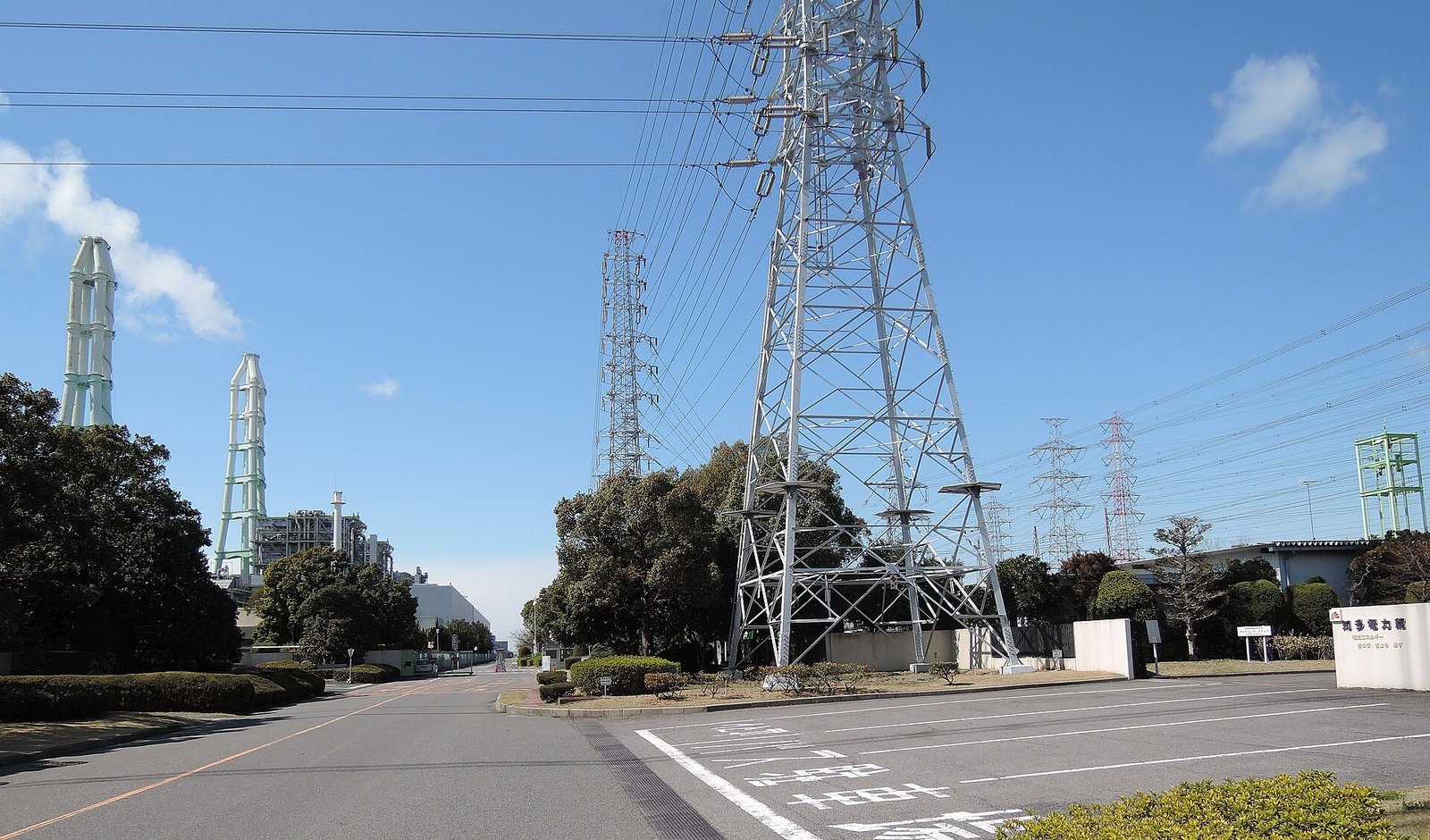
The power station sits in Chiba, near Tokyo, burning fuel to generate electricity for Japan’s biggest power company. Next to it, three companies now plan to build a data center that could draw as much as 400 megawatts — more than enough to power a mid-sized city — and to wire it directly to the plant rather than through the country’s congested grid. On October 1, Japan’s JERA, Dell Technologies and the British developer RHAELM signed a memorandum of understanding to make it happen.
The Chiba project, as the parties call it, would cost more than $15 billion across land, power infrastructure, construction and computing equipment, and would rank among the largest single-site AI deployments in Asia. JERA, jointly owned by Tokyo Electric Power and Chubu Electric Power, would supply 400 megawatts of power for 15 to 25 years from its Chiba thermal power station. Dell would provide standardized, rack-scale computing through what it calls the Dell AI Factory. RHAELM, a London-based developer focused on sovereign AI infrastructure, would build and run the facility.
Apollo Global Management, the New York-based investment firm, intends to serve as a strategic investment and financing partner for RHAELM on the project, according to a statement. The companies aim to begin operations around 2028 and reach full capacity in 2029.
The arrangement is built around a simple idea: skip the grid. By siting the data center behind the meter of an operating power plant, the partners avoid the years-long wait and transmission bottlenecks that have slowed data center construction in Japan and elsewhere. JERA’s chief executive, Yukio Kani, said the company generates roughly a third of Japan’s electricity and supplies nearly all the power consumed in the Tokyo area, giving it the fuel supply chains — liquefied natural gas, shipping, terminals and power generation — that AI infrastructure needs in a fuel-constrained market.
The deeper ambition is to make the Chiba project a template rather than a one-off. The three companies said they would develop a standardized, repeatable model for building AI infrastructure at national scale, starting in Japan and eventually, they hope, in other markets. Financial Times reported that if the model were replicated across JERA’s other plants, total investment could reach $140 billion and capacity of 3 to 4 gigawatts.
Japan has been trying to expand its domestic AI computing capacity, and the government has pressed for what it calls “Watt-Bit collaboration” — the coordinated development of electricity and telecommunications infrastructure. A country with scarce land and heavy reliance on imported fuel has struggled to find sites where data centers can get reliable, round-the-clock power. Co-locating them at existing power stations is meant to solve that problem directly.
For Dell, the deal is a way to sell more than servers. The company has spent years repositioning itself around AI infrastructure, and the Dell AI Factory is its bid to sell a standardized computing layer that can be deployed quickly alongside power and cooling. Arthur Lewis, president of Dell’s Infrastructure Solutions Group, framed the partnership as the foundation Japan needs to develop its own AI capabilities.
The risks are familiar to anyone who has watched big data center bets go wrong. Fifteen billion dollars is an enormous sum for a project whose customers have not all been named, and the economics depend on AI demand remaining as strong in 2029 as it is today. The partners are betting that the scarcity of power, not the scarcity of chips, will decide where AI computing gets built — and that whoever controls the electricity will be in the strongest position to control the next wave of data centers.
The timeline is aggressive by the standards of an industry where a single data center can take five years to approve and build. If the Chiba facility reaches full capacity in 2029 as planned, it will have gone from memorandum to operating at scale in roughly seven years — a schedule the partners say is possible only because the power and the land already exist. Whether that model actually travels to JERA’s other sites will determine whether the $15 billion is a single project or the first installment of something much larger.
JERA is the largest power producer in a country that imports nearly all of its energy, and it has spent years building out its LNG business precisely to keep electricity flowing through demand peaks. The Chiba plant is one of its older thermal stations, and pairing it with a data center gives the company a new way to monetize generation assets that might otherwise face declining utilization as Japan’s grid shifts toward renewables.
RHAELM’s chief executive, Bradd Lewis, said the company was built to take stranded power capacity and turn it into sovereign AI infrastructure, and that co-locating at JERA’s Chiba station could deliver a 400-megawatt facility years ahead of a conventional grid-connected timeline. Eiji Ueda, Apollo’s head of Asia Pacific, described the project as touching two of the firm’s highest-conviction themes: financing digital infrastructure and serving as a long-term capital partner in Japan.
The memorandum is not yet a binding commitment, and the parties still have to convert their framework into contracts, financing and construction. But the direction is clear. Japan’s answer to the AI computing shortage is not to build more chips — it is to put the data centers where the electricity already is.