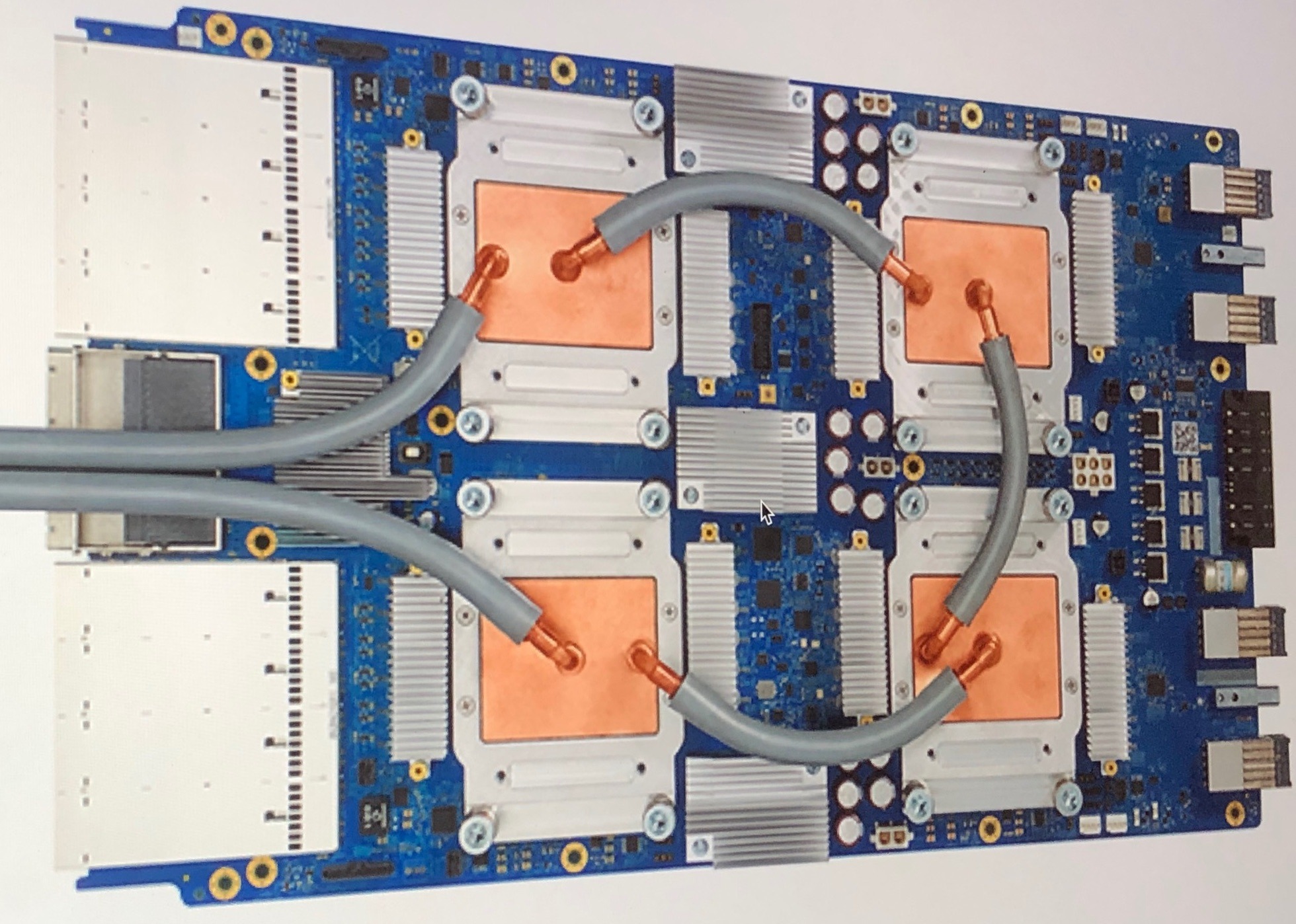
A Planet Labs satellite rode into low Earth orbit on October 1 aboard a SpaceX rideshare, carrying an unusual payload: a set of Google’s custom-built AI chips. The tensor processing units, or TPUs, mark the first hardware of their kind that Google has sent into space, and the first step in an experiment the company calls Project Suncatcher, an effort to build solar-powered computing facilities that can run in orbit for years.
The launch was part of Transporter-18, the SpaceX mission that packed 130 payloads onto a single Falcon 9 from Vandenberg Space Force Base in California. Google’s chips went up as a guest on the Planet Labs satellite, a modest beginning for a larger ambition the company has described in public only in broad terms.
The logic behind Suncatcher is simple on paper and daunting in practice. Data centers on the ground are limited by how much power they can draw from the grid and by how much heat they can dump into the air. A satellite in low Earth orbit sits in nearly continuous sunlight, and Google has said such a satellite can generate as much as eight times the power of an equivalent installation on the ground.
Putting computing in space has circulated around the industry for years, mostly as speculation. Google’s flight turns the idea into something testable: can the chips survive the radiation and temperature swings of orbit, and can the solar power they depend on actually be harnessed at scale? The Suncatcher test is meant to answer the first of those questions before the company commits to anything larger.
The engineering problems are not small. A chip in orbit must tolerate radiation that would corrupt a data center on the ground, and if it breaks it cannot be repaired, only written off. Heat that a terrestrial facility vents into the atmosphere has nowhere to go in a vacuum, so the satellites must radiate it away. Google has not said how much it plans to spend on the program, but the ambition has been evident since the company first floated the concept of a space-based data center.
The choice of hardware matters too. Google designs its own TPUs because controlling the silicon lets it control the cost and performance of AI compute, and that same logic extends into space. If Suncatcher ever scales, the company would be shipping its own chips into the sky, an extension of the vertical integration it already practices inside its terrestrial data centers rather than a purchase from an outside supplier.
The scale math is stark. According to TechCrunch, Google’s internal estimates suggest that a working space data center would require roughly 1,800 launches of Starship, the massive rocket SpaceX is still developing. That figure, if accurate, puts the project at a size that would take years and enormous sums of money to reach, and it shows the distance between a chip that works in orbit and a data center that actually runs there.
The demand driving the idea is real enough on the ground. AI’s appetite for electricity has pushed utilities and data-center operators to search for new sources of power, and the industry’s largest companies have signed deals for nuclear, geothermal and solar capacity in an effort to keep up. Space is, in that context, an extreme answer to a mundane problem: where does the power come from?
The experiment also tests a quieter question about who would run such facilities. Space hardware has traditionally been the domain of satellite operators and defense contractors, not software companies. If Google can show that its chips function in orbit, it opens the door to a model in which the company that writes the software also owns the machines that run it, hundreds of kilometers above the customers it serves.
Google’s space experiment shared the day with a quieter piece of good news on the ground. A federal judge in California dismissed two lawsuits over Google’s AI Overviews, the AI-generated summaries that appear at the top of search results. Chegg, the education company, and Penske Media had accused Google of copyright infringement and anticompetitive conduct, arguing that the summaries siphoned traffic away from their content.
The dismissals do not end the broader legal fight over how AI companies use published material. Publishers and creators have filed a string of cases against Google and its rivals, and courts are still sorting out what the law requires of systems that read and condense the web. But for one day the company could point to progress on two fronts at once: chips headed toward orbit, and two cases thrown out back on Earth.
Project Suncatcher remains, for now, a set of chips on a single satellite. Whether it becomes a fleet of solar-powered computers circling the Earth depends on answers the company does not yet have. The test that began with a rideshare launch on October 1 is the first attempt to get them.