
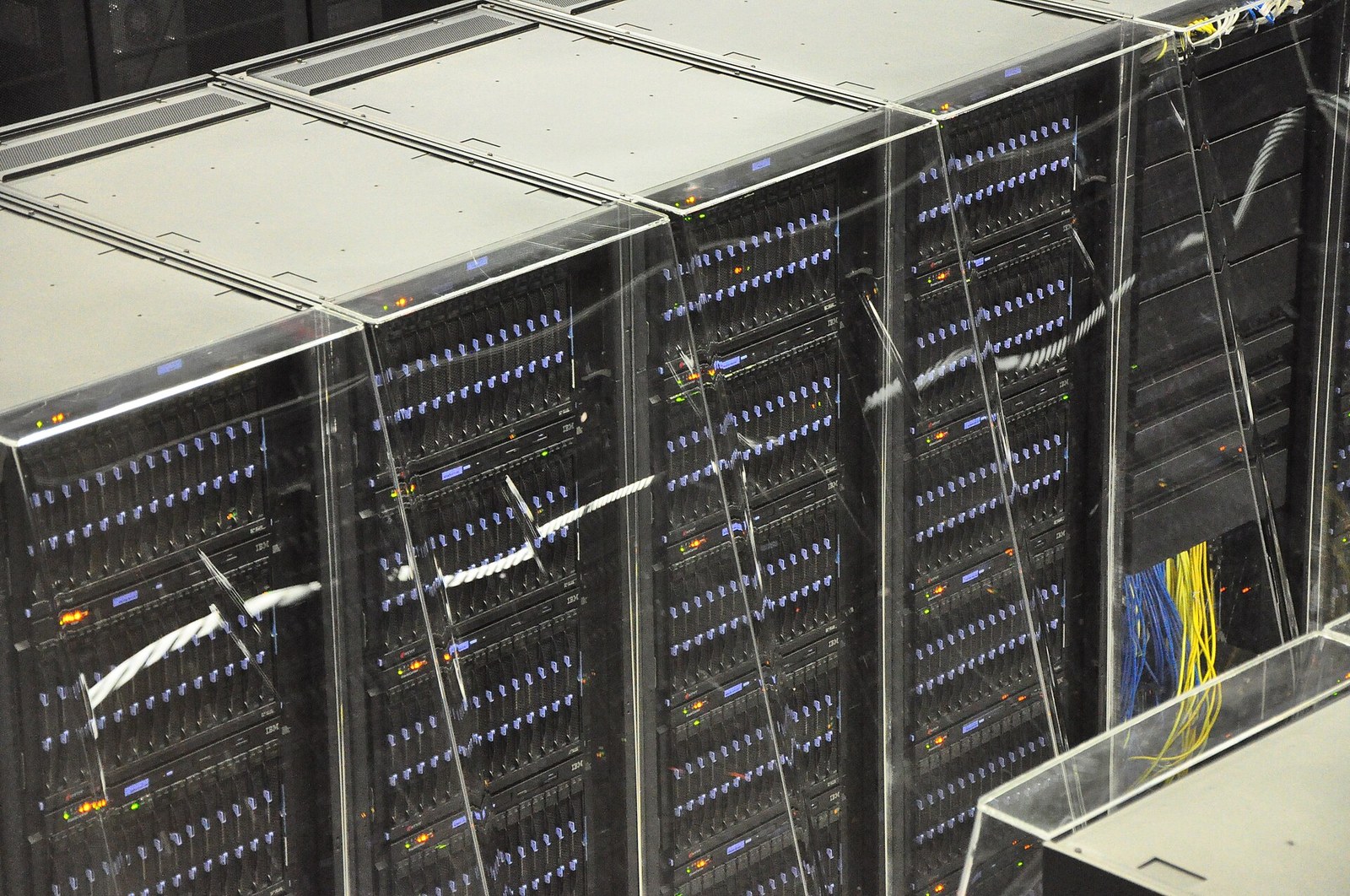
Europe’s effort to build more of its own AI computing power is about to land on a factory floor in western France. Bull, the French supercomputer maker owned by Atos, plans to double its production capacity to meet orders tied to the continent’s expansion of AI infrastructure, and it will invest roughly 80 million euros to retool its plant in Angers, Reuters first reported October 1, with HPCwire following the next day.
The Angers site is where Bull assembles the high-performance computers that have long carried the country’s supercomputing ambitions. Doubling its output is a direct response to a push across Europe to reduce dependence on American and Asian compute, a drive that has produced a wave of orders for domestic equipment makers.
The investment arrives at a delicate moment for Atos, Bull’s parent. Atos has spent years restructuring, selling assets and renegotiating debt after a financial crisis that nearly undid the company. Bull’s supercomputing business, long one of its strongest units, has been held up as a part of the company worth building around. The 80 million euro commitment to Angers suggests the parent is willing to fund that business as European demand arrives.
The push Bull is serving has a name and a budget. The European High Performance Computing Joint Undertaking, a pan-European effort known as EuroHPC, has spent years commissioning machines across member states, from the LUMI system in Finland to the Leonardo machine in Italy, several of them supplied or assembled by European firms. That program, plus national initiatives in France, Germany and elsewhere, has become the steady demand behind the orders now reaching Angers.
The most telling detail in the reports is what Bull’s chief executive identified as the real bottleneck. Asked by Reuters about Europe’s gaps, the CEO said the shortfall is in memory, not in processors, and that the tightest link in the local supply chain remains storage. The observation cuts against the usual story about Europe’s AI build-out, which tends to focus on the scarcity of advanced processors, and it points to a second-order problem: even as Europe secures the chips, it still depends on others for the memory those chips require.
That dependence is not new. The global memory market is dominated by three companies, Samsung, SK Hynix and Micron, none of them European, which leaves the continent’s supercomputing and AI build-out reliant on imports for a component every bit as critical as the processor. Bull’s chief executive was, in effect, flagging that Europe’s sovereignty push has a gap in the middle of the stack, and that filling it will take more than a factory floor in France.
Bull’s history gives the expansion a particular resonance. The company has built supercomputers for the French state and European research centers for decades, and its machines have consistently ranked among the most powerful on the continent. Under Atos, which acquired Bull in 2014, the business was folded into a broader IT-services group and then into Eviden, the spinoff that holds Atos’s high-performance computing and cybersecurity operations. Doubling capacity at Angers is a bet that the next chapter of that history will be written around European AI demand.
Bull’s connection to Angers is long-standing. The company’s roots reach back to the 1930s, when it made punched-card equipment for the French market, and it has carried the flag of European computing through generations of hardware. Its supercomputers have appeared on the global Top500 list for decades, a source of national pride in a field otherwise led by American and Chinese systems. The Angers plant, a center of that manufacturing, is being positioned as the hub for the continent’s next wave of machines.
The orders are real. European governments and companies have committed billions to building AI infrastructure within the region’s borders, driven by both economic ambition and a desire to keep data under local control. Bull is not the only beneficiary; other European manufacturers and assemblers are expanding as well. But its position as a homegrown maker of complete supercomputers gives it a claim on a meaningful share of that spending.
What the company can deliver, however, is bounded by the supply chain its chief executive pointed to. Doubling capacity is a factory problem with a factory solution: more floor space, more tooling, more people. The memory question is different. It is a problem of industrial base, and it cannot be solved by a single 80 million euro investment in Angers. Europe can assemble more of its own machines; whether it can supply the memory inside them is a question the continent has not yet answered.
The stakes reach beyond any one company. European leaders have made technological sovereignty a stated priority, and supercomputers built by a French firm running European data are central to that promise. If Bull can double its output and deliver on the orders arriving at Angers, it will have done its part of the job. The memory that goes inside those machines, and where it comes from, is a gap no factory expansion alone can close.



