
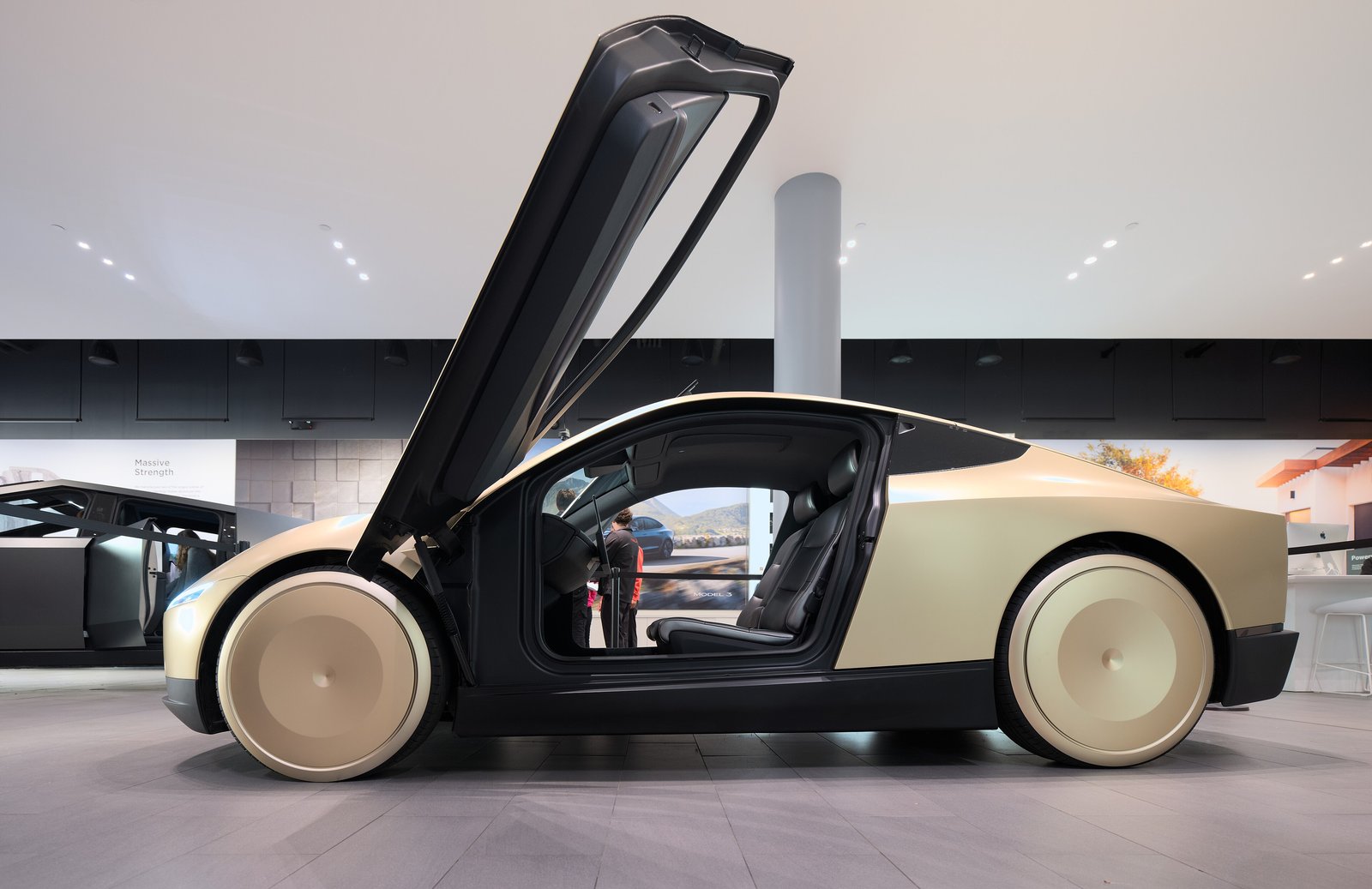
One month after Tesla put its driverless Cybercab on Austin’s streets, the cars are multiplying and the complaints are piling up.
On October 3, Tesla marked the first full month of the Cybercab’s Austin launch. The number of vehicles cleared for commercial operation in Texas has climbed to 169, nearly quadruple the fleet at the start. But paying passengers have reported long waits and drop-off points that missed the mark, and several cities have yet to issue permits for vehicles that run on public roads without a human driver.
The numbers from the same week told a happier story. Tesla said on October 2 that it produced more than 464,000 vehicles and delivered more than 486,000 in the third quarter, both above what analysts had expected. Energy storage deployment reached 13.7 gigawatt-hours. The results strengthened the company’s core business even as the robotaxi experiment drew mixed reviews.
Ars Technica flagged the soft spot: Cybertruck sales fell noticeably over the same period. The angular pickup that once commanded long waiting lists has struggled to keep its early momentum, and the decline sat oddly next to the broader delivery beat. Tesla’s lineup is not moving in one direction all at once.
The Cybercab rollout is a case study in the distance between a product’s promise and its pavement-level reality. The cars are designed without a steering wheel or pedals, and the Texas launch was meant to prove that Tesla could run a ride service with no one in the front seat. A month in, the service works well enough to grow, but not well enough to silence the riders who say the car got them close to where they asked to be, not exactly there.
The permitting map remains uneven. Texas has moved faster than most states, but many cities have held back from letting driverless vehicles loose on public roads. That patchwork, not the hardware, may be the real limit on how fast the fleet can expand. Each new city means a new set of regulators, a new round of safety reviews and a new chance for the launch to stall.
The growing fleet is itself a signal. Nearly quadrupling the number of approved vehicles in a month suggests that the underlying demand for rides, and the willingness of local authorities to let the cars run, is holding up even as individual riders gripe about wait times and wrong turns. The operational problems are real, but they are the kind of problems that come with scale, and Tesla has spent a month proving it can scale.
The robotaxi program matters to Tesla’s valuation in a way the delivery numbers do not. Analysts have long argued that the company’s stock trades on a story about autonomy rather than on the number of cars it sells. The Cybercab is the first chance to show that the story can become a service with paying customers and a fleet that grows. Every month of operation adds data that either supports the story or undercuts it.
The Austin launch, when it began a month ago, was deliberately modest, a small fleet on a limited set of routes, with Tesla able to pull the cars back at any sign of trouble. The expansion to 169 vehicles suggests the company found the early results good enough to push further. The rider complaints suggest the experience has not caught up with the scale.
Tesla is not alone on Austin’s streets. Waymo has run a robotaxi service in the city for longer, and its cars have logged far more miles without human drivers. The comparison has become the standard against which the Cybercab is judged, and it has not always been flattering. Tesla entered the market promising a cheaper ride and a simpler vehicle; riders are now measuring whether the savings are worth the wait.
The economics are the unspoken question. Robotaxis are expensive to build and to service, and the fares they can charge are set by competition with human drivers and with each other. Tesla has said little about what the Cybercab costs to operate, and until the fleet reaches a size where those costs spread across many rides, the service is a bet rather than a profit center. The delivery and energy numbers are what pay for the bet.
The drop in Cybertruck sales complicates the picture. The pickup was supposed to be the bridge between Tesla’s car business and its robotaxi future, and its decline suggests the company’s attention has moved elsewhere. Tesla did not break out the reasons for the slide, and the company has not said how much of its production capacity it plans to shift toward the Cybercab as the robotaxi fleet grows.
A month is not long enough to settle any of this, and Tesla has framed the launch as the first step of a much longer road. The company has said it plans to expand the service to more cities, and the 169 vehicles are a fraction of the fleet it would need to make robotaxis a meaningful line of business. For now, the month stands as the first real data point in a story the company has been telling for years: that the car of the future can drive itself, and that Tesla will be the one to prove it.



