
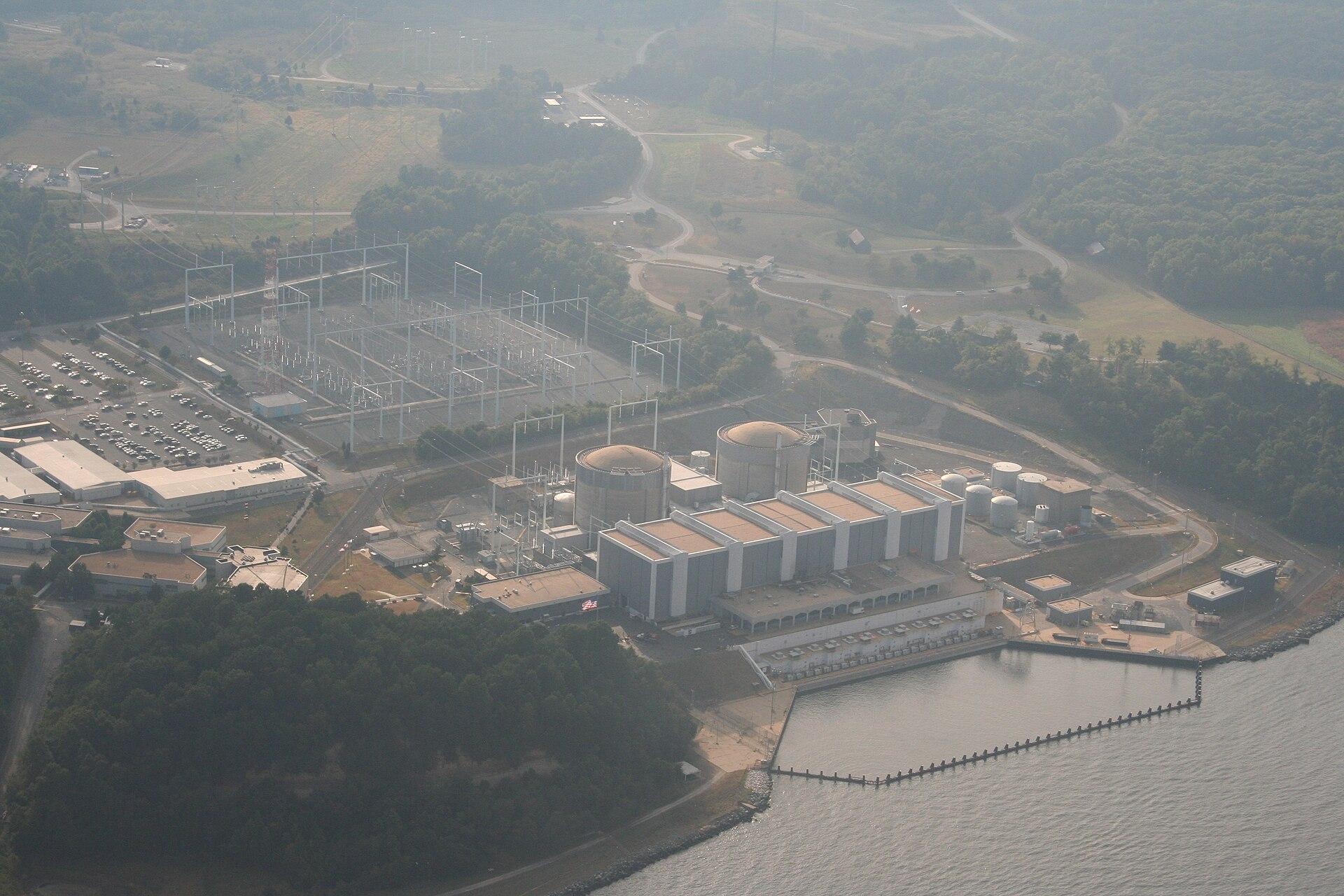
The data center Amazon wanted to build in Maryland is not moving forward. The power behind it is. On September 30, the company and Constellation Energy announced a 20-year agreement that will add about 190 megawatts of generating capacity to the Calvert Cliffs nuclear plant, Maryland’s only nuclear station, and steer a larger block of its output toward Amazon’s operations in the region.
The deal is a trade. Amazon had pursued a data center project in Maryland that stalled, and it is now putting capital into the state’s nuclear infrastructure instead. The agreement supports more than $3 billion in investment across the 1,790-megawatt plant, including the 190-megawatt uprate, which is expected to come online between 2030 and 2032, according to the companies.
The structure is a power-purchase agreement, the same tool the technology industry has used for years to buy wind and solar. What is new is the fuel. A 20-year commitment to buy nuclear output gives Constellation the revenue certainty to pay for an uprate it might otherwise not finance, and it gives Amazon a source of round-the-clock, emissions-free power that renewables cannot always match.
The agreement is broader than the uprate alone. It covers 690 megawatts of power from the plant, including the 190-megawatt expansion, and it is paired with a separate retail supply arrangement to serve Amazon’s facilities across the 13-state PJM market. In practice, the electricity from Calvert Cliffs keeps flowing onto the regional grid as it always has; Amazon is buying a claim on that output, not a private wire.
The move reflects a shift in how the hyperscale cloud companies are solving their power problem. Amazon’s capital spending has run to roughly $220 billion this year, exceeding its own operating cash flow, and much of that is data centers that consume electricity at a scale few other industries approach. Power, more than land or fiber, has become the scarcest input in the AI build-out, and the largest buyers are now signing decade-long deals to secure it.
Joe Dominguez, Constellation’s chairman and chief executive, framed the agreement as private capital strengthening critical infrastructure. “This agreement demonstrates how private investment can strengthen critical energy infrastructure,” he said. The company has said Amazon’s commitment gives it the certainty to pursue relicensing the plant for another 20 years and to develop new clean-power generation at the site.
Calvert Cliffs sits on the western shore of the Chesapeake Bay in Lusby, Maryland, and produces roughly 80 percent of the state’s clean energy, enough to power more than 1.3 million homes. For a state that has leaned on the plant for decades, the uprate means more of that capacity stays in service as the region’s data centers multiply.
Amazon is not alone in turning to nuclear. Microsoft and Google have each signed long-term agreements to secure power from existing reactors, and Microsoft has backed the restart of a dormant plant in Pennsylvania. Amazon has struck deals of its own, including a commitment to buy power from a Pennsylvania nuclear station and an agreement to help develop small modular reactors with X-energy. The Calvert Cliffs arrangement fits a pattern in which the largest technology companies are bidding up the price of reliable, carbon-free electricity.
The economics cut both ways. Nuclear uprates are expensive and slow, and the 2030-to-2032 timeline is far longer than a solar farm or a battery installation would require. But the industry’s bet is that constant, carbon-free baseload power will be worth the wait in a market where demand is growing and the alternatives are not keeping up. Amazon is effectively paying a premium for certainty.
The deal also carries political weight. Maryland has been both a beneficiary of the data-center boom and a place where opposition to it has grown, as residents weigh the cost of new transmission lines and higher electricity prices against the promise of investment. A nuclear agreement keeps Amazon’s money in the state while sidestepping the fights that new data centers tend to provoke.
For Constellation, the agreement is the latest in a string of long-term deals with technology buyers, part of a business that has moved from selling electricity on the spot market to writing decade-long contracts with the companies driving the next wave of demand. For Amazon, it is one more data point in a strategy that now treats power as a supply-chain problem to be secured the way the company once locked up servers and warehouses.
The result is a quieter kind of announcement than a new data center would have been, and a longer one. A 190-megawatt uprate will not solve Amazon’s power needs on its own, and the company is buying more than that in the deal as a whole. But the direction is clear. When the largest electricity users in the country need power they can count on, they are turning to the one source that never stops running.



