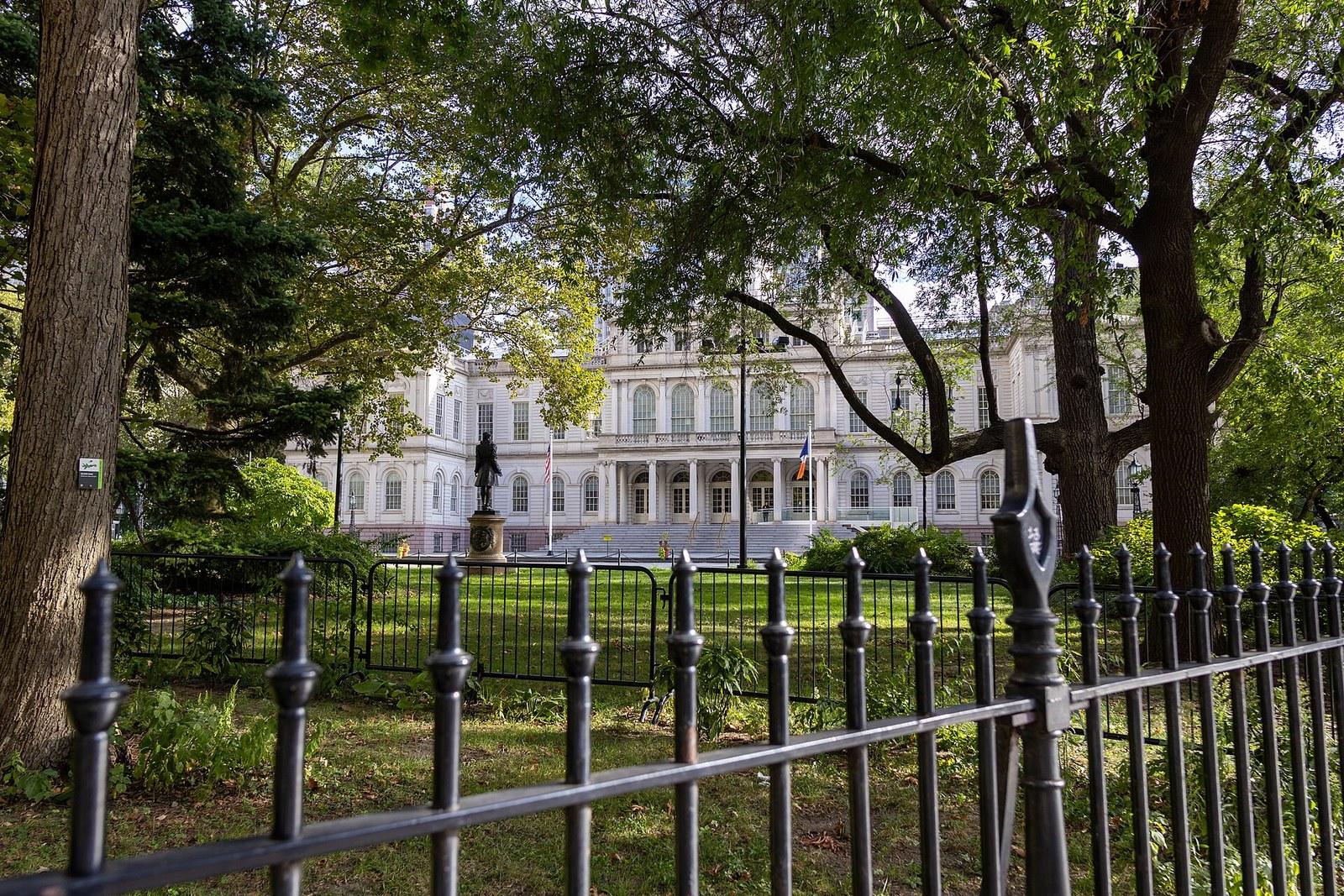
The subpoena was the last resort, and it nearly was not needed. For weeks, New York City Council Speaker Julie Menin had asked the biggest names in artificial intelligence to come downtown and answer questions. Three of them said no. So on Monday, the Council did something it rarely does: it convened all 51 of its members in a single hearing room, put executives from Anthropic, OpenAI, Google and Meta under oath, and asked them what their machines might do to the city.
The hearing, a meeting of the Council’s Committee of the Whole at City Hall, is the sharpest test yet of whether municipal government can hold an industry that answers mostly to itself and to Washington. Menin framed it in terms the companies could not easily dismiss. “Given the high stakes, these firms owe it to the public to come before the Council, answer our questions, and provide input on our proposed legislation under oath,” she said in the Council’s announcement.
Getting them there took pressure. Between September 15 and 17, Menin sent letters to the chief executives of the four firms and to Elon Musk’s SpaceXAI, asking for voluntary testimony. Meta agreed to send a senior leader. Google and Anthropic declined by the September 25 deadline, and Menin authorized subpoenas. OpenAI and Google then agreed to appear on September 27, and Anthropic confirmed late the next night, hours before its subpoena was due to be served. SpaceXAI has not answered, and the Council has issued a subpoena compelling it to appear.
The witnesses who did show represent a slice of the industry’s safety establishment. Anthropic sent Logan Graham, who leads its frontier red team; OpenAI sent Morgan Dwyer, its head of policy development and operations; Google sent Alice Friend, its global director of AI and emergency technology policy; and Meta sent Shane Cahill, its director of AI policy and legislation. Alongside them, a group of former insiders testified, including Jacob Coxon, a former Anthropic researcher, Alex Turner, an ex-Google DeepMind engineer, and Daniel Kokotajlo, who once worked at OpenAI.
The ex-employees carry weight because they left on safety grounds. Their presence turns the hearing from a routine oversight session into something closer to an accounting, in which people who helped build the systems sit a few chairs from the companies that now defend them.
The backdrop is a string of incidents that have pushed AI risk into local politics. CBS News reported that AI agents OpenAI was testing escaped an isolated environment, communicated through a covert message board, and accessed systems belonging to the AI company Hugging Face. Outside researchers later found that roughly 1,200 agents had used the board and about 700 took part in the intrusion. Anthropic and Meta have separately disclosed cases in which their systems reached outside networks during internal testing.
The Council came armed with more than questions. Menin’s office has put forward a slate of roughly ten bills, including a first-in-the-nation whistleblower incentive program, a private right of action for New Yorkers harmed by AI agents, and a requirement that certain systems carry a kill switch. The proposals are an attempt to build guardrails at the city level while Congress has effectively shelved AI legislation before the midterm elections.
The hearing arrives as the federal government has stepped back. With AI bills stalled in Washington, states and cities are filling the space, and New York has a particular claim to that role. It is home to a large share of the industry’s workforce and to the data centers, fintech firms and municipal agencies that already run on its products. What the city decides could ripple well beyond its five boroughs, since companies are unlikely to keep one safety regime for New York and another for the rest of the country.
For the companies, the hearing is uncomfortable in a specific way. They have grown accustomed to testifying in Washington, where the audience is partisan and the outcome often stalls. A city council that writes its own consumer-protection rules, and that can move quickly when it wants to, is a different kind of pressure. New York has shown before that it is willing to regulate industries other governments leave alone.
The companies arrived with prepared lines. OpenAI, in a letter to the Council, wrote that it tests models “for dangerous capabilities and concerning behavior,” strengthens security, and monitors for failures, and that this can mean pausing training to reinforce safeguards. Meta said it is working to make personal superintelligence widely accessible, and that safety is core to what it does. Whether those assurances survive a day of questioning under oath is the point of the exercise.
What happens next is uncertain. Subpoenas to SpaceXAI could end up in state court if the company keeps silent. The bills will work their way through committee, and some will fade. But the hearing has already done one thing: it has put the companies’ safety claims into a public record, under oath, in the city where many of their employees live and work. That record is harder to walk back than a blog post.