
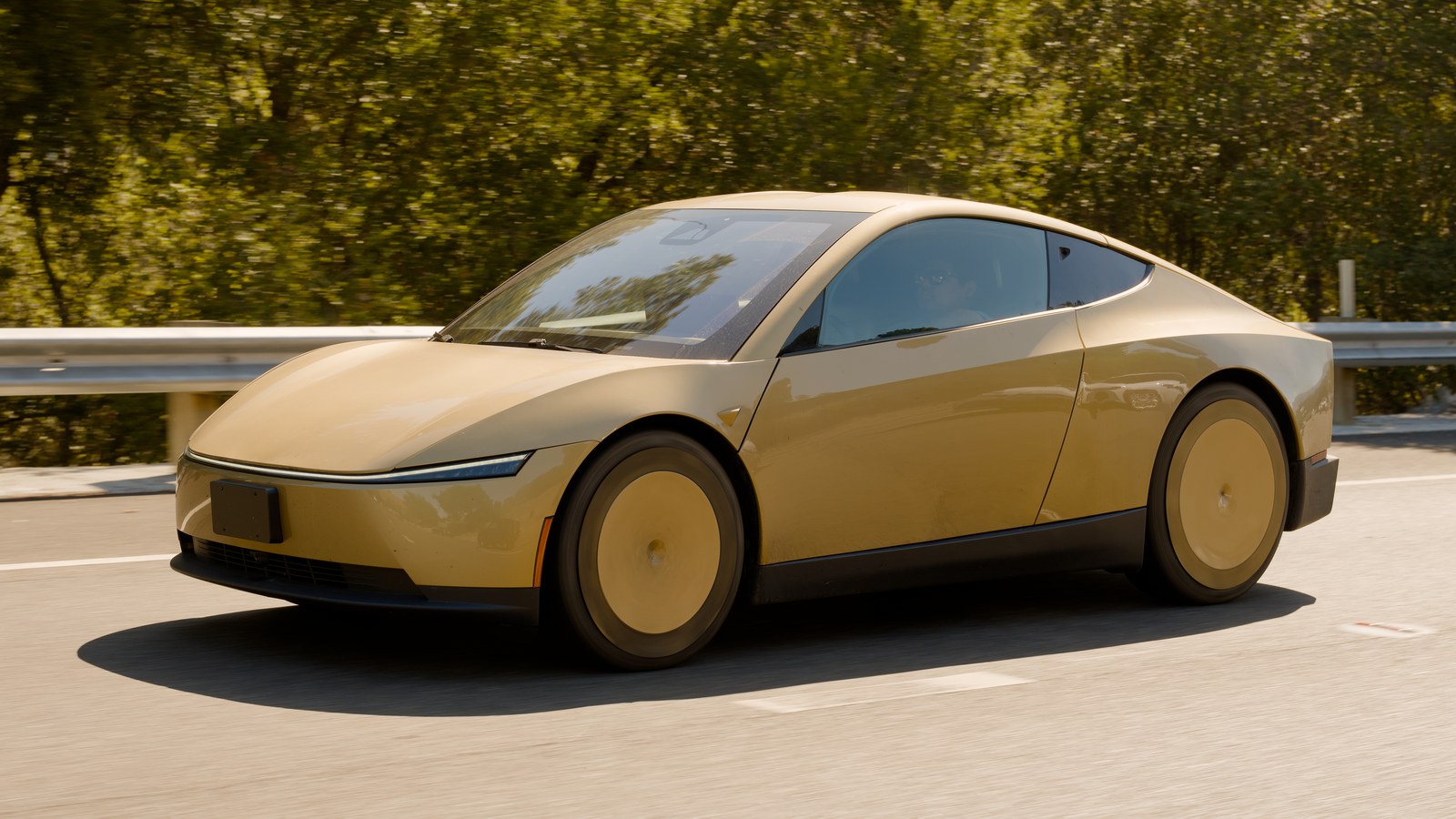
The cars that Tesla is betting its robotaxi future on have been picking up passengers in Austin for months. On October 4, the company widened the experiment: longer operating hours and 111 more Cybercabs, the two-seat vehicles with no steering wheel that sit at the center of Elon Musk’s vision for a driverless ride-hailing network.
The same day, Musk offered a rare public accounting of the technology’s limits. On social media, he wrote that the robotaxis still struggle to reliably spot animals on the road at night, describing the problem as a gray cat on gray asphalt. It was a small admission with a large implication: the long tail of unusual driving conditions, the part Musk has long promised the system would master, is still where the fleet is weakest.
The expansion is real, and so is the caution. Tesla began running its driverless ride service in Austin this year, and the addition of 111 vehicles marks one of the largest single steps the company has taken toward making robotaxis a commercial product rather than a demonstration. Longer hours push the service deeper into the night, which is exactly where the animal-detection problem lives.
Passengers are already weighing in. Over the past month, complaints about wait times and drop-off points have surfaced from riders who paid for the service. The gripes are mundane, but they matter: a robotaxi network succeeds or fails on the same things a human taxi service does, and Tesla is discovering that removing the driver removes none of the logistics.
Analysts said the Austin push matters less for its numbers than for what it signals. Tesla has said it wants robotaxis to become a meaningful business, and Musk has tied a large share of the company’s long-term value to the idea. A working, growing fleet in one city is the first real test of whether the economics and the reliability can hold up outside a controlled run.
The nighttime admission fits a pattern. Musk has repeatedly set aggressive timelines for self-driving and then revised them, and his willingness to name a specific technical weakness, on the same day the fleet grows, reads as an attempt to set expectations honestly even as the service expands. The question investors and riders will ask is how fast the gap closes.
The vehicles themselves are a bet on a design that few other companies have made. The Cybercab has no steering wheel or pedals, which means it cannot fall back on a human driver if the system meets something it cannot handle. That design choice concentrates risk in the software. A gray cat on gray asphalt is trivial for a human driver; for a vision system trained mostly on daylight scenes, it is exactly the kind of edge case that decides whether a robotaxi can operate without supervision.
Tesla’s approach differs from competitors in another way. Rivals such as Waymo have built their services around sensor suites that include lidar, while Tesla has stuck with cameras. Musk has argued that cameras alone are enough because humans drive with eyes alone. The nighttime animal problem is a direct stress test of that argument, and the fact that it remains unsolved will not quiet the skeptics.
For Austin, the stakes are concrete. The city has become one of the early proving grounds for driverless ride-hailing, and Tesla’s growing fleet is part of that. For Tesla, the 111 Cybercabs are a down payment on a business the company has promised for years. Musk’s one-line confession is the honest footnote: the hardware is scaling faster than the software’s ability to handle everything a road can throw at it.
The numbers behind the fleet matter as much as the software. A robotaxi earns money only when it is moving a passenger, and idle time is the enemy of the economics Musk has promised. Extending hours and adding vehicles is a bet that demand in Austin can absorb the extra capacity, and the passenger complaints already on record suggest the service is still smoothing out the basics of matching cars to riders before it can push utilization higher.
The expansion also carries a regulatory question. Driverless ride-hailing operates under a patchwork of state and city rules, and Tesla has had to win approvals market by market rather than launch wherever the software is ready. The company has said it intends to take the service to more cities, and Austin is being read as the template: proof that the Cybercab can run at scale, at night, and under scrutiny before the map widens.
The road ahead is measured in cities rather than features. Tesla has said it intends to extend the service to other markets, and each new city brings its own roads, weather, and regulators. Austin is the laboratory where the economics and the edge cases are being worked out in public, one gray cat at a time.



